
Unlock the Editor’s Digest for free
Roula Khalaf, Editor of the FT, selects her favourite stories in this weekly newsletter.
Mining group BHP has been found legally liable for one of the worst environmental disasters in the history of Brazil in a landmark case brought in the UK over the 2015 Mariana dam collapse.
The High Court in London on Friday ruled that the risk of the structure’s collapse had been “foreseeable” and that BHP, the world’s biggest mining company, was “strictly liable for damage caused to the environment and to third parties”.
Lawyers acting on behalf of more than 620,000 alleged victims are seeking up to £36bn in compensation from BHP and Brazilian miner Vale, which jointly own the Samarco iron ore project where the incident occurred.
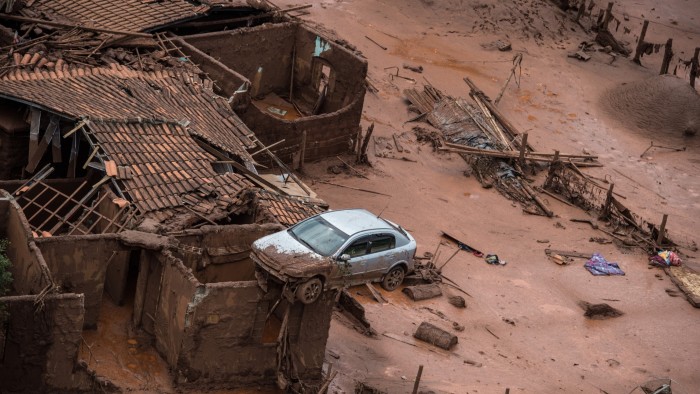
The disaster killed 19 people when sludge was released from behind the waste dam in the state of Minas Gerais. Hundreds of kilometres of waterways were contaminated, swamping riverside communities and destroying livelihoods.
The ruling sets the stage for compensation, which will be decided in a later High Court trial scheduled to begin next October. BHP and Vale have agreed to split any sums due.
However, BHP said it intended to appeal against the liability judgment on Friday. Brandon Craig, head of BHP’s Americas division, said the company would “continue to defend this action”.
The politically charged case is among the most complex of a new breed of high-value lawsuits hitting the English courts, fuelled in part by the rise of funds that specialise in financing litigation.
Lawyers said the ruling highlighted emerging legal threats facing companies that have connections to the UK over activities in foreign jurisdictions, even when they relate to joint ventures or local subsidiaries.
BHP had a dual listing in the UK and Australia when the disaster occurred in November 2015. Its main listing is now in Australia, along with its headquarters.
David Greene, head of commercial disputes at Edwin Coe, said the ruling showed how “if a local subsidiary is answerable in any way to an English parent, the parent is likely to have responsibility for it — and its wrongs”.
Mrs Justice Finola O’Farrell delivered her judgment on Friday after a 50-day trial, which concluded in March.
“The risk of collapse of the dam was foreseeable,” she found. The judge said there had been “obvious signs of contractive, saturated tailings and numerous incidents of seepage and cracking”, adding that “the collapse could have been averted”.
 Gelvana Rodrigues wears a T-shirt with a photo of her seven-year-old son Thiago, who died in the disaster © Ricardo Lisboa/FT
The judge said that by August 2014, BHP knew or should have known that the “internal drainage of the dam was inadequate to prevent saturation”.
Gelvana Rodrigues, whose seven-year-old son Thiago died in the incident, said: “I am very, very happy that they have been held accountable . . . Ten years of waiting and fighting was worth it.”
The ruling is a much-needed victory for Pogust Goodhead, the UK law firm that represented the claimants and which has been in turmoil following the abrupt departure of its former chief executive Tom Goodhead.
The firm received more than $750mn of financing from US hedge fund Gramercy to fund cases including the mining disaster claim.
Recommended

Pogust Goodhead described the judgment as a “historic win”. Alicia Alinia, the law firm’s new chief, said in a statement that the court had delivered “long-overdue justice to the thousands whose lives were torn apart”.
“It sends an unmistakable message to multinational companies around the world: you cannot disregard your duty of care and walk away from the devastation you caused,” she added.
BHP and Vale had argued that the London action was unnecessary after they agreed an updated compensation scheme last year in Brazil, which will take their total indemnity bill to about $32bn.
The companies said they had already paid out $13.4bn to people affected by the disaster and to public authorities. Vale said payouts made so far included $6bn disbursed to at least 610,000 individuals, including 240,000 in the London claim.
 Overgrown vegetation covers the entrance and walls of an abandoned school building in Bento Rodrigues, near the site of the dam collapse © Ricardo Lisboa/FT
Vale said that Friday’s ruling “confirmed the validity of waivers and releases signed by claimants already compensated in Brazil, which will reduce the number of claimants [in the London proceedings] and the value of the claims”.
BHP’s Craig also pointed to compensation that had already been paid, saying this would “significantly reduce the size and value of claims in the UK group action”.
Critics of the lawsuit in Brazil, led by an association representing the country’s mining industry, have called the London proceedings an affront to national sovereignty.
However, lawyers acting for the claimants in the London case say the amounts offered in Brazil are inadequate and that victims were not consulted.
O’Farrell, in her judgment, said that the High Court case “does not seek to replicate or supersede” proceedings or compensation schemes in Brazil.
Edwin Coe’s Greene said the case was a “thorough endorsement of the court’s ability to provide large numbers of claimants overseas with access to justice”.
Little more than three years after the Mariana disaster, another tailings dam owned by Vale ruptured in the town of Brumadinho, also in Minas Gerais, leaving 270 people dead.