

David Morrissey wants to make one thing clear: he has always had a well-stocked fridge. We’re discussing his BBC sitcom Daddy Issues, soon to return for a second series, because my daughters almost forced me to watch it. He plays Malcolm, a divorced father whose 24-year-old daughter Gemma, played by Aimee Lou Wood, turns up pregnant on his doorstep. The first thing that horrifies her about his shabby Stockport flatshare is the empty fridge. That was me, I tell him, just after my divorce.
“I do draw on personal relationships,” he admits, sitting in a London office near the Thames, fresh off the Eurostar from a weekend in Paris with his partner. He even has his suitcase with him. “I do draw on my own daughter, my own divorce and stuff like that. But also,” he slightly bristles, “my fridge was always full. I have standards.” Then he breaks into a cheerful grin.
Morrissey, 61, hasn’t always been so upbeat. “When I started out as an actor my goal was authenticity — still is,” he says. “The mistake I made was I believed authenticity could only be found in the dark, in heartache and pain. Anything that was funny, frivolous, joyful or loving could not be authentic. If I wasn’t banging my head against the wall or in pain then the work itself couldn’t be right.”
That’s because, he explains, he was using work as therapy. He grew up in the working-class Kensington area of Liverpool in the late 1960s. His mum worked at Littlewoods pools and his dad was, until David was seven, a cobbler. Then he became sick with a terminal blood disorder and died of a haemorrhage at home when David was 14.
“There was something in that torturous acting that helped me emotionally, because I was in grief, I was in trauma myself, and I thought that playing it would help me out,” he explains. “It didn’t. It just kept me in the space. It took me a long time to go, ‘Oh my God, I could be more McCartney than Lennon!’”
• David Morrissey: ‘I wasn’t happy growing up. I didn’t want to be me’
One of the things that’s feeding his inner McCartney is becoming a grandfather. His son Albie, a TV producer, had a child last year. “It’s just great,” he says beaming. “Really wonderful to see my son become a father, and how he deals with that.”
He and his ex-wife, the novelist Esther Freud, have three children: Albie, 30, Anna, 27, and Gene, 19. They divorced in 2020 after almost 27 years together and have new partners. Morrissey won’t be drawn on his, but he has been spotted around town with the theatrical agent Larah Simpson, 32, while Freud is in a relationship with Gerry Simpson, 62, a professor of law at the LSE. Freud said on a podcast recently that becoming grandparents has brought the former spouses closer together.
He thinks they’ve had a good relationship for longer than that. “Esther lives down the road from me, so we see each other all the time, and we have a great relationship around being grandparents,” he explains. “It was very important for us, regardless of what was happening between the two of us, that we remained good parents together and united parents together. It’s about being in communication with each other and all three of the kids. I think we’ve done that well already. That says a lot about Esther.”
He pauses. “And we share a dog, which is more challenging.” In 2013 they adopted a collie-cross called Billie from the RSPCA. “He’s getting old now, and lots of our family memories are around him. He was ill last year and we thought we were going to lose him. It was big stuff for us as a family.” You can see the concern on his face, but it’s not just the dog’s mortality that affected him.
“If I’m selfish about it, I don’t want to be suddenly ‘Grandad’,” he shrugs. “I don’t want people to see me in that light. I never knew my grandad, but my brother says he was an old man. I don’t want to be an old man. So it suddenly brings mortality into focus. How long have I got left? How long am I going to have in this boy’s life?”
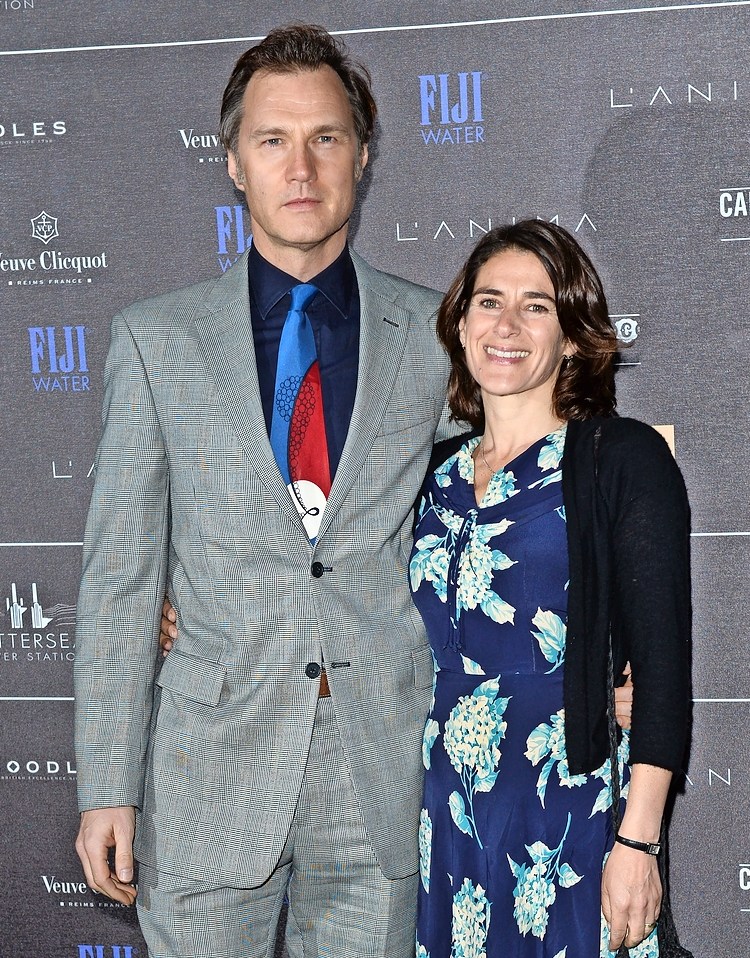
Morrissey with Esther Freud in 2014
GETTY IMAGES
His father’s death started that clock ticking early. “I was very aware of mortality at a very early age, and I’ve been marking off the years since I was 12,” he admits. “It’s like I’ve been living on borrowed time all my life. And being an actor means I spend a lot of time looking in the mirror. Imagine every morning you go to work and the first thing you do is sit in front of a mirror for ages, staring at your face. It’s a little too much awareness, trust me.”
He doesn’t look like a grandfather, I tell him. He’s in good shape and there’s barely a wrinkle on his skin. “It’s an attitude, isn’t it?” he nods. “We are ageing differently. Our diet is different. I don’t smoke, I don’t drink, I look after myself. So we are different to our parents’ generation in that way. I used to run and play five-a-side, but these days I just couldn’t. I do go to the gym — weights and cardio — but you also have to know yourself. I know I get hangry,” he indicates the Pret bag he has brought with him. “And numbers are numbers. You can’t fight them for ever. You can just try to understand them and yourself better.”
I wonder if this is why his roles have always explored masculinity. Whether it’s Gordon Brown wrestling with friendship and ambition in The Deal, the suspicious husband DCS Ian St Clair in Sherwood or hapless Malcolm in Daddy Issues, the list covers almost all of his career.
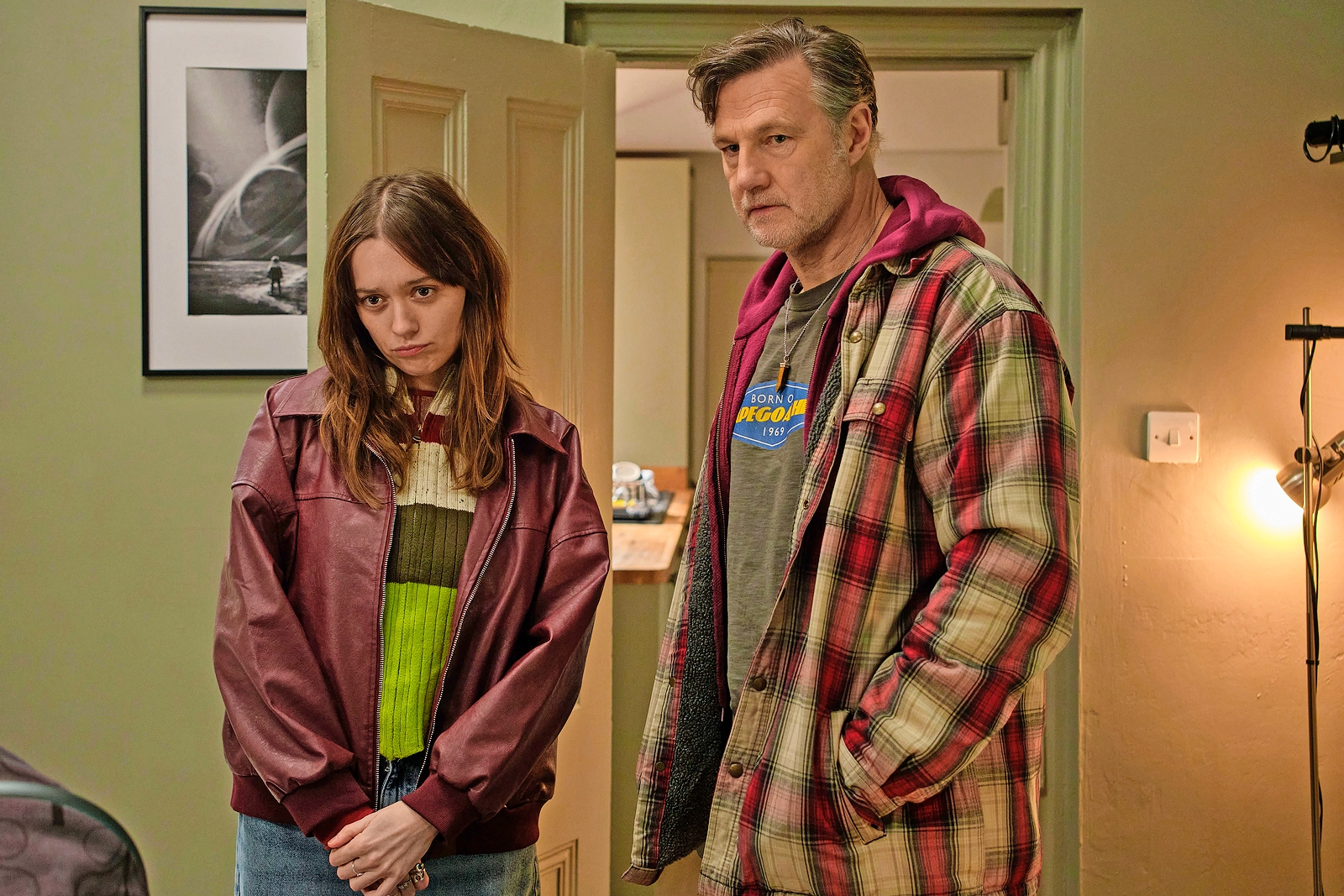
David Morrissey with Aimee Lou Wood in Daddy Issues
“I think any male role [does], though, no?” he says thoughtfully. “I’ll tell you what alarms me about men. I work for a number of charities, and I was at this big fundraising event where I heard Hetti Barkworth-Nanton, the chair of Refuge, give a speech. It just knocked me out. The huge majority of domestic abuse is men against women. Of course there are some exceptions to that, but it’s a male problem.”
He has since become an ambassador for the charity, which provides safe houses and a helpline for women and children and leads national campaigns. He seems so passionate, I wonder if he has seen domestic abuse in his own life. There’s a pause.
• David Morrissey on Sherwood: It was a volatile situation. I dug in
“I’ve seen it, it’s affected friends and family of mine, but it’s a little difficult for me to talk about that,” he says carefully. “I grew up in streets where you knew it was going on behind closed doors, and no one said anything. There was always some sort of excuse — substance abuse or alcoholism — but the anger, the desire to let loose on women and girls around you? It’s just disgraceful. It’s not just the physical violence but also that coercive bullying, isolating someone from their friends and family, controlling them. On average, one woman is killed by an abusive partner or ex every five days in England and Wales. Labour has said it will reduce by half the violence against women and girls over the next decade. It’s done nothing in the first year. It needs to act now.”
He worries about his grandson growing up in the online world of Andrew Tate, incels and cyber abuse, but adds: “I don’t want to quote Will Smith, but he did say something that was quite wonderful. He said, the internet hasn’t increased racism, the internet has just shown you how prevalent it is. Our job now in 2025 has to be to hold people accountable.”
He looks back at his younger self, the boy who’d lost his male role model and invested his self-worth in his work, and wishes he could tell him things would be OK. “I had real tunnel vision about what I wanted and how I was going to get it, and sometimes people got hurt in that,” he says regretfully. “I wish I’d spent a bit more time with my mum before she died, things like that. But then I’ve always loved learning and hated being taught, so I’d just tell myself to sod off.”
What he is grateful for is that that young man was taken seriously. “Growing up in Liverpool then, you felt you were at the centre of the universe,” he explains. “The Beatles weren’t celebrated by the city council like they are today. I had things like Echo and the Bunnymen, China Crisis, OMD, Pete Wylie, and in the theatre Willy Russell and Alan Bleasdale, and I was best mates with Ian Hart and I knew Paul McGann — stuff like that. Anything seemed possible. The people you’d see on Top of the Pops on a Thursday would be in the pub on Friday. When I said I wanted to be an actor to my friends and family, nobody laughed at me. They only said, why not be in a band?”
David Morrissey’s perfect weekend
Lark or owl? Nowadays I get up earlyish, and I’m early to my bed.
Green juice or fry-up? Green juice. If you’re worried about mortality that’s the wise choice.
What’s on your screensaver? My grandchild.
What was your last Google search? Wordle.
I couldn’t get through the weekend without… I can get through the weekends without Strictly because it’s not always on air, but I love watching it.
David Morrissey is an ambassador for Refuge and is supporting its fundraising prize draw with Omaze, which is helping to provide safe homes for women and children escaping abuse. To enter, visit omaze.co.uk by November 23