
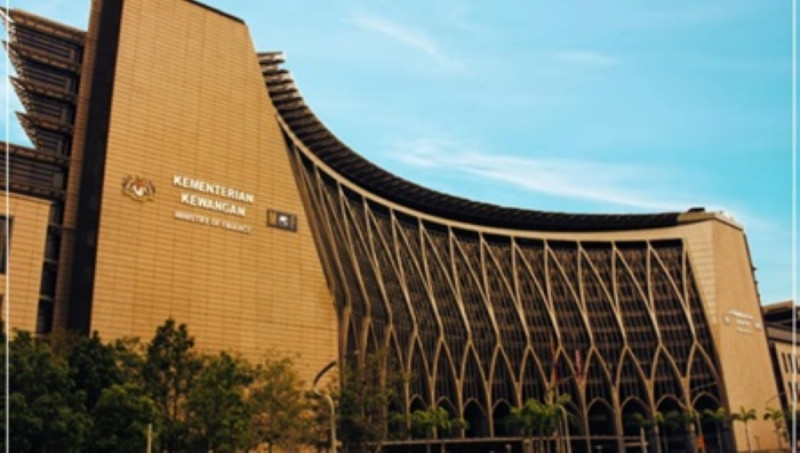
THE Ministry of Finance (MOF), in a statement on Saturday, said the performance highlights the resilience of the nation’s economy, buoyed by robust domestic demand even as external pressures and global uncertainties continue to persist.
The Ministry of Finance noted that domestic demand was the primary driver of growth, increasing by 5.8% in Q3, although slightly down from the 7% growth seen in Q2.
Household spending, supported by a favourable labour market and controlled inflation, played a critical role in sustaining the economy.
Additionally, government social assistance programs, including the Sumbangan Tunai Rahmah (STR) and Sumbangan Asas Rahmah (SARA), helped to further stimulate consumer expenditure.
“Malaysia’s strong quarterly performance places us firmly on track to achieve the higher end of our 2025 growth target of 4.0% to 4.8%.
With resilient domestic demand, a stable labour market, and continued investments in high-growth, high-value sectors, we are building a solid foundation for sustained economic momentum throughout the remainder of the year,” said Prime Minister and Finance Minister, Datuk Seri Anwar Ibrahim.
From a supply-side perspective, the services sector grew by 5.0%, while the manufacturing sector expanded by 4.1%.
The mining sector saw a significant recovery, registering a 9.7% increase. Within services, the food and beverages, accommodation, and transportation subsectors saw particularly strong growth, while the manufacturing sector remained stable, driven by both export and domestic demand. The mining sector’s recovery was largely attributed to increased production of natural gas and crude oil.
The Ministry also reported significant improvements in several key economic indicators.
Total employment grew by 3.1%, reaching 17.0 million people, with the unemployment rate holding steady at 3%. Inflation remained at 1.3%, unchanged from the previous quarter.
Manufacturing sales rose by 3.5% to RM500.1 billion, with notable growth in the food, beverages, and tobacco sectors.
The Industrial Production Index (IPI) increased by 4.9%, while total trade expanded by 3.7%, with a trade surplus of RM50.3 billion.
Foreign direct investment continued to grow, reaching RM8.5 billion, and the ringgit remained stable at RM4.2070 against the US dollar.
Looking ahead, the Ministry of Finance emphasised the government’s commitment to advancing the Ekonomi MADANI framework, which aims to foster economic growth through structural and fiscal reforms, improve productivity, and enhance competitiveness.
Efforts will also focus on promoting digitalisation and high-quality investments. The government aims to reduce the fiscal deficit to 3.8% of GDP in 2025 and 3.5% in 2026.
The Thirteenth Malaysia Plan, along with the Fourth MADANI Budget, will continue to guide Malaysia’s economic trajectory and ensure the benefits of growth are broadly shared across society. -November 15, 2025