
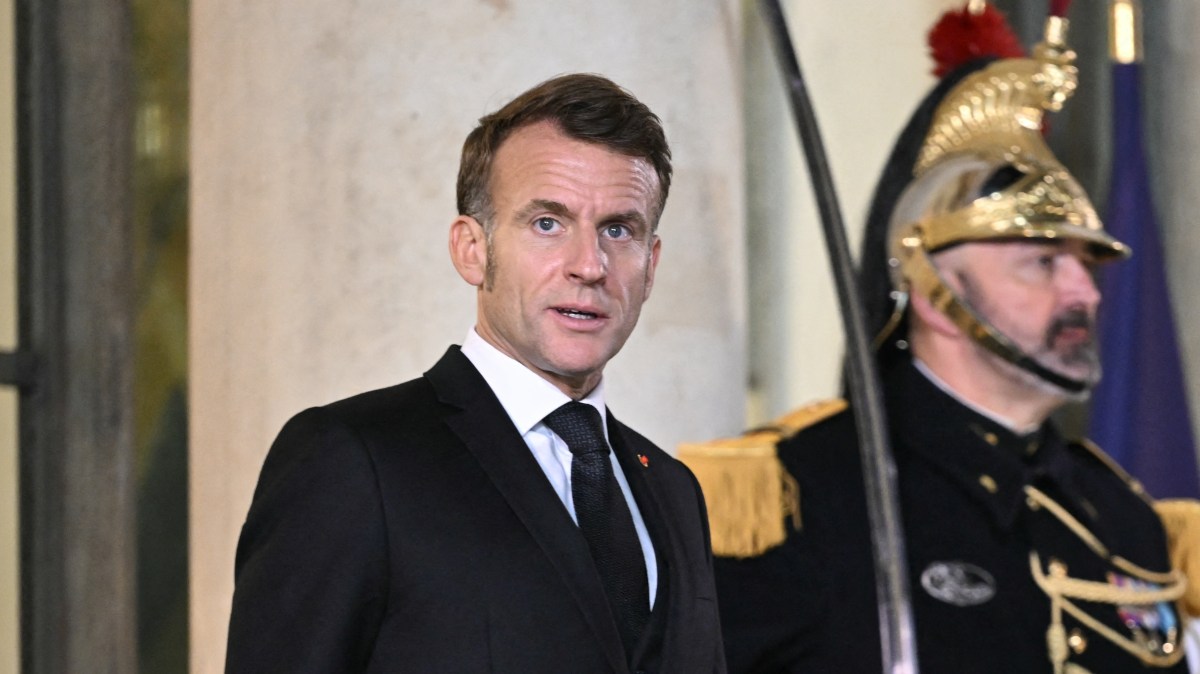
In many areas where President Macron had hoped to show leadership, France has suffered setbacks
BERTRAND GUAY/AFP/GETTY IMAGES
The vote by France’s national assembly to suspend the controversial law raising the retirement age from 62 to 64 turns to ashes virtually the only substantial achievement of Emmanuel Macron’s second term in office. It underlines the fantasy world in which many of France’s legislators are living and will make it all but impossible for Sébastien Lecornu, the hapless prime minister, to pass a budget that has any hope of quelling nervous financial markets or cutting a huge budget deficit.
Mr Lecornu had himself proposed the suspension last month as a last-ditch measure to ensure his government’s survival. It may buy him some time and was supported by Marine Le Pen’s right-wing National Rally as well as the Socialists and Greens, who refuse to contemplate any cuts in France’s generous — and increasingly unaffordable — social benefits. The measure, with the loss of tax revenue, will cost billions by 2027. The European Commission, horrified by France’s inability to rein in spending, has called for other steps to find the money. But the credit rating agencies are less sanguine and have swiftly downgraded France’s outlook from “stable” to “negative”.
The measure leaves President Macron high and dry. Blamed by all sides for the impasse by calling parliamentary elections that were neither necessary nor able to bolster his centrist supporters, the president now appears to be the lamest of lame ducks. Refusing calls to resign, which would undermine the whole structure of Charles de Gaulle’s Fifth Republic, he insists he will limp on until his term ends in 2027. But his unpopularity, already equal to that of François Hollande at his nadir, reflects the bitter disappointment of France’s middle class, who enthusiastically backed the former economics minister and saw in him an example of a modern, technocratic, entrepreneurial figure. Instead he is now seen as haughty and regal, and has a style that does nothing to bring together France’s deeply polarised society.
His weakness at home inevitably diminishes his standing overseas. In many areas where Mr Macron had hoped to show leadership, France has suffered setbacks. His doctrine of Europe’s strategic autonomy has been strengthened by Russia’s attack on Ukraine, and especially by the Trump administration’s prevarication in regard to Nato. But while now championing a tough European defence of Ukraine, France has itself been unable to find the weapons or opportunity to make much difference. Mr Macron has also not been able to count on solidarity with Germany as a treaty partner, as his high-flown manner has alienated successive more pragmatic German chancellors, looking for concrete results rather than political philosophy.
Things have also not gone France’s way in Africa, long a key area of influence. French troops and advisers have been expelled across the Sahel. France’s championing of the environment, following the Paris agreement, has been muted, overtaken by disillusion in many richer countries.
Mr Macron must now hope that Mr Lecornu, his fifth prime minister in two years, can make some headway in passing the budget. That should reassure French business and alleviate the sense of drift and division gripping the electorate. But it is a long way from the heady days of En Marche! when a fresh Mr Macron urged France to go forward. Like Napoleon on Saint Helena, today’s Macron is an immobilised and isolated figure.