
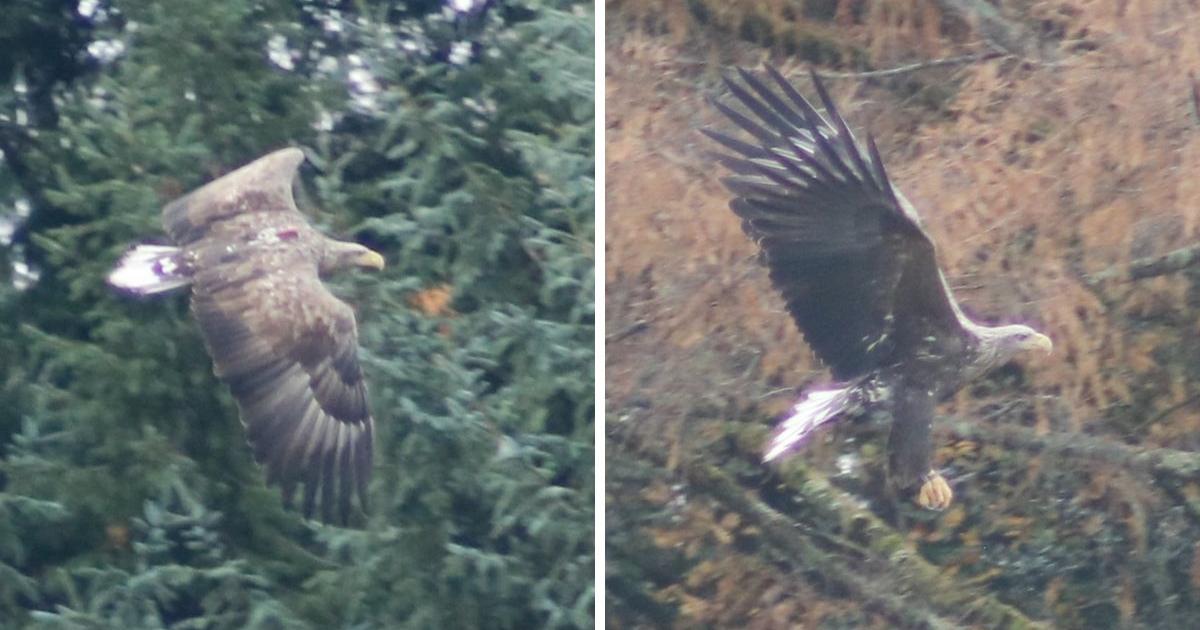
Henry Sharkey said he spotted two white-tailed eagles, also known as sea eagles, at Ardingly Reservoir in West Sussex, north of Haywards Heath.
The large birds were seen by Henry on Thursday November 13, just two days after a white-tailed eagle was photographed in Ashdown Forest.
A white-tailed eagle was spotted in Ardingly Reservoir (Image: Henry Sharkey)
White-tailed eagles are Britain’s largest birds of prey and were once widespread across England, until persecution by humans wiped out the entire population by 1780.
Also known as sea eagles, they are now being returned through a ground-breaking conservation project led by Forestry England and the Roy Dennis Wildlife Foundation.
The project is reintroducing white-tailed eagles across southern England, returning a lost species that can offer wide-ranging benefits to nature, landscapes and people.
A white-tailed eagle was spotted in Ardingly Reservoir (Image: Henry Sharkey)
The project team released 37 birds on the Isle of Wight in 2019, under licence from Natural England, with the long-term aim of establishing an initial six to eight breeding pairs along the south coast of England.
All juvenile eagles are collected from wild nests in Scotland, under licence from NatureScot, and then translocated to the Isle of Wight and reared in special aviaries before being released.
As of August 2025, 45 young white-tailed eagles have been released by the project, and several pairs of birds have established territories in the south of England.
In 2023 a chick hatched at an undisclosed nest site in Sussex for the first in England since the eighteenth century.
A further two chicks were born in the summer of 2024, and in the summer of 2025 pairs in Sussex and Dorset both bred, bringing the total number of white-tailed eagles born in the wild to six.