
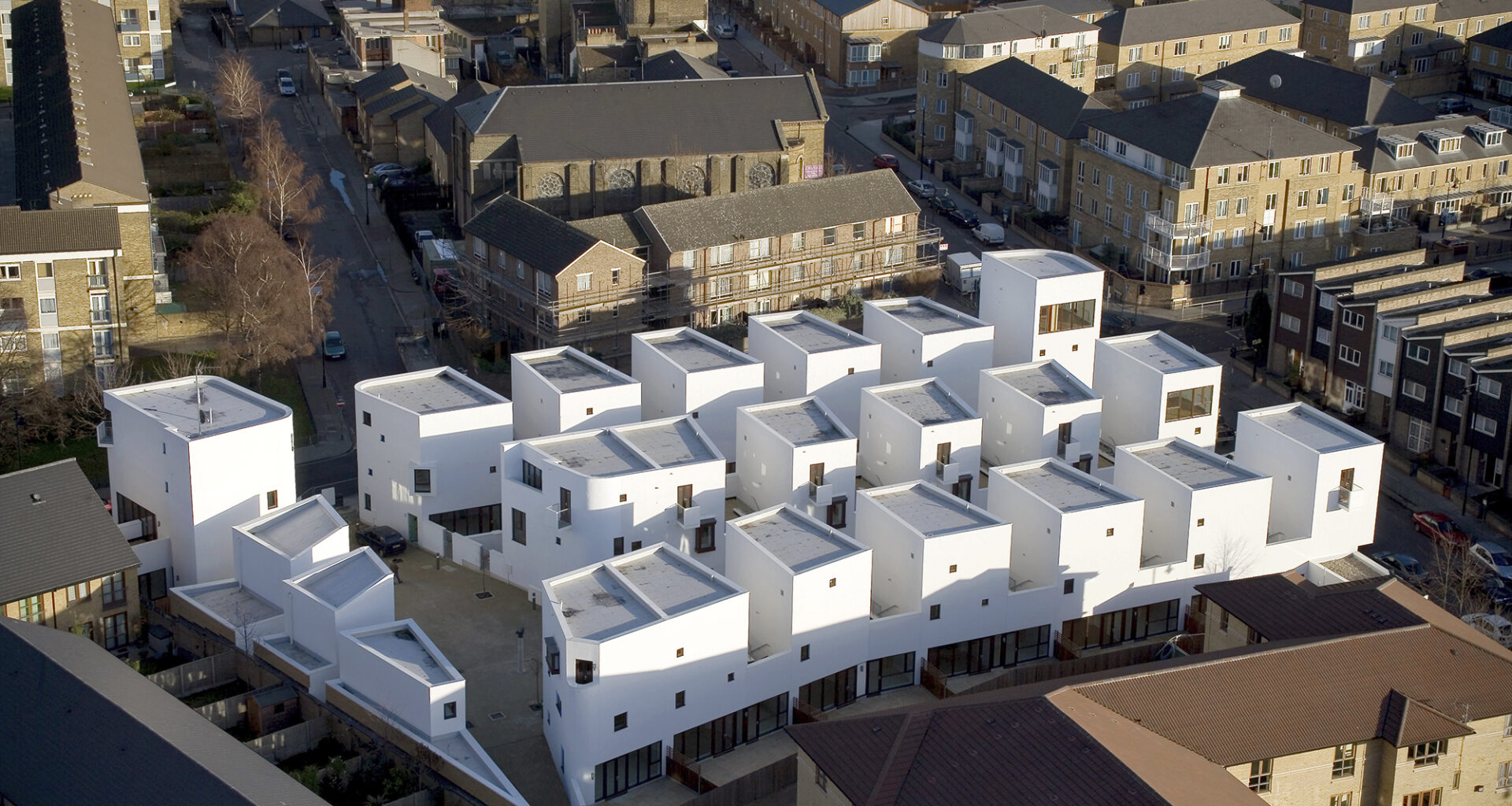
The 2006 housing scheme was widely lauded at the time of its completion, winning an RIBA National Award and making the Stirling Prize longlist.
Barber and the Twentieth Century Society are among those to have voiced fears about plans by the UK’s largest housing association, Clarion, to alter the low-rise, high-density buildings.
Peter Barber Architects said it was ‘really worried’ by a proposal, submitted to Tower Hamlets Council, to replace stained timber double-glazed windows with uPVC ones.
It added: ‘Additionally, we’re extremely concerned that the plan to overclad the dozens of timber projecting oriel windows, which are the most pronounced feature on every principal façade, would ruin the project.’
Peter Barber himself wrote on X: ‘Oh noooooooo plans to replace timber stained double glazed with nasty UPVC faked up ones. Pray Tower Hamlets refuse the application.’
Speaking to the AJ this week, Barber said: ‘Originally the clients and Tower Hamlets planners went out on a real limb to make [Donnybrook] happen. It would be a real shame if the new regime at Tower Hamlets does not have the same kind of ambition.’
‘This change would have a devastating effect on the appearance of the estate’
The Twentieth Century Society has urged the council to refuse consent for the uPVC windows and called for Clarion to ‘rethink’ its approach.
Writing in the AJ today, its director, Catherine Croft, says: ‘Not only is uPVC hugely damaging in environmental terms, this change would have a devastating effect on the appearance of the estate.
‘Donnybrook with uPVC windows would cease to be an exemplar of good housing practice.
‘Instead, it would become an indictment of poor social housing management and a demonstration of just how fundamentally damaging and depressing ill-considered changes to estates can be.’
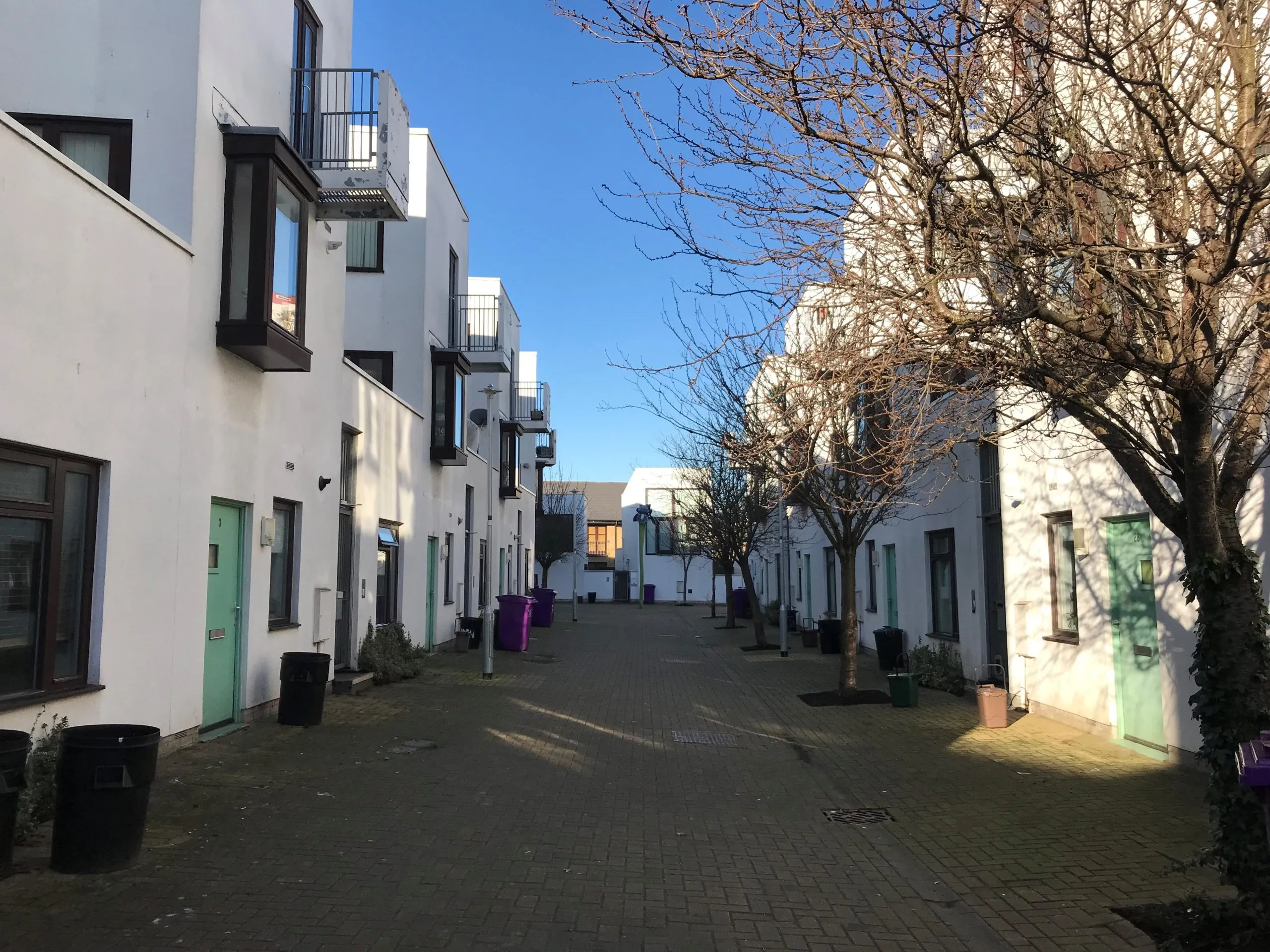
Jane Hay, chair of local residents group Roman Road Bow Neighbourhood Forum, described Donnybrook Quarter as ‘a very important example of urban affordable housing developments, in its own way famous and influential, and one which Tower Hamlets should be very proud of’.
She added: ‘The proposal to replace all the timber frames with uVPC would alter the whole character of the build to the estate’s detriment, as well as compromising the “breathability” of these units to the disadvantage of the residents.’
Hay said the group was also calling on the council to urgently consider putting a building preservation notice in place and to make a listed building application to Historic England. Hay said this would give a six-month ‘stay-of-execution’.
She added: ‘We urge all officers and councillors to resist this application. Bow East residents deserve high-quality housing, and that which is already in place to be protected for future generations.’
Residents at the development have offered differing opinions on the plans. One posted to Barber, thanking him for supporting the residents.
But, another responded to Barber on X, saying: ‘Honestly love your work on this. But it was poorly built, the insulation and soundproofing is quite bad, especially in winter. We’ve condensation and some of us have got mould on their walls. It’s a necessity for those who live there like me.’
In a statement, a Clarion Housing spokesperson said: ‘We understand and appreciate the concerns that have been raised.
‘We place a high value on the architectural legacy of our estates and the contribution that architects and planners have made over many years to creating high-quality homes and neighbourhoods. Preserving the overall look and feel of the neighbourhood is important to us, and we always seek replacement elements that reflect and respect the original design intent.
‘When making decisions about the maintenance and replacement of building components in our homes, our priority is always to secure the best outcomes for residents and ensure the long-term sustainability of the property.
‘Any materials we install are selected for their suitability for both residents and the building, and all works comply fully with current regulations and industry standards.’
The statement added: ‘The replacement design maintains the established proportions and character of the buildings, with materials and finishes chosen to complement the existing appearance and support the wider architectural identity of the development.
‘We will continue to engage with all stakeholders as the planning process progresses with the local council.’