

For years, the locals thought there were a few dozen wallabies roaming free on the Isle of Man.
Then the Wildlife Trust dispatched surveillance drones equipped with thermal cameras to track them:
In Ballaugh Curragh, an area of wetland in the northwest of the island, dozens were seen in clusters. Each pink dot below represents a group of wallabies, labelled with the number in each group:
The total count for the Isle of Man leapt to as many as 1,200 — and the population is still growing.
For a small island in the Irish Sea, that is a lot of marsupials. The red-necked wallaby, a medium-sized cousin of the kangaroo, is not a native creature.
It was introduced in the 1960s when a Manx wildlife park’s enclosures proved less than secure. The animals did what wallabies do best: hopped off.
They have since colonised a significant portion of the north of the island, thriving in its mild climate and scrubby vegetation.
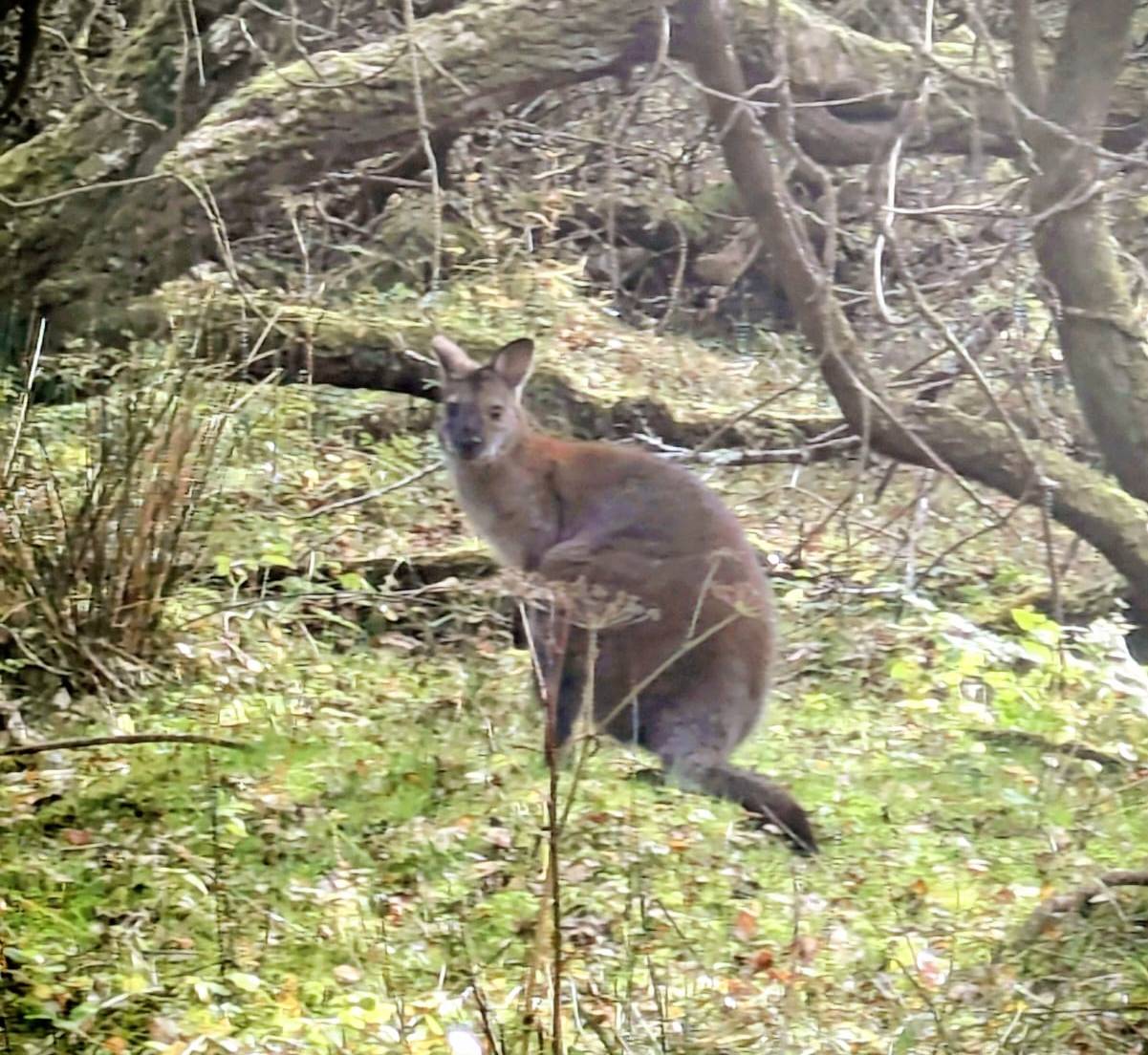
As a result, the Isle of Man boasts one of the largest feral wallaby populations outside Australia, the only place they truly belong. A debate is brewing over what, if anything, to do about it.
Some locals still find them charmingly exotic; others less so. Conservationists worry that the animals nibble young saplings, hampering reforestation. Farmers grumble about damaged fences. Naturalists warn that they may disturb ground-nesting birds or spread toxoplasmosis, a parasite carried in their droppings.
Anton Cashen, a landowner, said: “They’re cute until they’re eating your woodland.”
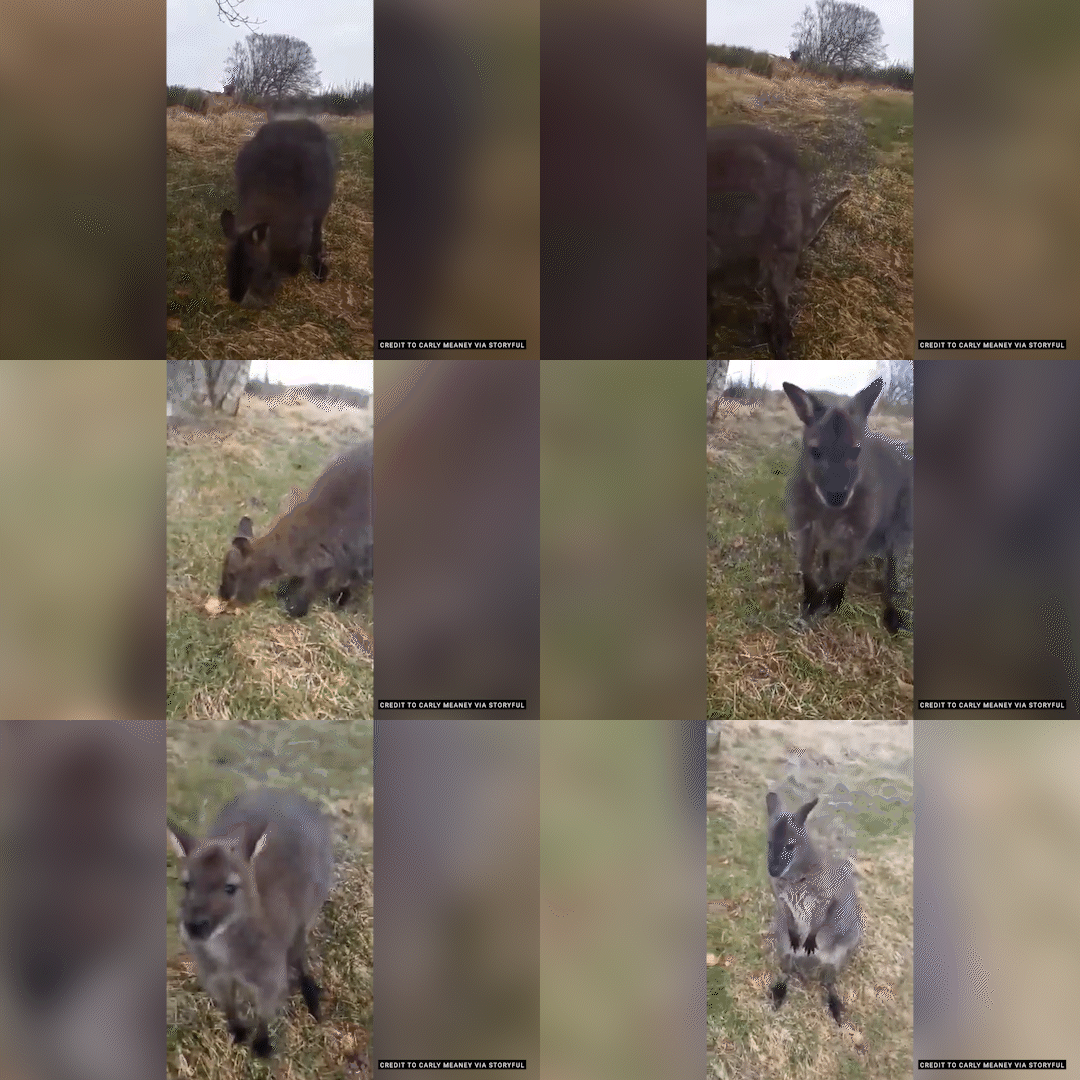
A close encounter in Stirling in 2020
A cull, once unthinkable, now seems a possibility.
The Manx marsupials may be only the beginning. Grey squirrels, muntjac deer and ring-necked parakeets have already slipped beyond control in Britain.
• The mystery of London’s Himalayan parakeets: myths v truth
It is not impossible, say experts, that wallabies will be next.
In the UK, the creatures were once a curiosity limited to the Peak District, where escapees from a private zoo survived for decades.
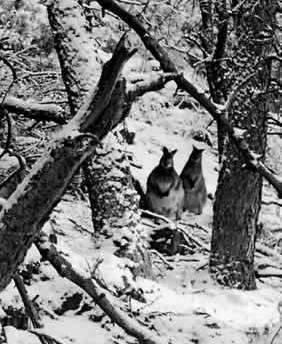
A Peak District sighting in the snow in 1962 and, below, in 1975
DAVID SIDDONS
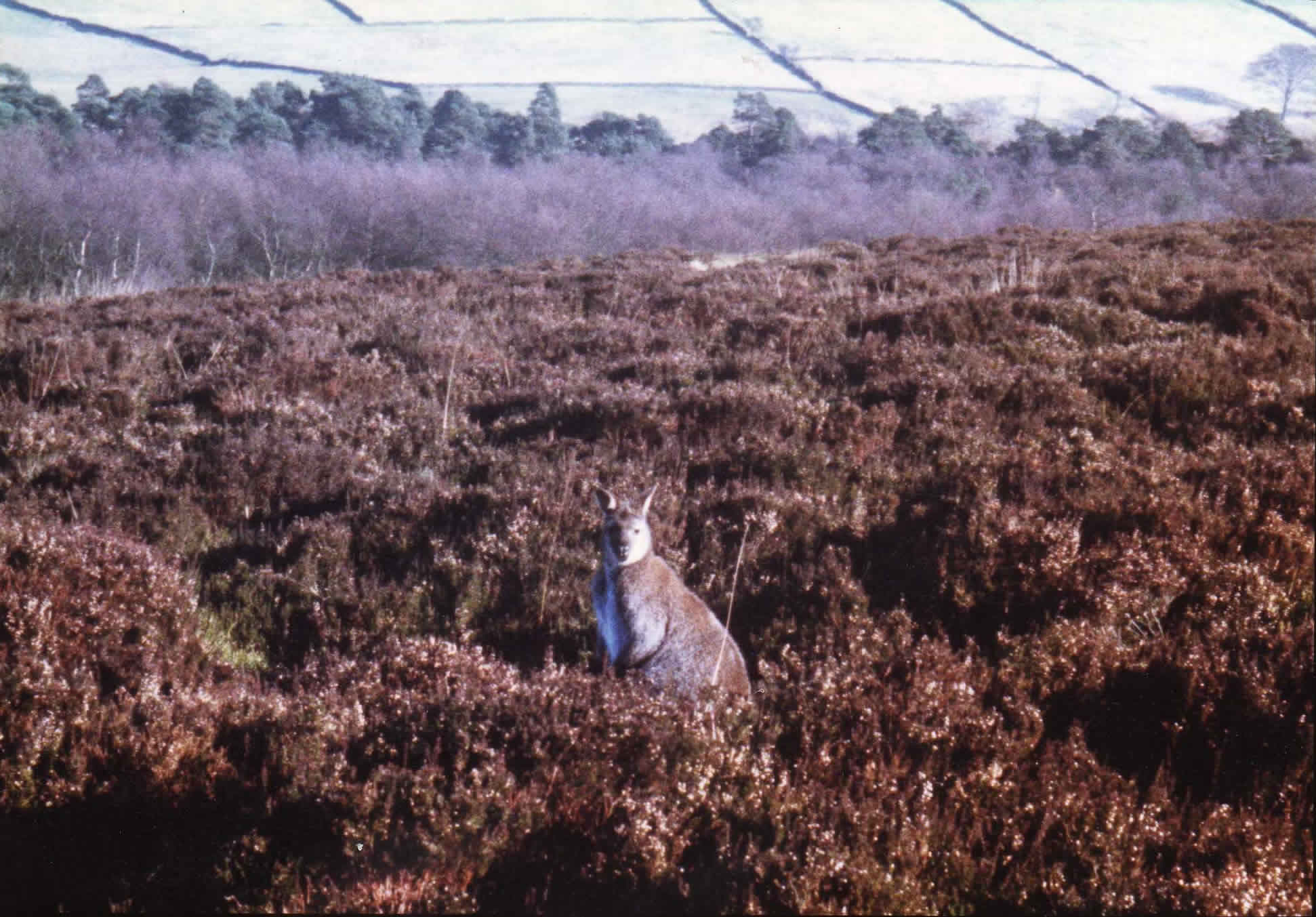
That population appears to have succumbed to the harsh winter of 2010.
Yet wallaby sightings have not ceased: they have merely moved south. The most recent verified data indicates clusters in the Chiltern Hills, Cornwall and Wiltshire, and further reports from Cumbria, Yorkshire, Northumberland, Lancashire and north Wales down to Kent, Suffolk, Cambridgeshire, Norfolk, the Thames Valley and the Isle of Wight.
Conservationists have noticed that once one wallaby makes it on to the local news, many more seem to pop up.
Erin McDaid of the Wildlife Trust in Nottinghamshire, where wallabies have been spotted in several areas including Sherwood Forest, said: “It seems highly likely that there are more wallabies out there than we ever suspected.”
Many locals, he added, have stopped bothering to report sightings — they have become too commonplace to cause a stir.
Anthony Caravaggi, an ecologist who has spent years piecing together UK wallaby records, explains that he began the work “out of curiosity more than anything” when reports were “cropping up around the place”. He wondered whether there was more to it than the odd zoo escapee. His conclusion? There must be.
“We have observations of mothers with joeys in the pouch,” he said. “It appears that we have, in the UK, viable, free-living populations.” His data suggest clusters of breeding groups, not just lonely strays.
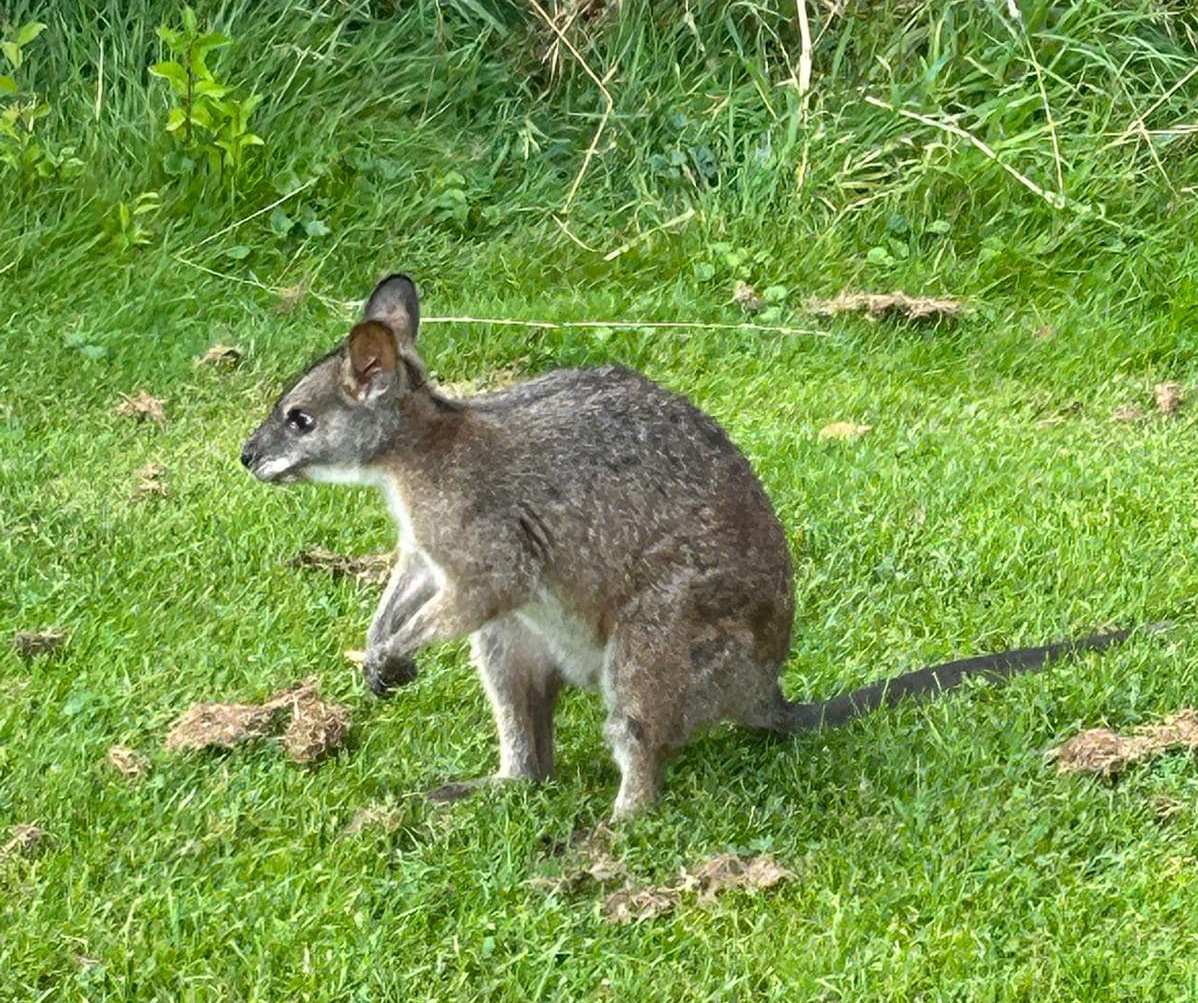
A wallaby at Oakmere Golf Club in Nottinghamshire last year
OAKMERE GOLF CLUB
In the Chiltern Hills, for instance, wallabies cover far more ground than any single animal could manage. Between 2013 and 2017, 11 sightings were recorded across an area of 340 square kilometres, far larger than the typical home range of an individual wallaby in Australia, which is less than one square kilometre.
That suggests several individuals, rather than a lone wanderer.
A similar pattern was seen in Cornwall, where several summer sightings in 2017 were reported as the same animal, even though some occurred 45km apart.
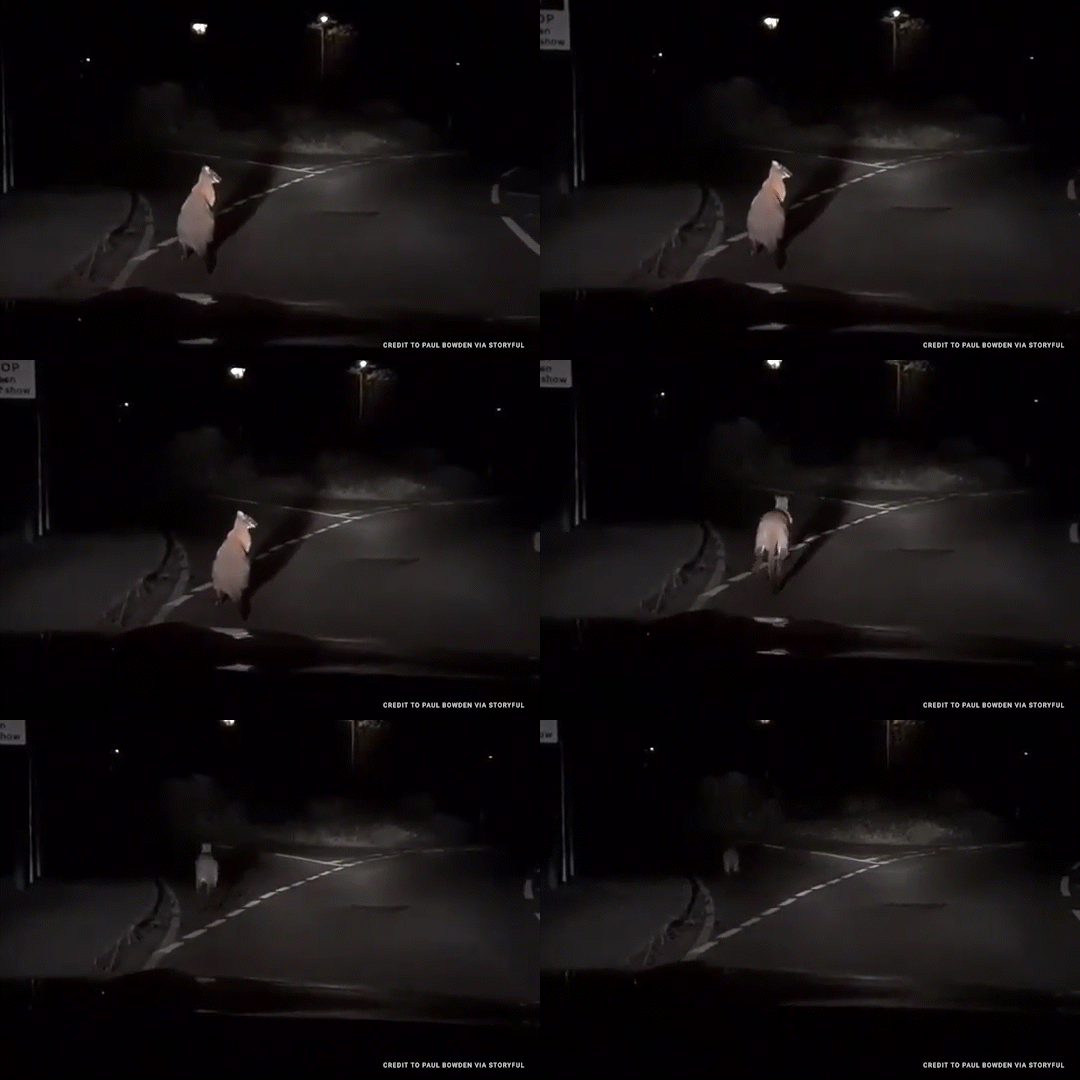
Crossing the road in St Blazey, Cornwall, in 2020
Caravaggi noted that our winters are becoming milder. The countryside suits the animals, too.
“There’s a lot of scrub and bush for them to feed on, plenty of room and few predators,” he said. They have been seen wandering into gardens and on urban fringes.
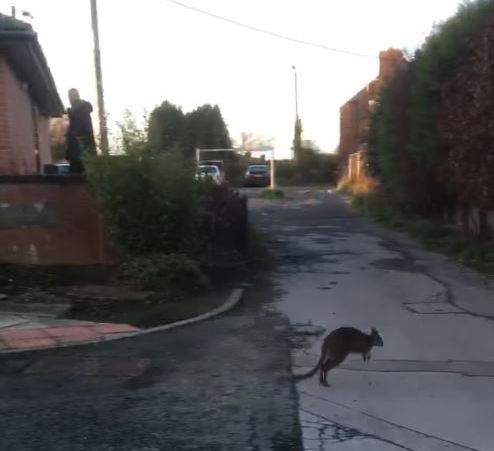
Venturing down a street in Evenwood, Co Durham, in 2020
“The potential for wallabies to spread rapidly is certainly there,” he added.
Private collections ensure a steady supply of potential pioneers. Wallabies are kept in zoos, petting farms and even as living lawnmowers, instead of sheep, on smallholdings.
“The potential for escapes is quite substantial,” Caravaggi said, and each breakout may add a little more genetic diversity to a burgeoning marsupial diaspora.
Does it matter? For now, Britain’s rogue wallabies may seem harmless. But Caravaggi issued a warning: by the time there is clear proof that they have become a problem, a remedy may be impossible.
“Once a non-native population becomes established, it becomes extremely expensive and extremely difficult, if not impossible, to exert any meaningful control,” he said.
The cautionary examples of grey squirrels, muntjac deer and ring-necked parakeets speak for themselves. “By the time you’ve accrued the evidence it may be too late,” he added.
Whether Britain is on the verge of a wallaby boom remains uncertain. Much of the evidence comes from citizen sightings, social media posts and the occasional blurry photograph. But a pattern may be emerging: where conditions are mild, space abundant and predators scarce, wallabies can thrive.
A few decades on, will Britons look back on these early reports the way their grandparents spoke of the first grey squirrels: amusing at first, and then everywhere?
As the Isle of Man has learnt, these cute creatures have a habit of multiplying when no one is watching.