
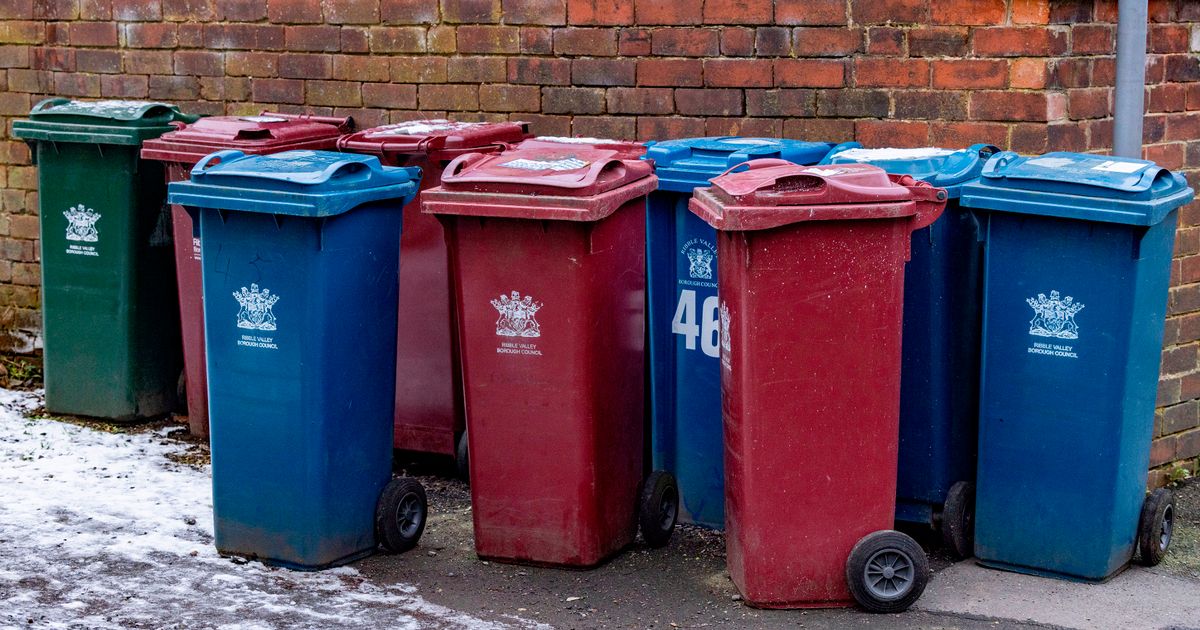
The new plan will see households have at least four waste containers and change the way it works for every home in England
06:00, 20 Nov 2025Updated 08:09, 20 Nov 2025
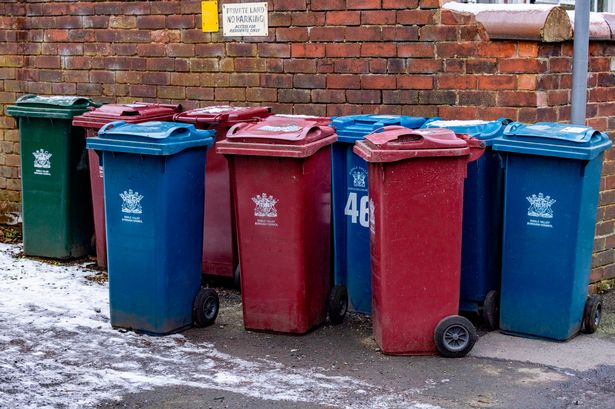 A big change which will come into play as early as March next year will see English households have a minimum of 4 bins(Image: James Maloney/Lancs Live)
All homes in the UK are set to undergo a massive change to their recycling and bin collections next year. And this week the Department for Environment, Food and Rural Affairs gave an update after a question was asked – wondering if many people know about the huge plan.
Under the scheme recycling in England is to be standardised from 2026, with all homes, businesses and schools recycling the same materials, the Government has said. There will also be a once-a-week minimum requirement for the collection of food waste, which the Government said would reduce the amount going to landfill.
The Simpler Recycling plan is also proposing that residual, meaning non-hazardous industrial waste should be collected every fortnight, though local authorities are concerned this would result in higher environmental costs elsewhere, such as through more fuel being burnt in transportation.
In a parliamentary question Labour’s Amanda Hack asked the Secretary of State for Environment, Food and Rural Affairs Emma Reynolds: “What discussions her Department has had with PackUK on the adequacy of communications with households on changes to household collections under Simpler Recycling.
Mary Creagh, Parliamentary Under-Secretary (Department for Environment, Food and Rural Affairs), explained that it was down to local councils to get in touch with houses directly. She said: “Local authorities are best placed to communicate specific new collection requirements with their residents when rolling out services. Defra and PackUK are working closely on opportunities to support local authorities with the communication of the changes to household recycling.
“To support local authorities, Defra has provided £79.5 million transitional resource funding for food waste including specific funding for communications. Under Extended Producer Responsibility (EPR) for packaging legislation, producers‘ disposal fees will contribute to the costs of public information campaigns by the scheme.”
The new default requirement for most households and workplaces will be 4 containers for:residual (non-recyclable) wastefood waste (mixed with garden waste if appropriate)paper and cardall other dry recyclable materials (plastic, metal and glass
These may be various container types, including bags, bins or stackable boxes. The document entitled ‘Simpler Recycling in England: policy update’ says: “This is the government’s maximum default requirement and is not expected to increase in the future. However, councils and other waste collectors will still have the flexibility to make the best choices to suit local need. This is a sensible, pragmatic approach to the collection of materials for every household and business in England.”
The scheme aims to make the policies the same around England and end the ‘postcode lottery’ of bin collections in England whereby councils collect different materials for recycling, ‘causing confusion for households’. The changes pledge to ensure ‘bad-smelling food waste’ will be collected from all households ‘at least’ weekly.
Officials hope that the change will improve recycling rates which have plateaued at about 44 per cent since 2015. There is a timeline for the change:
by 31 March 2025, businesses and relevant non-domestic premises in England will need to arrange for the collection of the core recyclable waste streams, with the exception of garden waste (glass, metal, plastic, paper and card, and food waste)micro-firms (businesses with fewer than 10 full-time equivalent employees) will be temporarily exempt from this requirement. They will have until 31 March 2027 to arrange for recycling of core recyclable waste streamsby 31 March 2026, local authorities will be required to collect the core recyclable waste streams from all households in England. This includes introducing weekly food waste collections for most homes, unless a transitional arrangement appliesby 31 March 2027, kerbside plastic film collections from businesses and relevant non-domestic premises, and households will be introducedWhat will happen to different types of waste:
Co-collecting food and garden waste
To maximise flexibility for local authorities and households, the government is introducing an exemption to allow the co-collection of food and garden waste. The document said: “There is no evidence that this would affect their ability to be recycled or composted, since the materials can always be processed through in-vessel composting when mixed.”
Dry Materials
By default, paper and card should be separately collected from all other dry materials so their potential to be recycled is not reduced. 121 local authorities reported that they already collect paper and card separately from other dry recycling across England.
All other dry materials may be co-collected, as the benefit of simplifying (and thereby potential to increase volumes), offsets the smaller contamination risk. According to the latest WRAP data, 95 local councils already co-collect plastic, metal and glass in this way across England.
The document said: “Simpler Recycling will enable consistent, more streamlined collections from all households, businesses and relevant non-domestic premises (such as schools and hospitals). Local authorities and other waste collectors will be able to co-collect some waste streams by default meaning that they will no longer need to collect 7 separate streams.
“These common-sense changes will not lead to the proliferation of bins but will ensure the same set of materials are collected everywhere in England.”