
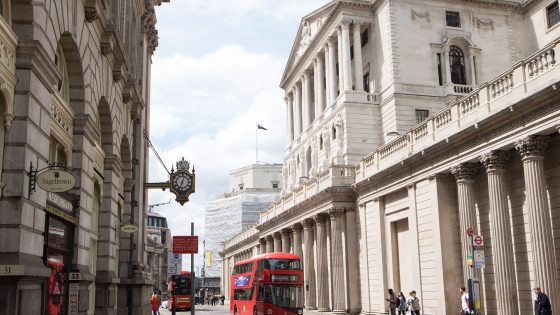
The heritage specialist made the RIBA Stirling Prize shortlist this year for its restoration of Westminster’s Elizabeth Tower. It is working on the Bank of England overhaul with LOM Architecture, AECOM and Arup.
The £7.5 million contract includes architectural design services across all RIBA work stages for the renewal and future-proofing of the bank’s Grade I-listed headquarters in the centre of the City of London.
While the shortlist for the ‘incredibly complex project’ has not been made public, it is understood that Purcell was chosen ahead of Foster + Partners, BDP, Bennetts Associates and Hawkins\Brown.
The project – scheduled to run until September 2029 – is expected to require numerous sensitive interventions within the secure, historically significant building. It includes upgrading existing infrastructure, replacing ‘end-of-life heating, pumping and ventilation systems’, and rethinking the current office layouts to create extra workspace. This will allow the institution to vacate its offices in Moorgate.
The building was originally designed by John Soane and was completed in 1833. It was later significantly redesigned by Herbert Baker in the 1930s. It last underwent major renewal in the 1990s.
The Threadneedle Street site occupies a prominent site overlooking the William Tite-designed Royal Exchange and the Mansion House by George Dance the Elder. The bank holds around 400,000 bars of gold, worth over £200 billion, in its underground vaults.
In its original tender brief, the bank said: ‘The supplier will need to adapt to the bank’s chosen delivery model (traditional vs design & build) and deliver at all times recognising the Threadneedle Street building is an operational, historically significant building and a secure environment.
‘The services included in the scope of this procurement include, but are not limited to: design development and coordination, ensuring compliance with regulatory requirements, collaborating with internal and external stakeholders across design disciplines, production of feasibility studies, technical drawings and documentation, and provision of construction oversight.’
Bids for the commission were evaluated 30 per cent on price and 70 per cent on quality, split across project approach and team (28 per cent), design ethos and strategy (24 per cent), and design delivery and practicality (18 per cent).
Purcell has a lengthy track record of working with listing landmarks. Last year the AJ100 practice working with Jamie Fobert Architects was also shortlisted for the Stirling Prize – this time for its revamping of London’s Grade I-listed National Portrait Gallery.
In May, the RIBA brought in Purcell as executive architect for Benedetti Architects’ £58.8 million refurbishment of its London headquarters.
Interview: Vivienne Grafton, executive director of central operations, Bank of England

Vivienne Grafton, executive director of central operations
What made the winning team stand out?
We were delighted with the tender response, with over 20 submissions for what will be an incredibly complex project. Getting down to a single team was a huge challenge as the shortlist brought varying experiences that approached our brief from different perspectives.
Ultimately, the team curated by Purcell brought a blend of all the things that are going to be key to success on this project: awareness of secure facilities, designing for delivery in operation, and contemporary workplace design, all within the envelope of a Grade I-listed building.
They were able to showcase clearly how they intend to work with us, as partners, to fulfil our brief and aspirations, offering up collaborative methodologies for addressing really challenging issues.
They also wrapped all of this in a value-based framework that demonstrated how we would review design proposals for the concrete benefits they bring to the bank and the public.
What do you see as the most challenging aspect of the scheme?
This is an opportunity to breathe new life into a legacy building, not through radical reinvention, but through thoughtful, intelligent transformation.
The Bank of England is more than a financial institution. In London alone, it is a workplace, a site of public engagement through financial literacy campaigns and the Bank of England Museum, and a central part of the City of London’s identity. Our ambition is to support all these functions, and more, within a renewed estate that demonstrates public value, sustainability, and respect for heritage.
However, the bank is a public institution, and the budget must reflect that. We believe this is a compelling challenge – to deliver maximum impact with intelligent restraint.
How much of the plans do you expect to be new-build elements?
The focus is very much on internal refurbishment and adaptive reuse, rather than an extensive new build. The majority of the investment will go into upgrading core infrastructure, replacing end-of-life heating, pumping and ventilation systems, and reimagining existing spaces to support contemporary ways of working. Any new-build elements will be limited and carefully considered, respecting the building’s heritage and planning constraints.
One of the strengths of the winning practice is its provenance when it comes to giving existing structures a new lease of life and relevance for current requirements.
Last year, they also worked with the City of London Corporation to create and publish their Heritage Building Retrofit Toolkit – we want to make sure that we follow the same best practice as we have such an opportunity on a project of this scale.
How much of what is proposed will be visible to the public once complete?
This is a key question we are reviewing at the moment. We hope that we can explore this further with our new design team. We are unsurprisingly a very secure site, but the public are already invited into our free museum, and this work presents an opportunity to build further access.
‘It feels appropriate to engage more with the public’
We are an institution that answers to the people of the United Kingdom through Parliament, so it feels appropriate to strive to engage more with the public where possible.
What is the scale of investment and the approach to ensuring value for money throughout the design process?
We are making a significant investment in the transformation of our Threadneedle Street site, primarily to replace ageing infrastructure – a common challenge with historic assets – and to provide savings for the bank.
This remediation work also presents the opportunity to rethink our workspace and create additional capacity to allow us to leave our office in Moorgate.
Overall, we expect to generate significant savings, allowing the whole programme to pay for itself within just 20 years, while making sure the building can continue to serve us long into the future.
By consolidating our London estate, the bank will reduce long-term costs and ensure resources are used effectively. This is not about grand gestures; it is about doing what is necessary in the most cost-conscious and thoughtful way to secure a future-ready workplace that reflects the bank’s values.
This is not about grand gestures
Every spending decision will be guided by our responsibility to the wider public as well as our colleagues. We’ve already brought expert cost consultants on board to support us with that, ensuring we stay laser-focused on delivering value for money.
What other expertise have you brought in to help deliver such a complex project?
We’ve appointed AECOM as our project manager, Arcadis as our cost consultant and Arup as our engineering expert. We have also curated a very strong client-side team with specialisms across heritage, security, corporate real estate, financial services, workplace design and social psychology.
Such a complex project calls for a multidisciplinary team that brings broad and diverse perspectives. We’re also engaging closely with the bank’s board, known as Court, to ensure robust governance and oversight at every stage.
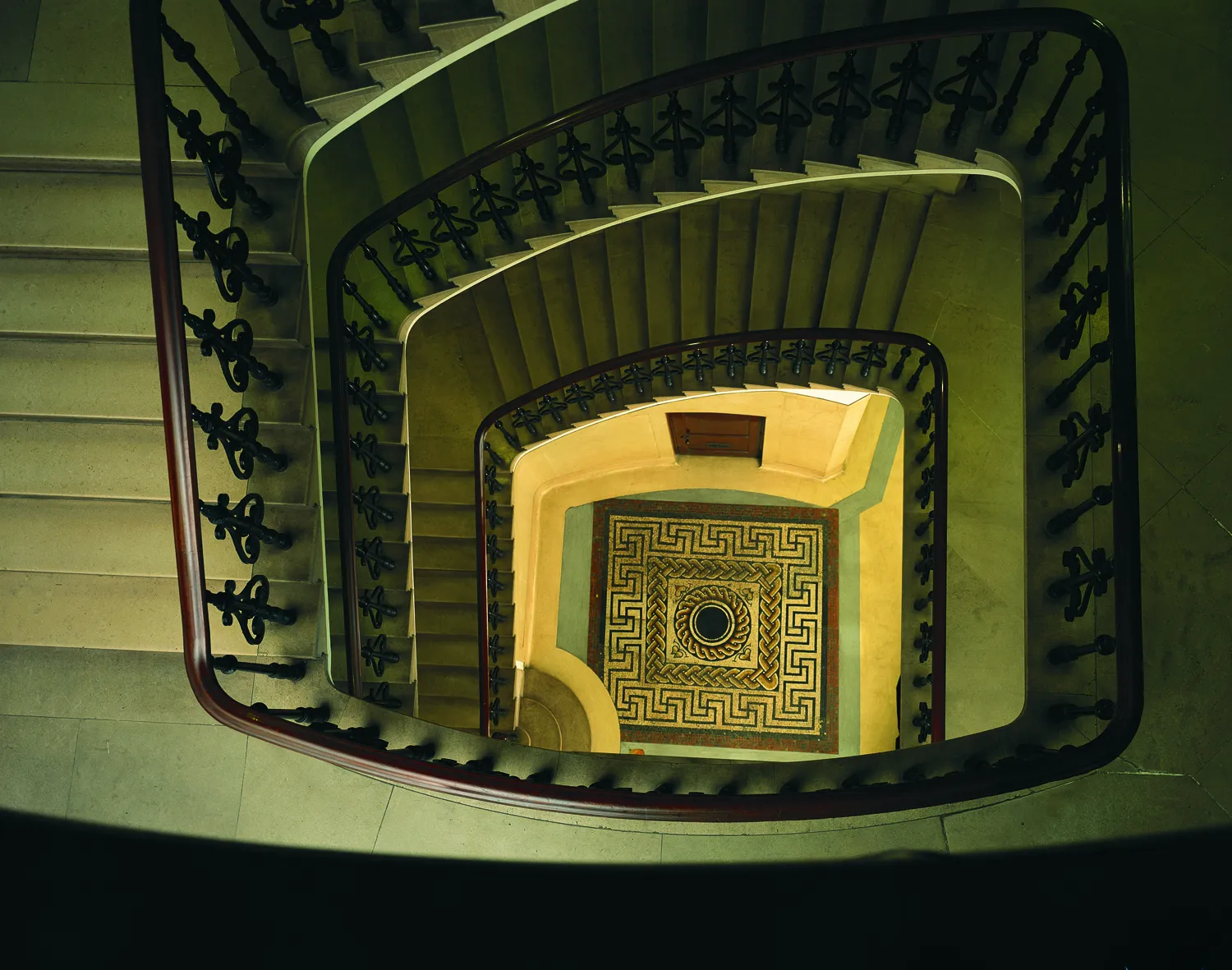
When completed during the Herbert Baker rebuilding of the Threadneedle Street premises (1935-39), the cantilevered staircase in the front hall of the Bank of England was among the longest in Europe.