
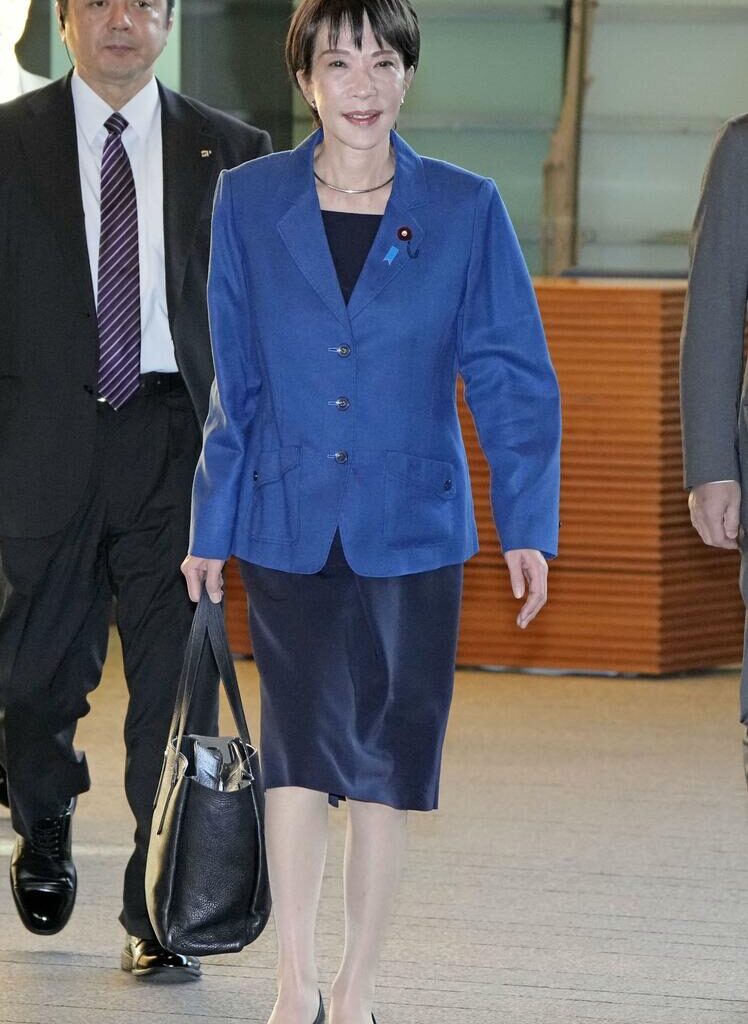
TOKYO – The Japanese government on Friday approved a massive economic package worth around 21.3 trillion yen ($135 billion) to tackle rising living costs, as Prime Minister Sanae Takaichi seeks to spur growth through expansionary fiscal spending.
The first stimulus package under Takaichi, who became prime minister just a month ago, is expected to reach 42.8 trillion yen when combined with spending by local governments and the private sector, well above the 39 trillion yen in measures the previous year.
A series of measures in the package are intended to support the world’s fourth-largest economy amid concern that higher U.S. tariffs will hurt both businesses and ordinary households.
In addition to short-term inflation relief measures, the government also plans to boost investment in areas such as shipbuilding and artificial intelligence, seen as vital for crisis management and national security. Such strategic investments, Takaichi hopes, will also lift the country’s long-term economic growth.
To fund the economic package, the government plans to craft a 17.7 trillion yen supplementary budget for the current fiscal year through March, aiming to enact it before the ongoing Diet session ends in December.
It would exceed the 13.9 trillion yen supplementary budget for the previous fiscal year compiled by Takaichi’s predecessor, Shigeru Ishiba, reflecting her push for aggressive fiscal spending.
Japan’s supplementary budgets have exceeded 10 trillion yen in recent years, far above the several trillion yen typically seen before the COVID-19 pandemic.
But some economists are questioning the efficacy of the latest package, warning that stimulating demand during an inflationary phase could push prices higher and squeeze households.
The prospect of a large-scale stimulus package has prompted a sell-off of the yen and Japanese government bonds in recent days, fueled by market concerns about the country’s deteriorating fiscal health, already the worst among advanced economies with debt over twice the size of the economy.
Specific items include cash handouts of 20,000 yen per child, which would require about 400 billion yen in government funding, as well as rice vouchers or other coupons worth 3,000 yen per person to be distributed by local authorities.
The government will also incorporate into the package the effects of scrapping a provisional gasoline tax and raising the tax-free income threshold as part of efforts to reduce the financial burden on households.
As households face elevated food prices, the central government will set aside 2 trillion yen for subsidies to local governments to enable them to launch their own measures.
The package will also allocate 500 billion yen in subsidies for electricity and gas bills for the first three months of next year, reducing energy costs borne by households by roughly 7,000 yen on average over the period.