
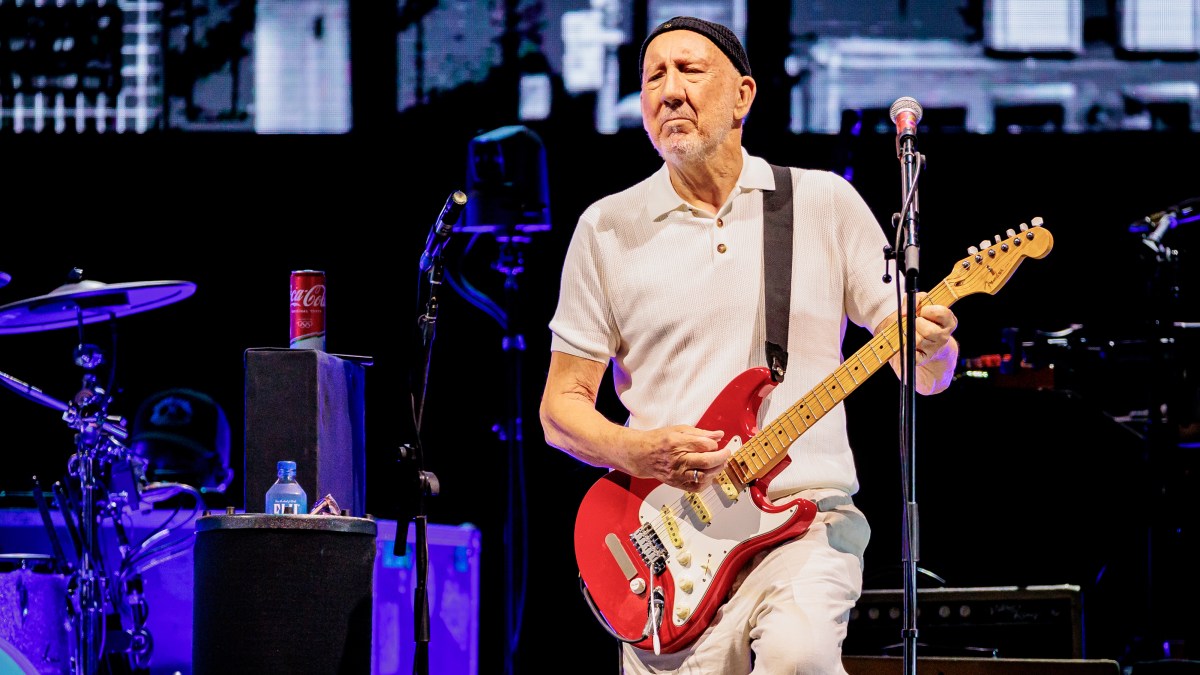
Their creative partnership resulted in some of the finest rock’n’roll of the 20th century but the Who’s Roger Daltrey and Pete Townshend are no strangers to disagreement, even the odd fist fight.
The pair’s latest argument, however, has taken them into the most un-rock’n’roll of topics: artificial intelligence.
Daltrey, the band’s lead vocalist, thinks the technology could destroy music, but Townshend, the guitarist, disagrees and wants to use AI to finish his unreleased work.
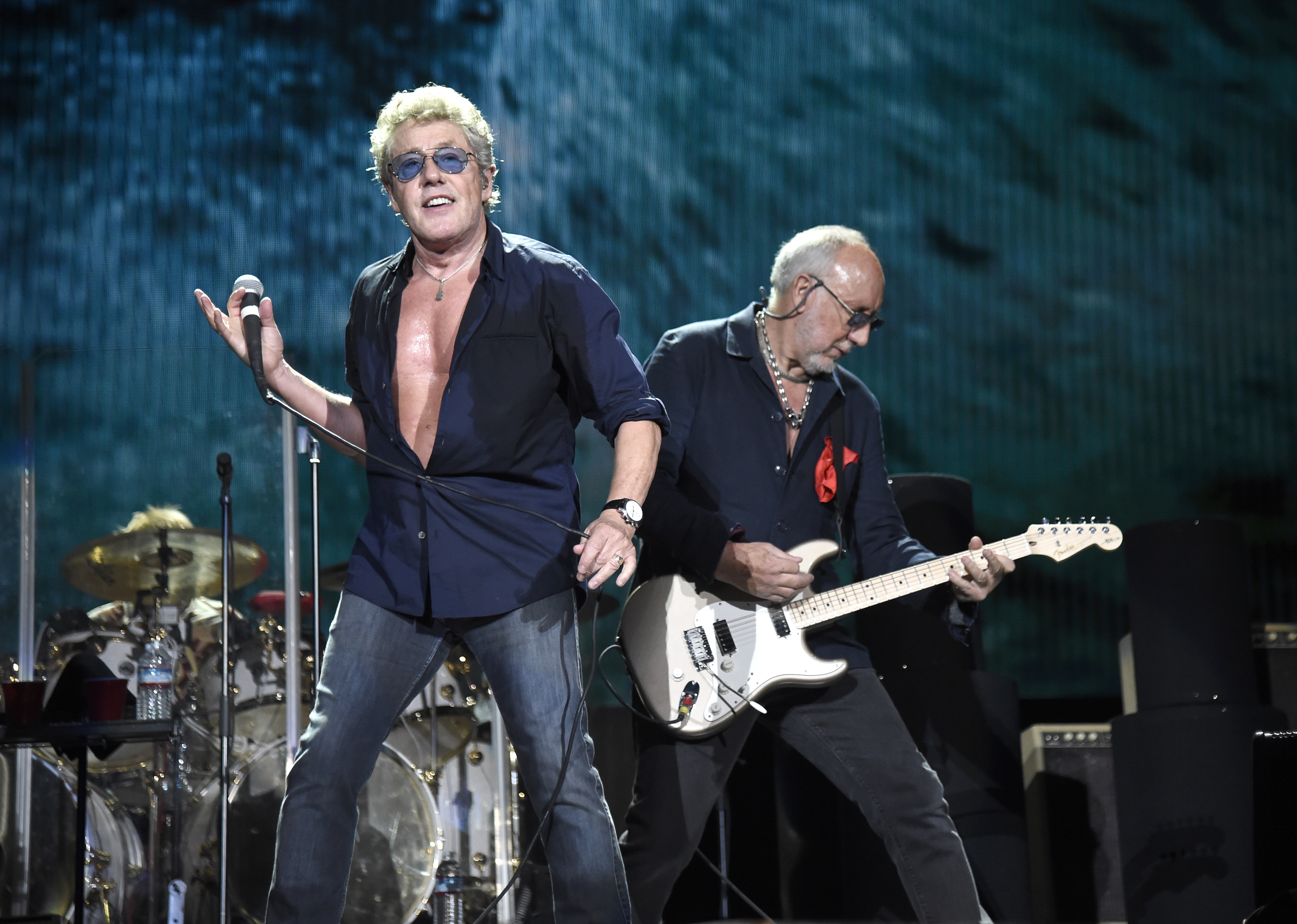
Roger Daltrey and Townshend during the Desert Trip festival at the Empire Polo Club in California in 2016
KEVIN MAZUR/GETTY IMAGES
Townshend, the Who’s main songwriter, last week told Stephen Colbert, the US talk show host, that he has between 350 and 450 pieces of unfinished music lying around and is tempted to put them into the AI platform Suno to see if it can help him generate some hits.
It has prompted several in the music industry to urge him to think twice. Townshend told Colbert that some of the music in his vault is “probably terrible” and he has “only managed to wade through about half of it”.
He added: “I don’t know what to do with it … I’m also quite interested in AI. I’m quite interested in getting some of my old songs that didn’t quite work because I didn’t get them right the first time round and put them up on to Suno or something, some AI music machine, and seeing what it can make of it. It might be some hits.”
Daltrey said earlier this year that AI was “going to destroy the music industry if we’re not careful … music is a different language, and we shouldn’t let AI control that”.
Suno is an AI platform where people can create music by putting in text prompts. It was developed by scraping songs from the internet to develop the software. The company is being sued by the US recording industry for copyright infringement. Suno believes that what it has done is allowed under US law. The start-up said this week it was valued at $2.45 billion after raising $250 million in its latest funding round.
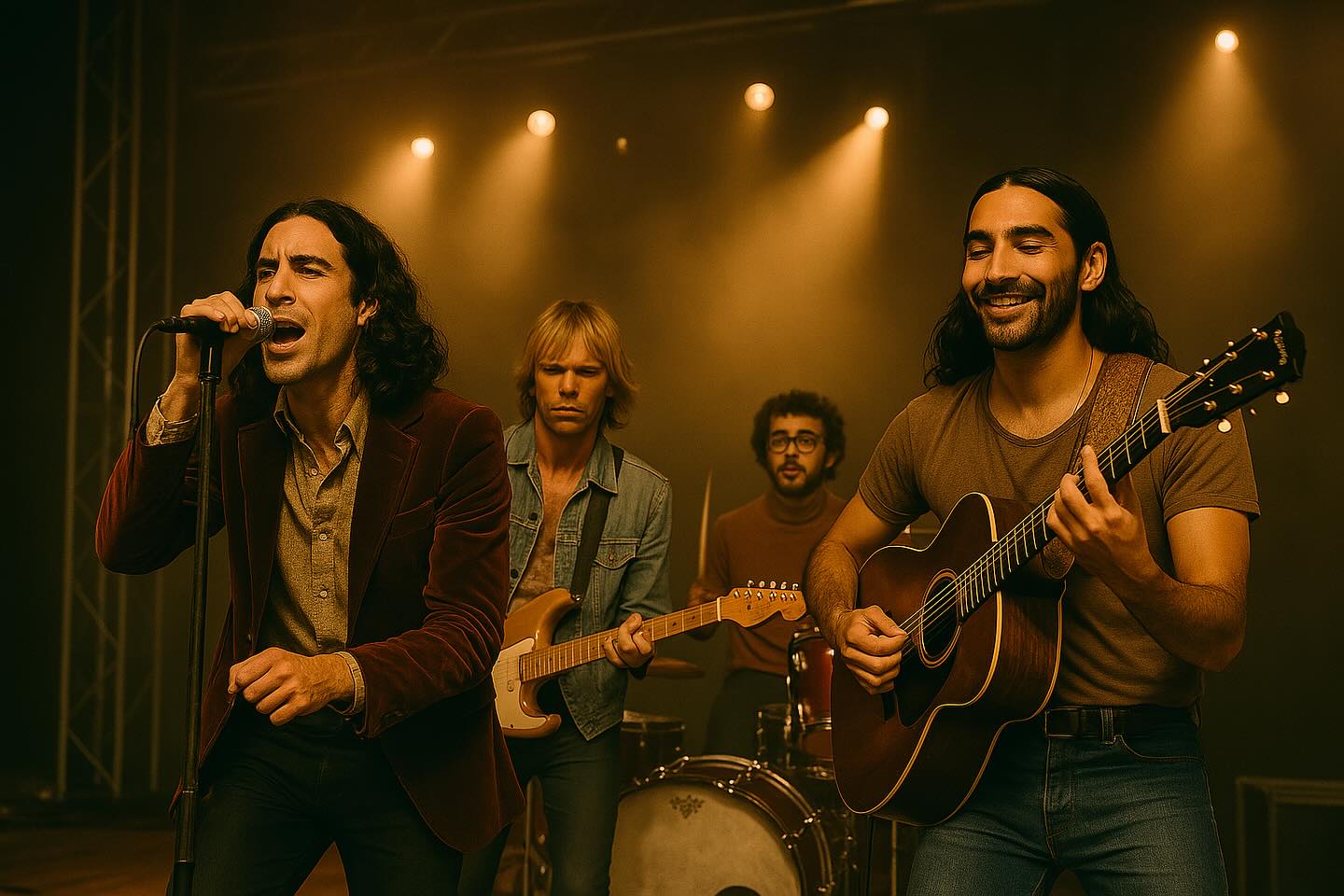
The Velvet Sundown, a band created with artificial intelligence
Ed Newton-Rex, a composer and chief executive of Fairly Trained, a non-profit organisation that certifies AI companies that pay for copyrighted works, said: “Suno is built using other musicians’ work without permission. If Pete Townshend is going to use AI to rework his songs, I’d hope he would use tools that didn’t exploit other musicians’ work in this way.”
Michael Price, an Emmy-winning composer of the soundtracks for Sherlock, Dracula and Unforgotten, also urged Townshend to steer clear of Suno: “At 80, I’m sure Pete Townshend doesn’t need my opinion, but how much better would it be if he hired a new young producer, like Dave Gilmour did with Charlie Andrew, rather than feeding his back catalogue into a meat grinder of plagiarism.”
Gilmour, of Pink Floyd, recently teamed up with Andrew, who worked with the group Alt-J, for a solo album.
Jen Jacobsen, the executive director of the Artist Rights Alliance, a US organisation that advocates for musicians’ rights, said: “Pete Townshend is obviously a legend and amazing, and I think that he should be able to do whatever he wants with his music.”
However, of his potential use of Suno, she added: “It depends on what he’s saying about Suno and how he’s using it. Suno is a platform that, as I understand it, does not offer artists the amount of control, consent and choice about how their work is used [that they should have].
• No one need worry about a hit AI band — except Justin Bieber
“It’s been trained on work that’s been stolen. And so the platform itself is not friendly to artists. It doesn’t respect artists’ rights. If Pete Townshend were to endorse this platform, regardless of how it treats artists, that would be a problem.”
Townshend recently quipped in an interview with The Times that his fans were always wanting him to write new songs that sounded like the old ones. Noting that Paul McCartney and the producer Giles Martin used AI to complete an old John Lennon demo and release it as Now and Then by the Beatles, he said: “If I told AI ‘write a load of Pete Townshend songs like he used to in 1973’, a lot of Who fans would be really pleased.”
What some Who fans were not pleased about was the use of AI to create cover art for the band’s 2025 release, Live at the Oval 1971. Designed by Townshend’s nephew, Josh, some called it “AI slop” on fans’ message boards.

The cover art for Live at the Oval 1971
Fears over AI and music have intensified recently as the volume of material has increased on streaming platforms.
• Did AI write that song? Only 3 per cent can tell — take our quiz
The music site Deezer said that 50,000 fully AI-generated tracks were uploaded to the platform each day, accounting for 34 per cent of all deliveries, up from 20,000 and 18 per cent earlier this year. An AI-generated song topped a Billboard chart for the first time last week.
Lucas Woodland, the lead singer of the Welsh rock group Holding Absence, recently spoke out about an AI group, Bleeding Verse, which was based on his band but had more listeners in a matter of months.
He posted on X: “So, an AI ‘band’ who cite us as an influence (ie, it’s modelled off our music) have just overtaken us on Spotify, in only two months. It’s shocking, it’s disheartening, it’s insulting — most importantly — it’s a wake-up call.”
He urged listeners to “oppose AI music, or bands like us stop existing”.
Suno was approached for comment.