
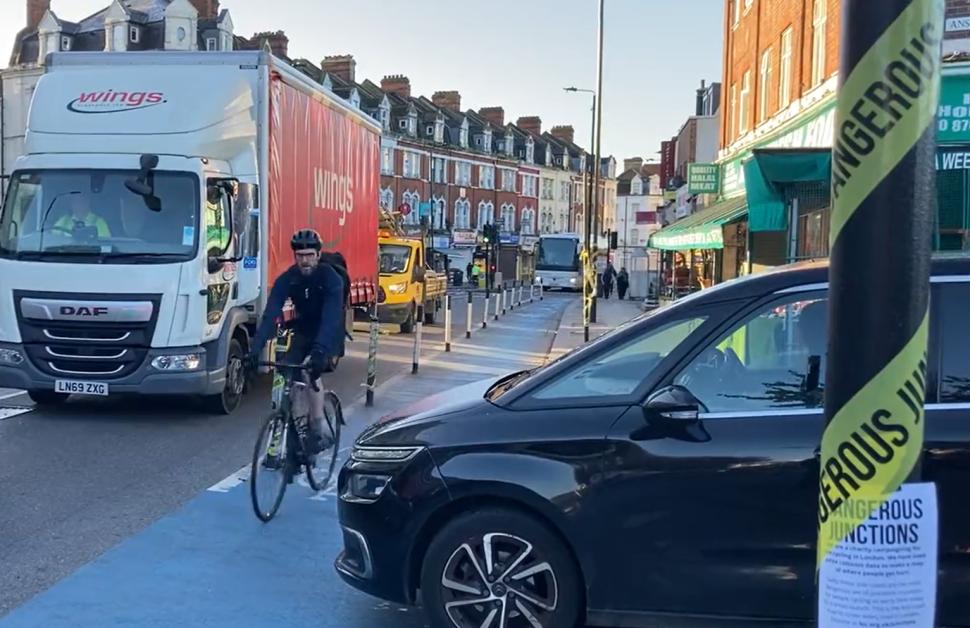
London’s transport chiefs have avoided or delayed “overdue” changes to dangerous junctions in order to avoid negatively impacting bus journey times, cycling campaigners in the capital have claimed.
According to the London Cycling Campaign, when considering whether to improve safety measures at certain junctions, Transport for London bosses make a “calculation” comparing the potential impact on bus journey times against what they deem to be an “acceptable” number of crashes.
The claim comes as the London Cycling Campaign released its updated list of the city’s most dangerous junctions for people on bikes, as part of Brakes’ Road Safety Week 2025.
The group also launched a new campaign calling on London mayor Sadiq Khan, Transport for London, and the borough councils to make “rapid, temporary” improvements at the junctions which require the most urgent action, to be followed by a programme of permanent improvements which would comprehensively remove all critical safety failures.
The London Cycling Campaign’s new dangerous junctions map, the latest instalment in the group’s long-running campaign, is based on five years of emergency services data and covers the period between 2020 and 2024.
In a statement, the LCC said it updates the map annually “in order to highlight to the Mayor, TfL, the police, London’s councils, and the public that we know where road danger is, but all too often do nothing about it.”
According to the data, the top ten most dangerous junctions in London in the past five years saw four cyclists killed in collisions and 51 seriously injured, while there were a further 129 crashes which resulted in minor injuries.
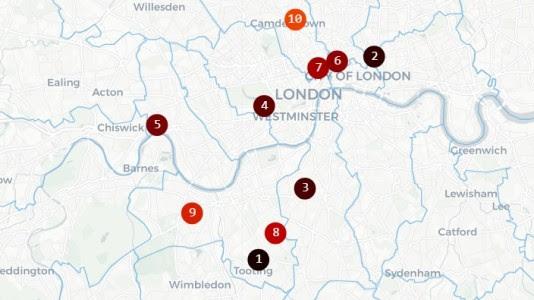 London dangerous junctions map (credit: London Cycling Campaign)
Weighting collisions by severity and recency, the campaign concluded that the most dangerous junction for cycling in London remains the cluster on the Upper Tooting Road in Wandsworth, which has ‘topped’ the LCC’s rankings for the third year in a row.
“The last five years data show the junctions around the Ansell Road, Lessingham Avenue and Derinton Road rat runs as they cross Upper Tooting Road are seriously injuring two cyclists a year on average and slightly injuring four more,” the campaign said.
The second most dangerous junction for cycling also remains the Great Eastern Street/Curtain Road junction in Shoreditch, while the third most lethal junction, like Upper Tooting Road, is situated along the Cycle SuperHighway CS7 corridor, at Clapham High Street and Gauden Road. A third CS7 junction, Balham High Road and Ramsden Road, also made the top ten, in eighth.
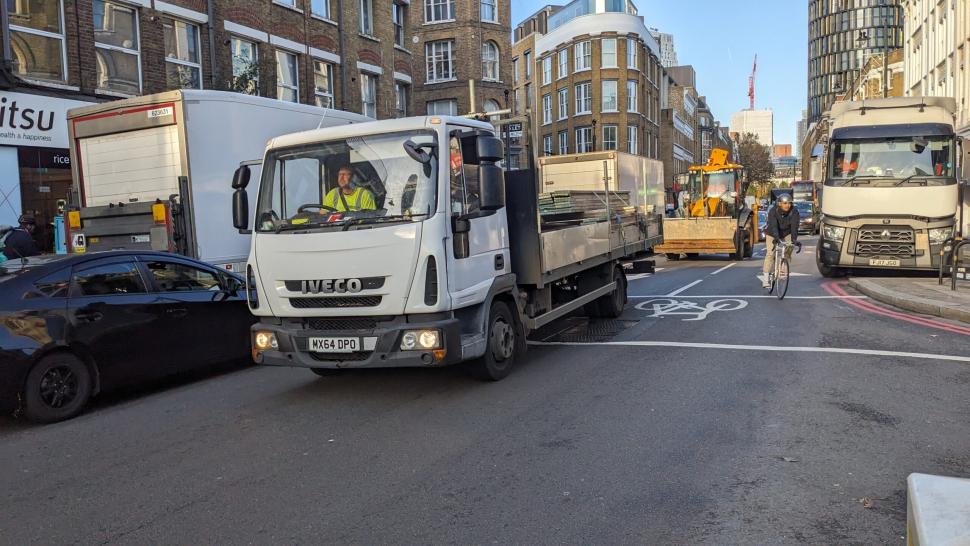 Curtain Road junction, London (credit: London Cycling Campaign)
A newcomer to the list, however, is the C9 junction of King Street and Weltje Road, which the LCC says Hammersmith and Fulham Council has so far refused to take action on, “despite a clear pattern of serious collisions from a rat run from the A4 crossing a bidirectional cycle track”.
Since the data was complied, two more cyclists have been killed in collisions in London: an unnamed young business student, who was fatally struck by a lorry driver on Stratford High Street in Newham in January, and 24-year-old Jamal Yahya Pratley, who was killed by a van driver in June at a notoriously hostile junction in Camden, linking New Oxford Street and Bloomsbury Street.
In a statement issued alongside the new map, the London Cycling Campaign claimed that the number of deaths and serious injuries on the capital’s roads is a result of inaction by TfL, the mayor, the police, and the local councils.
In particular, the campaign criticised what they perceive to be Transport for London’s desire to ‘balance’ cycling safety improvements with other forms of transport.
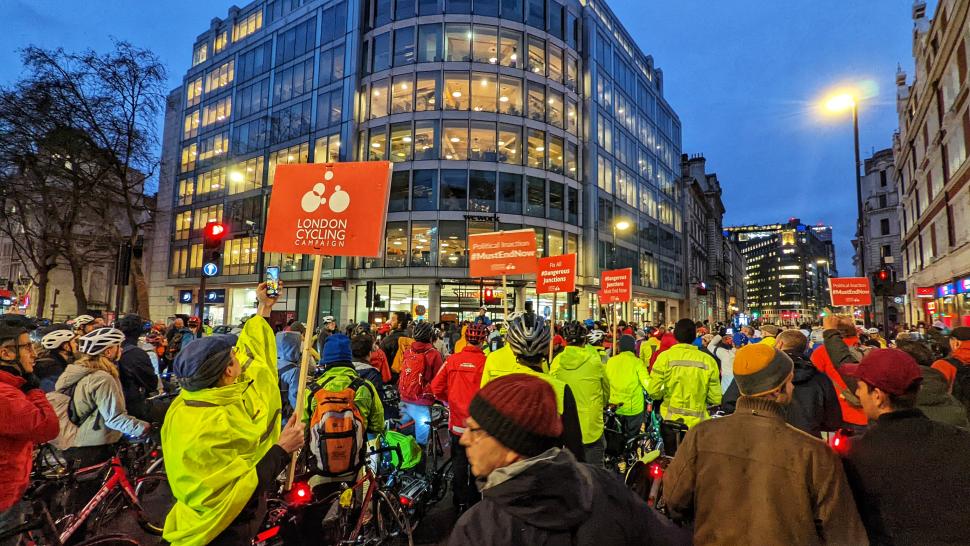 Protest – Holborn LCC vigil.jpeg (credit: road.cc)
“LCC’s view is TfL has avoided or delayed years overdue changes to many junctions to avoid impacts to bus journey times,” the group said.
“This is what council officers across London and even inside TfL tell us repeatedly is the primary cause of inaction: a calculation on what is acceptable in collision numbers versus impacts to bus journey times.
“LCC’s view is ‘balancing’ such ideas is ludicrous given the real problem for bus journey times (too many cars) remains largely ignored and people keep dying.
“Indeed, TfL could act on both bus journey times and road danger by more boldly separating buses from private motor vehicles using bus ‘priority’ measures, freeing up space and time for walking, cycling and public transport at junctions, by reducing capacity for private motor traffic.
“That’s what LCC is asking the public to demand from the Mayor – bolder and more rapid action on junctions, that doesn’t ‘balance’ public transport and active travel safety but solves both.”
> Bike lanes crucial to preventing cycling near misses, major new study suggests
Elsewhere, the campaign noted that several of the junctions included in their list are situated along cycleway corridors and bike tracks.
“Some critics of cycle tracks claim that such tracks worsen danger for cycling or are ineffective – and no doubt some will seize on the results we highlight as further evidence to bolster their views,” the group said.
“However, the evidence on cycle tracks has been clear both in London and internationally for years now: cycle tracks in general strongly improve not only cycling safety but also diversity, enabling many more people to cycle that wouldn’t otherwise.”
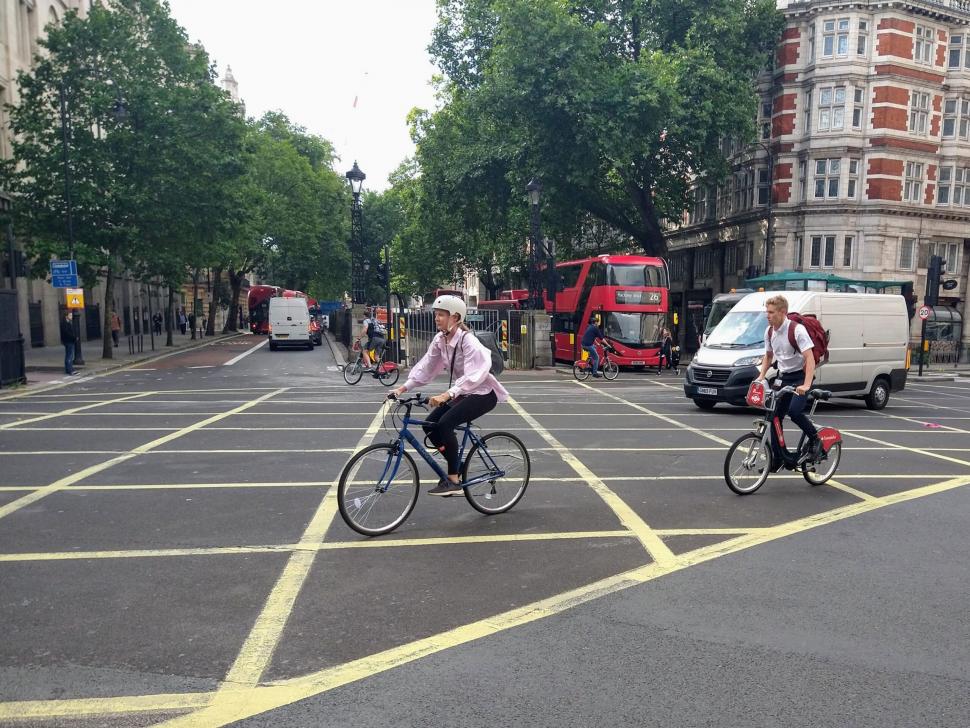 Dangerous junctions campaign (London Cycling Campaign) (credit: road.cc)
Meanwhile, the LCC also noted that the lack of Low Traffic Neighbourhoods (LTNs) has resulted in drivers making risky manoeuvres off and onto main roads where there are cycle lanes and high numbers of cyclists.
“The most dangerous junction cluster for cycling in London is where the old Cycle Superhighway CS7 on Upper Tooting Road, now with some wands for protection, intersects with major ‘rat-runs’ in Wandsworth,” the LCC said.
“During the pandemic, Wandsworth Council installed LTNs on one side of this stretch of road, but removed them after opposition within weeks.
“It is likely that LTNs here would fix the road danger issues that are seeing an average of two cyclists suffering serious (often life altering) injuries a year here, and a further four injured enough they needed emergency services attendance.”
The group concluded: “The lesson from these junctions is that with political will, there is a way. Claims we need to ‘balance’ motor traffic, public transport, cycling, walking and wheeling are bogus.
“If the choice is another life cut short, or many thousands moving through an area safely daily, the Mayor, TfL and London’s councils can choose the latter. The compromises, delays, and inaction around too many junctions are currently killing and injuring too many Londoners.”