
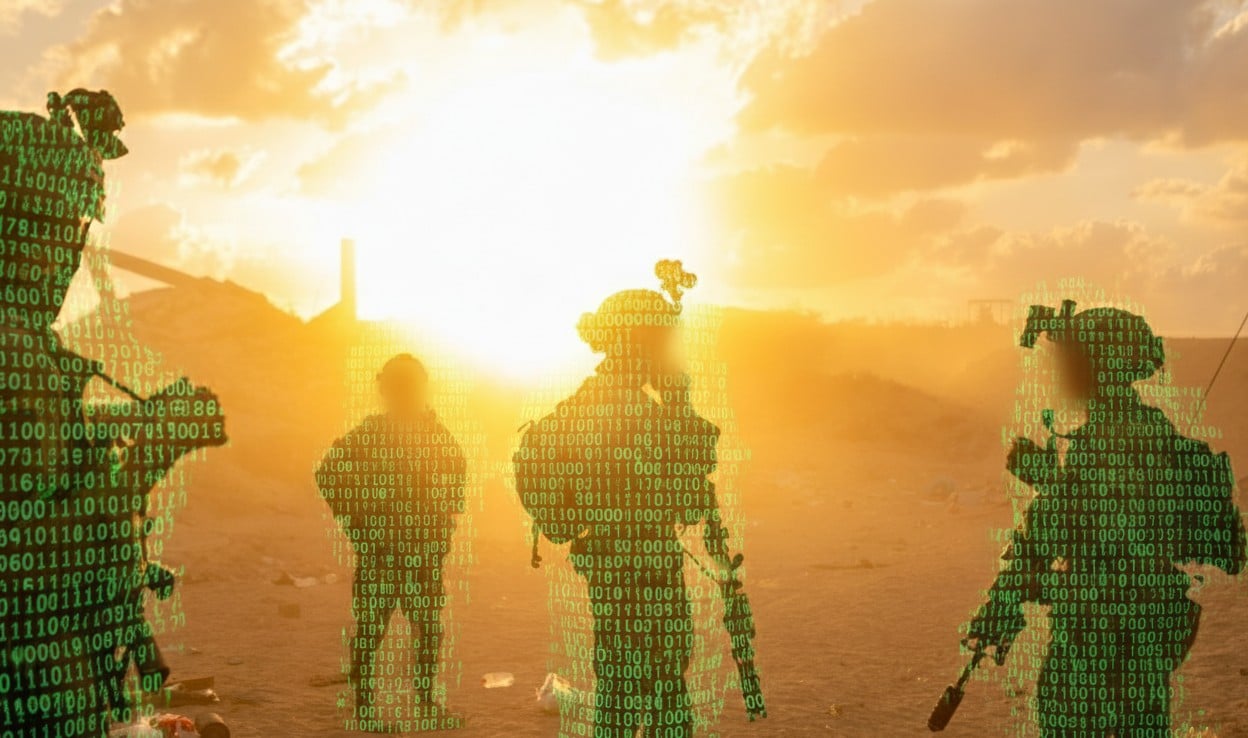
Wars, never in short supply, seem to be everywhere these days. According to the Uppsala Conflict Data Program, last year recorded the highest number of state-based conflicts worldwide since the organization began collecting data in 1946.
But war in 2025 often means something very different than what it meant in previous decades, in terms of where it is fought, how it is fought and who is doing the fighting.
As drones and autonomous tools increasingly take human bodies and human decision-making off the field of battle, modern armies are being challenged to adopt newer tools and strategies while adapting to the rapidly evolving landscape and keeping flesh and blood in the equation.
From the Israel Defense Forces navigating Hamas’s vast underground tunnel networks in Gaza, to Ukraine’s innovative use of drones against Russia, the future of warfare — a hybrid of automation and boots on the ground — is being written in real time.
For the IDF, a military that has embraced new technologies with uncommon zeal, the elemental nature of this shift has forced a deep internal reckoning. Today, the army is flirting with a fundamental rethink of how it is structured, as it wrestles with how to fight smarter, faster and with fewer troops while ensuring that technology enhances, rather than replaces, human judgment.
Get The Times of Israel’s Daily Edition
by email and never miss our top stories
By signing up, you agree to the terms

IDF chief Aviv Kohavi (right) speaks with Nimrod Aloni, chief of the Gaza Division, near the border with the Gaza Strip, August 4, 2022. (Israel Defense Forces)
Italian World War I general Giulio Douhet, often called the father of strategic airpower, once said: “Victory smiles upon those who anticipate the changes in the character of war, not upon those who wait to adapt themselves after the changes occur.”
That insight still holds true more than a century later. Militaries like the IDF that place a premium on keeping up with the bleeding edge are finding that anticipating changes means they must redefine themselves now.
Looking to the future, the army is learning to strike a balance between coding and courage, algorithms and intuition, machines, and the men and women behind them, for an era where wars are waged through networks, sensors and software as much as through firepower.
Ghost in the machine
The IDF’s latest push for adaptation could arguably be traced back to 2019. That year, chief of staff Aviv Kohavi championed a shift away from dependence on large-scale ground formations as part of a multi-year plan he dubbed Momentum.
At its heart is a “multidimensional strike” concept, also known as multi-domain operations, or MDO, which seeks to strengthen three interconnected capabilities: real-time tactical intelligence to detect and engage targets; expanded aerial strike capacity to hit multiple high-value targets in rapid succession; and a sweeping digital transformation that linked sensors, strike units, and the air force through advanced information networks.
Together, these innovations aim to make operations faster, more precise and less reliant on prolonged, manpower-heavy campaigns.
To make it work, the plan calls for a structural overhaul of the IDF’s ground forces — shifting from traditional divisions to smaller units designed for strategic maneuvering and equipped with improved defenses, particularly against anti-tank missiles.
The combined approach underscores a clear objective: to create a more agile and technologically driven ground force that could operate without needing large-scale callups of troops.
Kohavi’s vision, however, now faces an uncertain future. Unverified reports, first aired in April by Kan, indicate that the IDF is considering disbanding the very unit that embodied his multidimensional warfare concept — the so-called Ghost Unit — and reallocating its resources among other elite formations.
The IDF has yet to comment on the matter publicly.
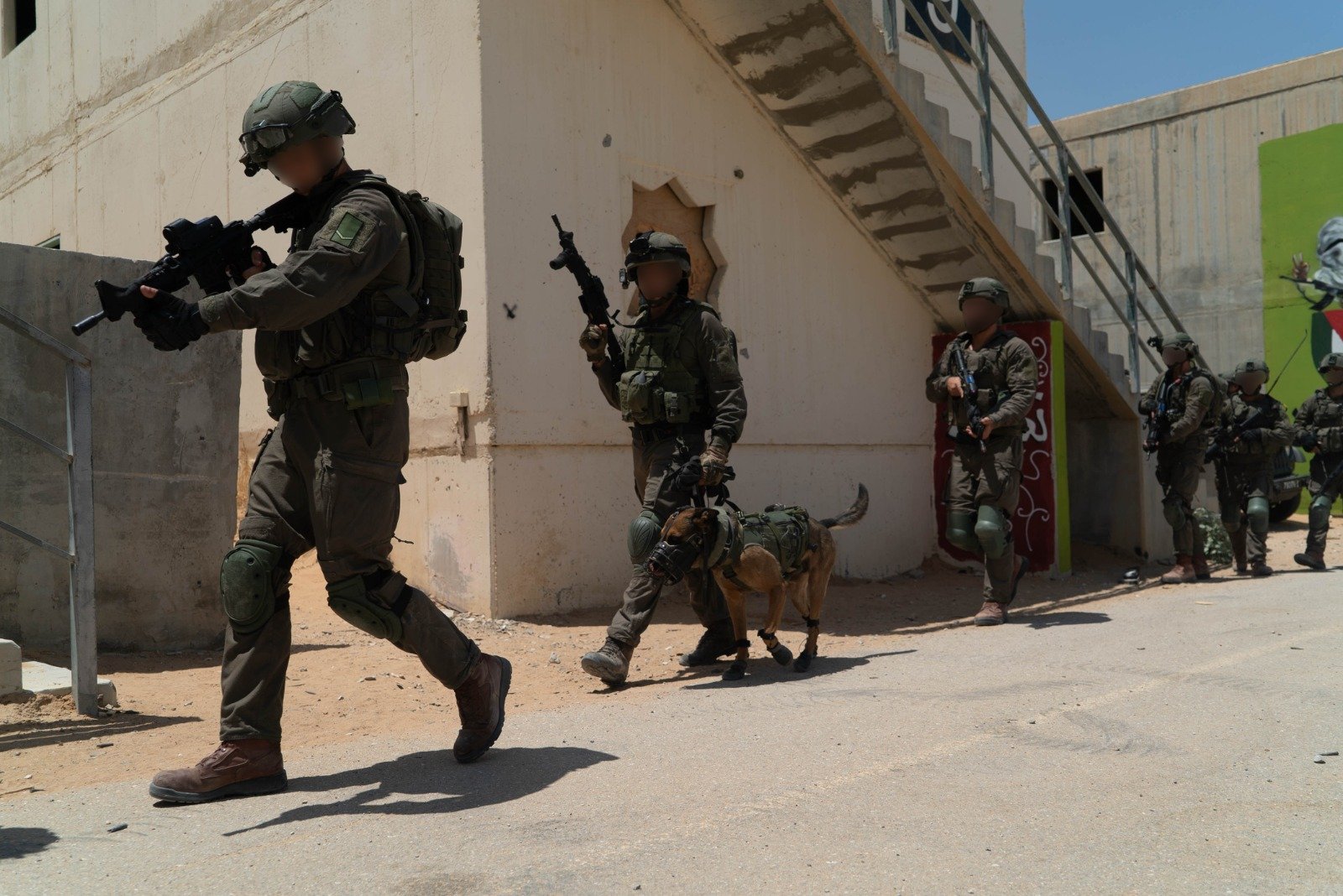
Soldiers and a K-9 from the IDF’s Ghost Unit take part in a weeks-long training exercise in July 2020. (Israel Defense Forces)
The Ghost Unit is a showcase of Kohavi’s push for compact, versatile units that could rapidly deploy and perform a myriad of maneuvers to face a wide array of threats, a Swiss army knife of sorts. Unlike traditional combat formations, it combines a wide range of capabilities from across the military — including infantry troops, fighter jets, attack helicopters, tanks, combat engineering, drones, K-9s and robotics.
But the Ghost Unit was never just about tactics. It was part of a broader revolution in military thought — what strategists call multi-domain warfare.
Everywhere at once
Tim Sweijs, director of research at The Hague Center for Strategic Studies, describes MDO as “old wine served in new bottles.”
The idea, he said, builds on century-old visions of coordination between land, air and sea forces, but now extends across entirely new dimensions, such as space and cyberspace.
He credits the conceptual shift to “the sensor revolution — the ability to see everything, everywhere, all at once — combined with the information and communication technology revolution.”
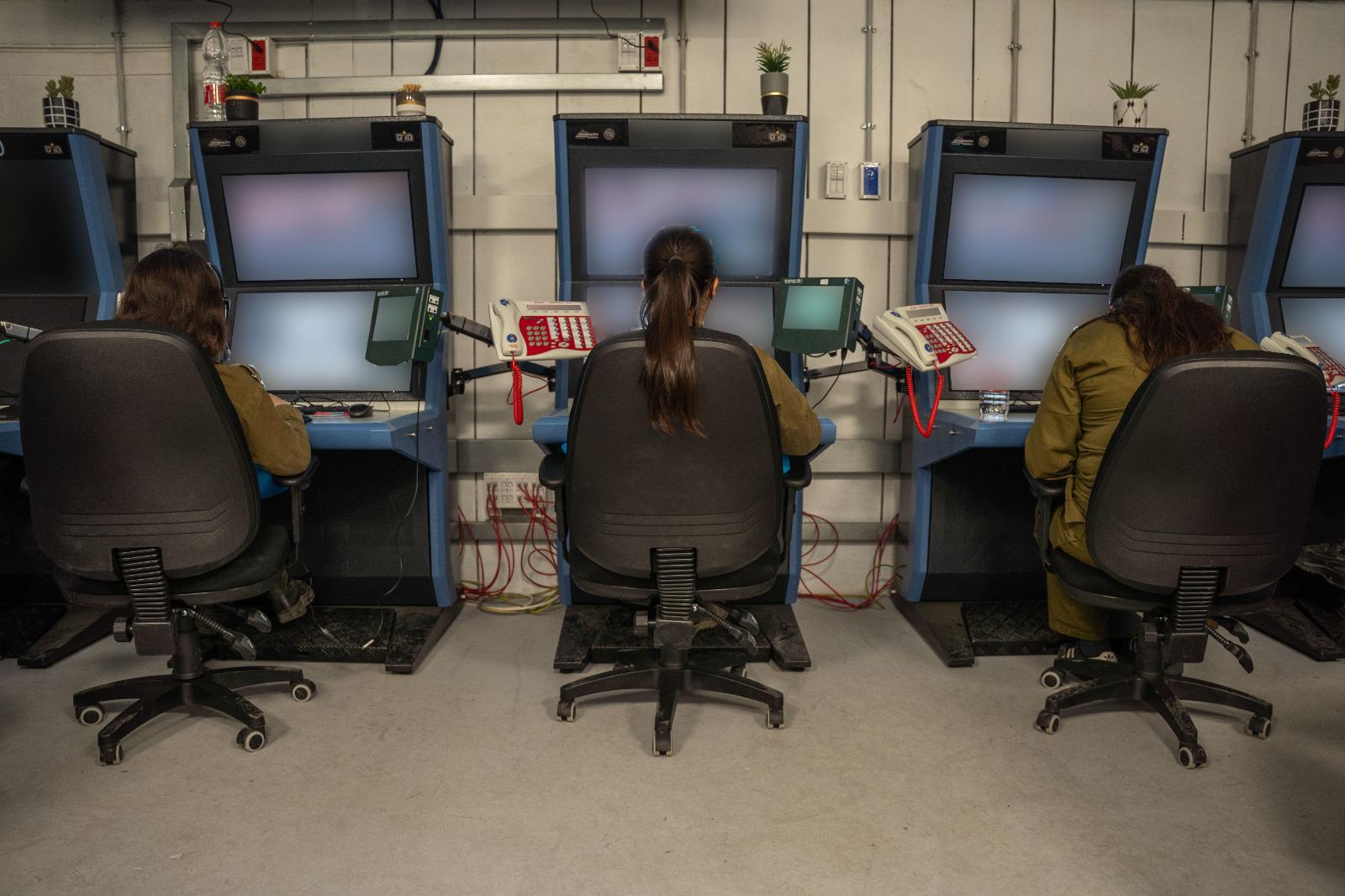
Soldiers are seen monitoring surveillance cameras at a command center at the IDF’s Re’im camp in southern Israel, November 5, 2023 (Israel Defense Forces)
“These two technological advancements have made it so military organizations dust off older concepts,” Sweijs explained.
MDO aims to synchronize every aspect of warfare — kinetic and digital, offensive and defensive — across land, sea, air, cyber and space, while linking it with non-military tools such as information operations. That means combining traditional weapons and troops with activities like cyber disruption, satellite surveillance and information campaigns aimed at shaping public perception and the enemy’s decision-making.
Imagine an army deliberately seeding false intelligence to convince an adversary that no attack is coming. Once the enemy has relaxed alertness, a tightly synchronized multidomain action unfolds: naval units secure the coastline, satellites and drones feed real-time images to commanders, aircraft carry out targeted strikes while electronic-warfare assets degrade the enemy’s ability to coordinate, a small ground team moves to seize key positions, and a remote cyber cell quietly intrudes into the group’s networks to confirm identities and intercept communications.
For a traditional military, such an operation could take years to plan and coordinate, working through thickets of actors, bureaucracies and mission-critical choke points. An army using a multidomain strategy would theoretically cut through all that to enable rapid simultaneous action across all these areas to overwhelm and surprise an adversary.
In practice, though, making it all work is far more challenging.
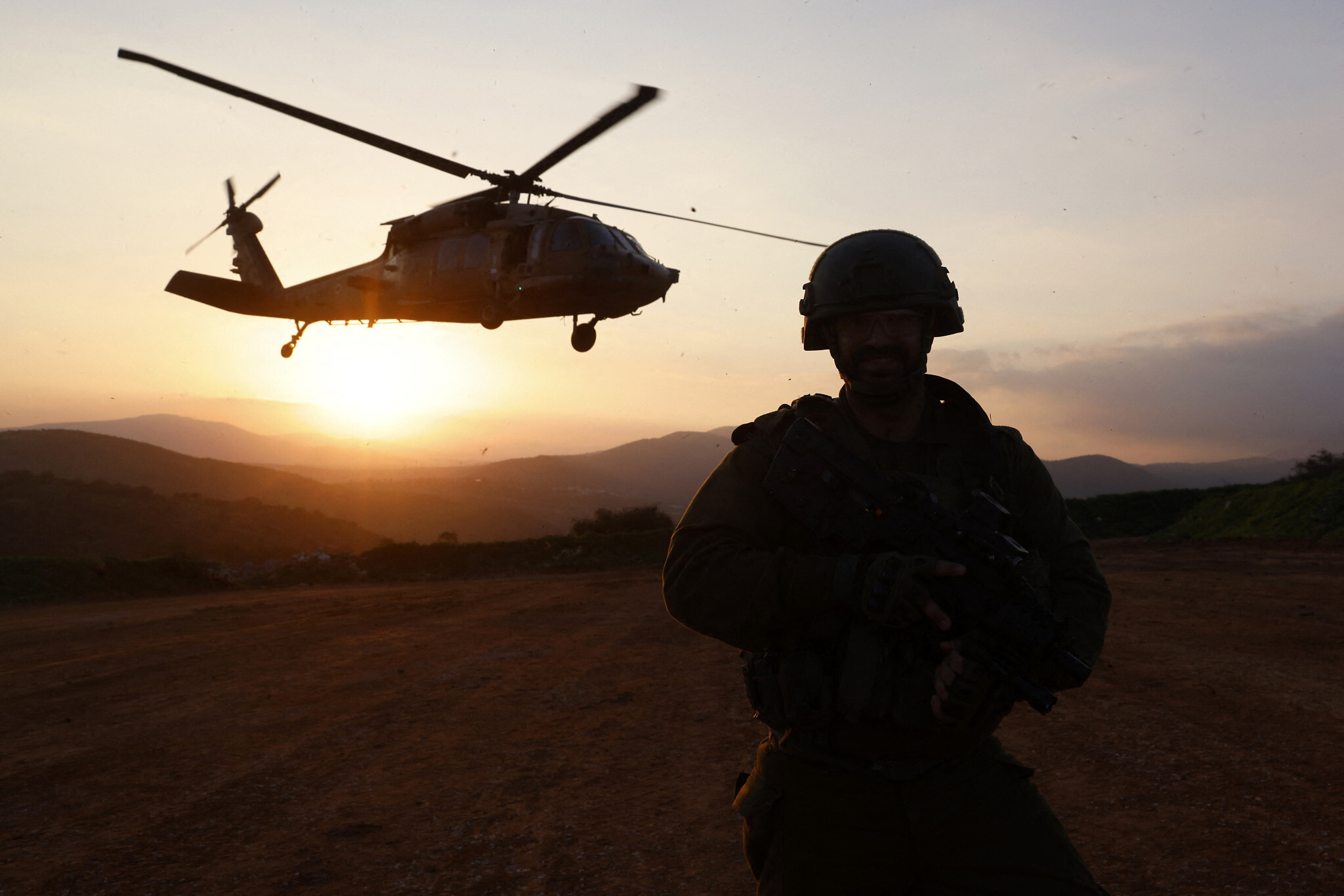
An Israeli soldier looks on as a helicopter takes off during a military exercise in Upper Galilee near the Lebanon border on February 7, 2024. (Photo by Jalaa MAREY / AFP)
“Most of these militaries are still very much organized in a service base,” Sweijs noted — meaning they remain divided into traditional branches such as the army, air force and navy, each with its own hierarchy, culture and command structures. “So that whole idea of MDO is aspirational, but as it comes down to reality, it’s really hard to implement… also because the individual services aren’t trained to operate in such a context.”
Confusion also persists over where multi-domain integration should occur — at the unit level, as with Israel’s Ghost Unit, or at higher operational echelons. Sweijs pointed to the challenges of “commander overload,” warning that small-unit MDO often demands impossible levels of coordination and risks over-reliance on constant connectivity.
Yet, even non-state actors — who operate asymmetrically against well-established militaries — are learning to exploit the multi-domain approach.
Sweijs called Hamas’s October 7, 2023, attack on Israel “horrific,” but noted that “you could argue that this was an MDO operation,” combining land, air and sea infiltration with rocket barrages and information warfare.
Israel’s own campaigns, he said, offer some of the most advanced examples of multidomain coordination. In its June 2025 offensive against Iran, the IDF fused kinetic strikes, intelligence and covert action into a single, synchronized effort. Israeli jets hit missile, nuclear and command sites deep inside Iran, guided by satellite intelligence that produced over 12,000 high-resolution images in real time.
On the ground, over 100 foreign agents — some reportedly operating a drone base inside Iran — helped neutralize air-defense systems to assist the Israeli military in its campaign. At the same time, Israeli cyber units infiltrated the phones of Iranian officials’ bodyguards and drivers, turning their devices into trackers that led strike teams to their targets.
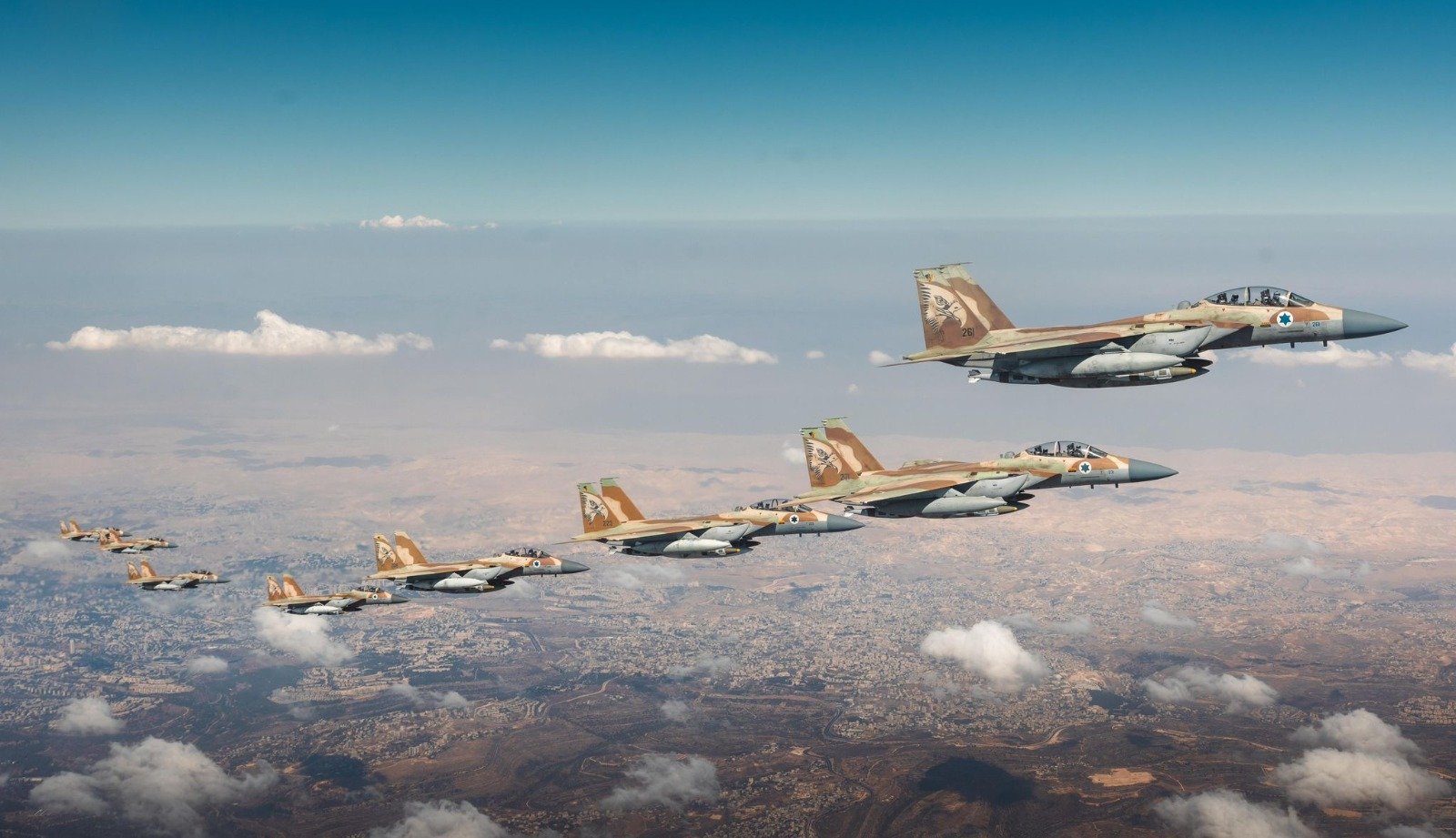
Israeli Air Force F-15 fighter jets fly over Israel en route to carry out strikes in Iran, in a handout photo published on June 25, 2025. (Israel Defense Forces)
Still, Sweijs cautions against viewing MDO as an end in itself.
“Even if we have smaller, dispersed and decentralized units operating with more capabilities,” he said, “you will still have a difference between the close fight and the deep fight… and the ways that you not only execute them, but command and control them.”
“Fighting a war on the ground with Hamas is different than fighting a war with Hezbollah, and is very much different than fighting a war with Iran,” he added.
An automated future
If multi-domain warfare is the blueprint, AI and automation are the machinery bringing it to life. For Aviv Shapira, CEO and co-founder of XTEND — a defense technology company that provides drone systems to militaries, including the IDF — the past two years have been a live experiment in that transformation.
“XTEND is very unique in a way, because we had the power and the privilege to actually save lives in the past two years,” Shapira said.
His company builds an operating system that allows soldiers with minimal training to control swarms of drones and robots remotely, keeping operators out of harm’s way. Since October 7, 2023, XTEND has become one of the largest drone providers to the IDF, supplying systems for intelligence, reconnaissance, precision strikes and counter-drone operations.
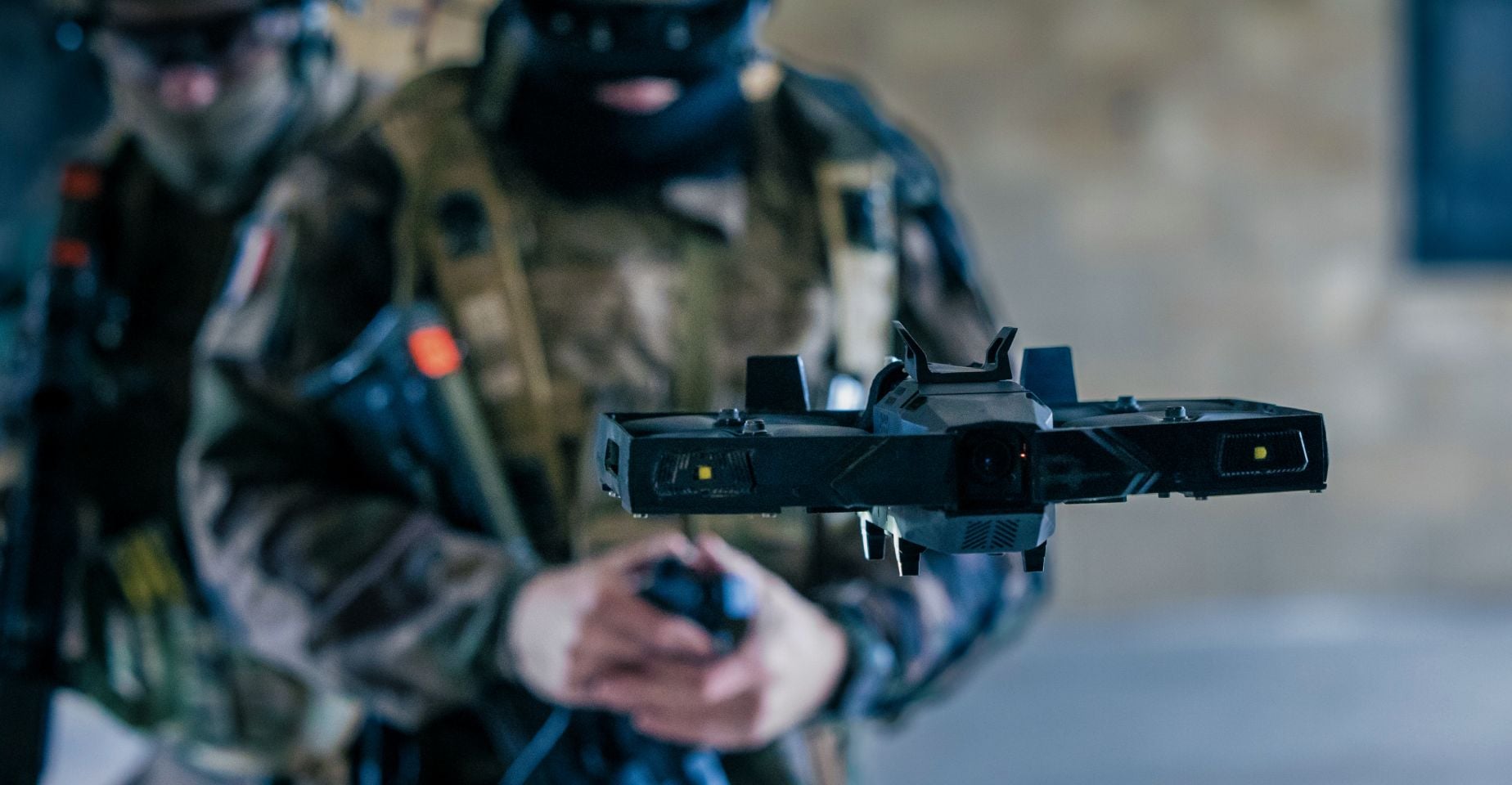
An action shot of XTEND’s XTENDER drone, used for tactical indoor reconnaissance, unknown date. (XTEND)
“Everyone thinks that the air force can win the war without boots on the ground,” he said. “Unfortunately, we’ve seen that it’s not like that.”
The future, he argues, lies in precision robotics — tools that can do what human soldiers can’t, in places the soldiers can’t safely go.
Artificial intelligence, meanwhile, is rapidly transforming how those drones operate.
“Because of AI — or thanks to AI — they can actually make decisions for the first time, based on everything they’ve learned from human operations,” Shapira explained.
Today, most drones around the world are still manually operated, he said, “because autonomy is not good enough.” But progress is accelerating. In XTEND’s systems, AI already manages flight control and target detection — though strike missions still require human approval.
“When it comes to killing enemy targets, AI needs to be under ethical reviews,” Shapira said. “We created a flying computer that has ammunition capability, and when that computer is independent, we have to make sure it doesn’t make mistakes.”
During the early weeks of the Gaza war, however, the limits of AI became clear.

A man shows GPS disruptions on his cell phone on the Google Maps app, Haifa, August 1, 2024. (Chaim Goldberg/Flash90)
“When the war started, we thought we knew what we were doing,” Shapira recalled. “AI completely failed because it was training on the wrong scenarios… Drone spoofing was something that no one had prepared for.”
Spoofing normally refers to an activity in which a data source is disguised as another to mislead a target. During the war, Israel used widescale GPS spoofing, emitting false GPS signals to obscure the real location of assets, to confuse incoming rockets and hostile drones.
But the tactic occasionally disrupted friendly systems as well, causing XTEND’s autonomous drones to lose positioning data or misinterpret their environment. As a result, human operators had to step in, revealing the limits of AI-trained systems in unpredictable electromagnetic conditions.
In those moments, the “human touch” — adaptability, intuition and improvisation — proved irreplaceable. Yet Shapira remains convinced that, once properly trained, AI will eventually surpass human performance in certain combat roles. “When it’s better than a human,” he said, “I would give AI the controls.”
Manpower transformed
For all the talk of machines replacing humans, Azar Gat, academic adviser to the executive director of Israel’s Institute for National Security Studies, argues that such assumptions misunderstand the history of technology itself.
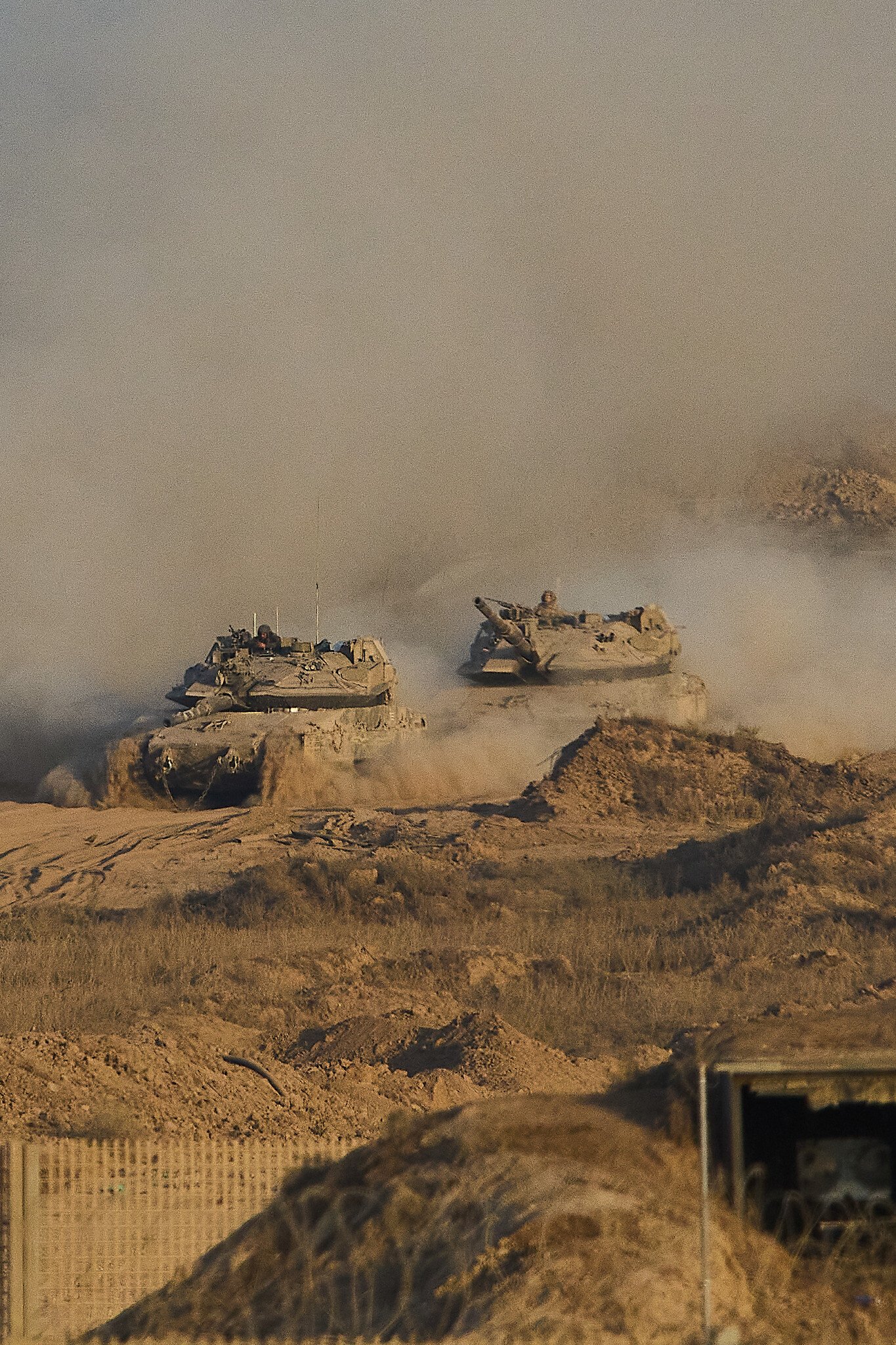
Israeli soldiers drive tanks inside the Gaza Strip toward southern Israel, Sunday, Oct. 5, 2025. (AP/Ariel Schalit)
“What we know from 200 years of technological development is that the workforce does not contract. It’s transformed.” Just as tanks and airplanes didn’t reduce army size in the 20th century, drones and AI won’t erase the human factor — they’ll redefine it.
“In many roles, drones and other robotic systems are going to replace human activity,” Gat said, “but the idea that this means a reduction of manpower is beside the point.”
Instead of expanding the number of foot soldiers, Gat believes that militaries will redirect manpower toward operating, maintaining, and programming increasingly complex autonomous systems — ensuring that humans remain essential, even as machines take on more of the physical fight.
“The IDF is as big as it was during the Yom Kippur War and larger than it was during the Six Day War,” Gat noted, referring to conflicts in 1973 and 1967. “What we need is an army of whatever size — depending on the threat — which is fully technological.”
Since the 1980s and 1990s, the IDF’s overall manpower and number of divisions have been cut roughly in half. Yet Gat sees this as evolution, not erosion.
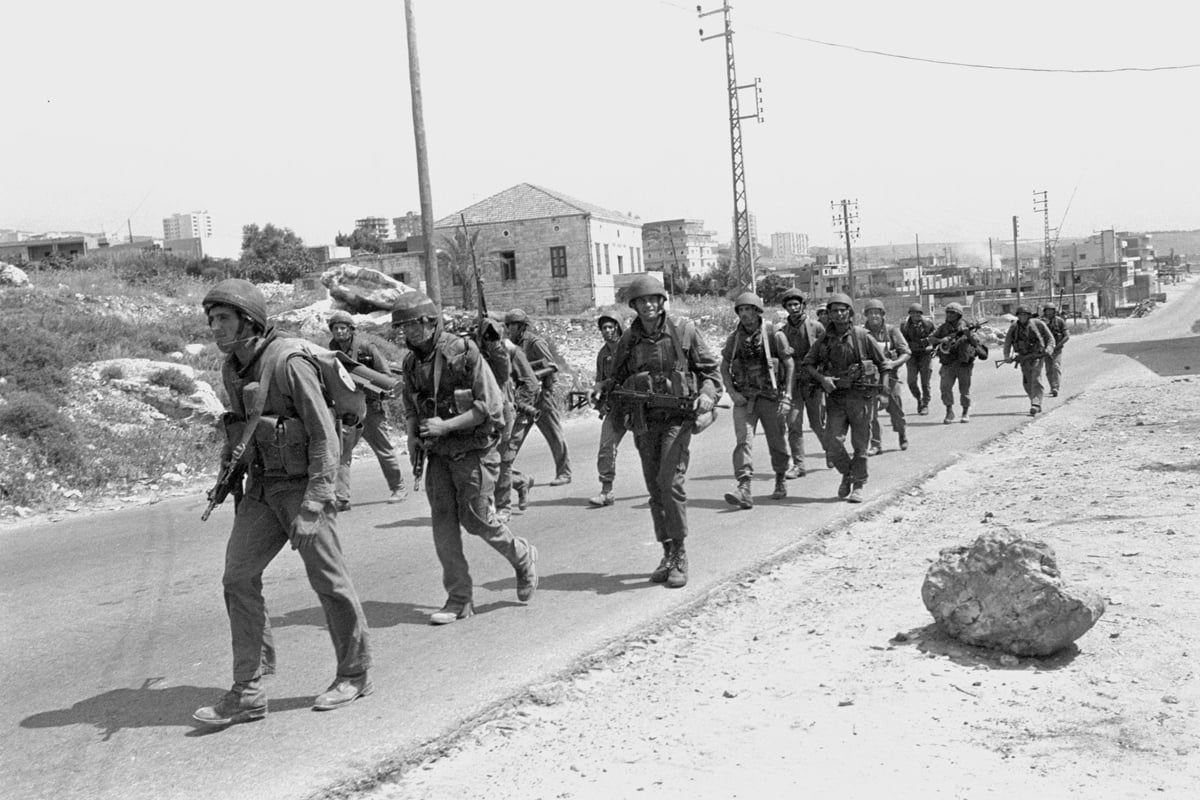
Israeli troops in Lebanon, 1982. (Michael Zarfati / IDF Spokesperson’s Unit)
“The general trend is for the army to go high-tech,” he said. “Every unit in the army now uses drones.”
He points to the Russia-Ukraine and Gaza wars as proof that technological sophistication, not numerical strength, defines modern military power.
“The Russians have not been able to gain air superiority over Ukraine, even though they hold a very large air force,” Gat said. “By contrast, Israel was able to achieve air superiority over Iran for a period of two weeks at a distance of 2,000 kilometers. This is unprecedented.”
“What the two wars have shown is that Israel is miles ahead of both the Ukrainians and the Russians in most respects,” he said.
For Gat, the IDF’s future size should depend on the threats that emerge after the current war — not on nostalgia for mass mobilization. “It depends on the scenarios we expect — who are we going to fight?” he said. “We might be able to know more after the war. Hezbollah has been destroyed… Hamas — we need to see what remains of it in Gaza.”
Blood still matters
Even as AI grows more capable, the essence of war remains human — emotional, moral and political. According to Sweijs, this paradox defines the modern battlefield.
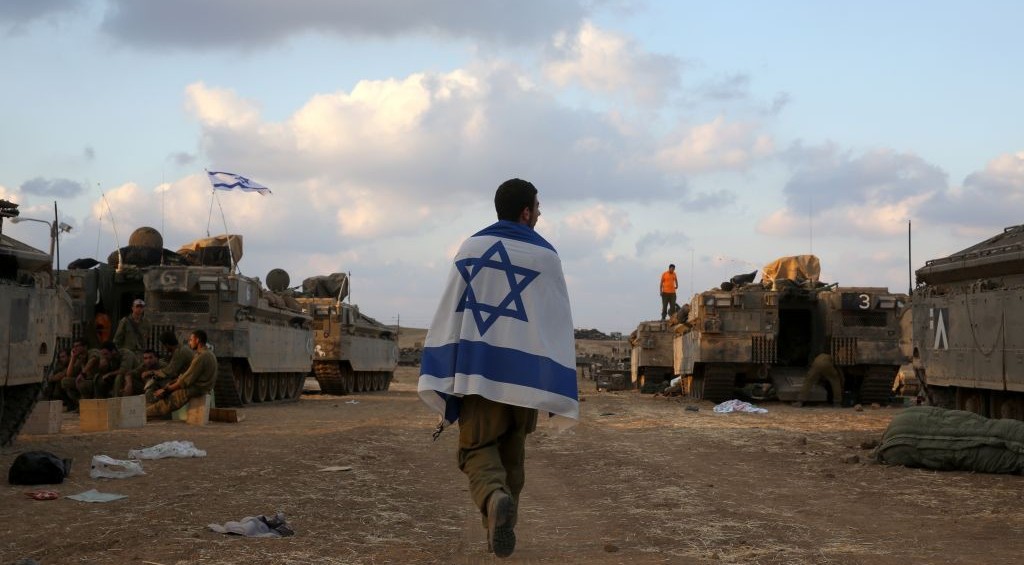
An IDF soldier clad in an Israeli flag near the border with Gaza, July 19, 2014. (Photo credit: Nati Shohat/Flash90)
“Ultimately in war, it’s about using violence to achieve political objectives, but also showing your enemy that you’re willing to spill blood to achieve your objectives,” he said. “If it’s only the machines that you are hitting, the fighting won’t stop.”
The wars of the future will be fought across domains, through sensors, algorithms, and autonomous systems — but victory will still depend on courage, judgment, and sacrifice.
For militaries like the IDF, mastering that balance between automation and humanity may be the defining test of the coming century — proving that in the age of machines, it still takes people to win wars.