
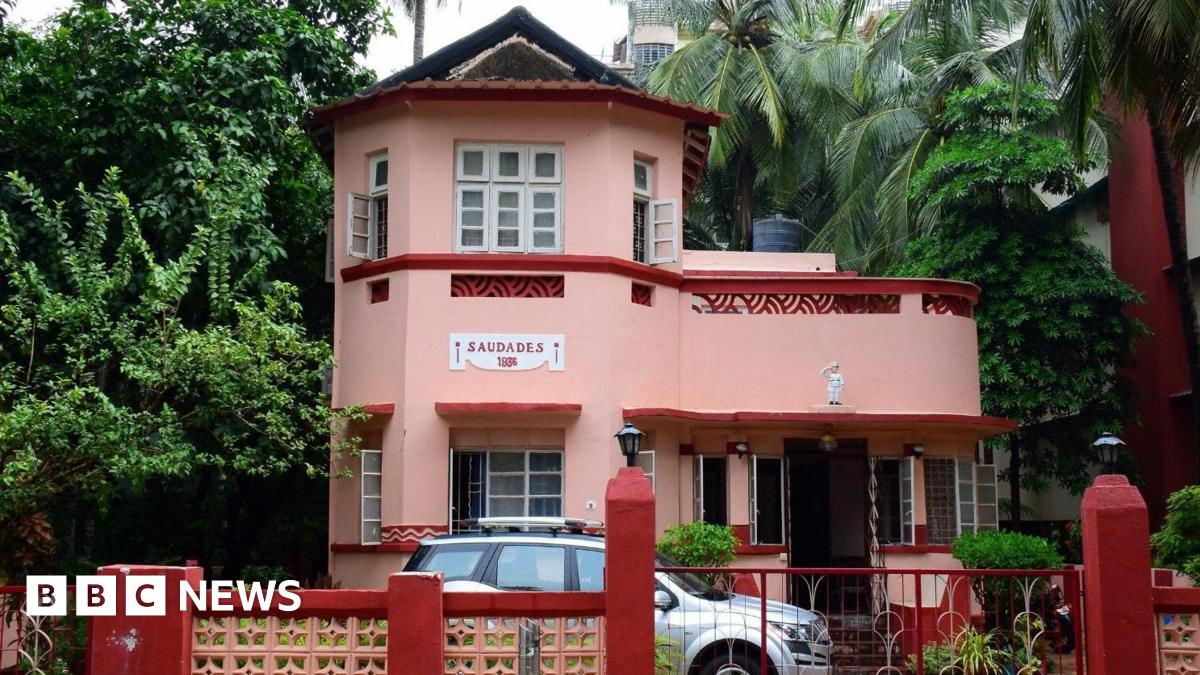
It was at a landmark architecture exhibition in Paris in 1925 that the Art Deco aesthetic first exploded on the scene.
In the 100 years since, the glamorous building style – evocative of neon-lit jazz bars and the golden age of big motion pictures – rapidly spread around the world.
It moved from the famous pastel hotel facades of Miami’s South Beach to the sprawling necklace of mansion apartments along Mumbai’s Marine Drive seafront.
Art Deco’s distinct motifs – typified by geometrical ziggurats (step towers), sweeping curves, sunburst designs, nautical elements and circular or turreted rooftops – symbolised an unequivocal break from the past, celebrating the dawn of a new, unabashed, post-war 20th Century modern age.
In a short time, the style transcended architecture to influence the design sensibility of home interiors, furniture, fonts, jewellery and some of the world’s most iconic cinema halls – from Radio City Music Hall in New York City to Regal, Liberty and Eros cinemas in Mumbai.
“It represented hope, optimism and speed, coinciding with the emergence of the motor car and also concrete as a building material, which when compared with stone, could be worked with in a tenth of the time and fifth of the cost,” Atul Kumar, founder of the Art Deco Mumbai Trust and curator of a new exhibition celebrating the centenary of Art Deco in the city, told the BBC.
“It was not elaborate like Victorian Gothic design that preceded it, and came with a classicism and simplicity that has survived the test of time,” he said.
And nowhere has that been more apparent than in Mumbai, which, according to Mr Kumar, is home to the world’s largest documented collection of Art Deco buildings. Other estimates put Mumbai in the second spot behind Miami.