


How much is enough for your rainy day fund? (Picture: Getty Images)
Listen to article
Listen to article

Your browser does not support the audio element.
After day-to-day expenses, it’s easy to forget about building a safety net in case things go wrong.
But burying your head in the sand can prove pricey, as evidenced by a Norton Finance study that found the average Brit spent £1,590 in the past two years on unplanned bills, while 12% forked out more than £4,000.
Respondents took more than six months to recover from a surprise cost, which ranged from home and car repairs to family emergencies, with one in five having to repay money they borrowed as a result.
Then there’s the dreaded situation of losing your job. You’re only entitled to statutory redundancy pay once you’ve been with the employer for two years, after which it’s capped at just a week-and-a-half’s pay for each full year of service.
Alternatively, if you’re fired or have to leave for another reason (such as ill health), you could be left entirely without income for who knows how long, the consequences of which could be devastating.
Despite this though, 73% of the UK population have less than £500 in savings according to Starling Bank — barely enough for a drizzly day, let alone a rainy one. But how much is enough?

Experts say three to six months of your essential expenses is a good role of thumb (Picture: Getty Images)
Although everyone’s situation is different, Anthony Fuller, chartered financial planner at Path Financial, typically recommends an emergency fund equating to six months of essential living costs, along with ‘some extra allowance’ to cover ad-hoc issues like your boiler breaking.
‘You might want to allow more than this in some situations,’ he tells Metro. ‘For example, if your income is variable, your employment is insecure or if you have dependents relying on you.’
Christie Cook, managing director of retail at Hodge Bank, echoes this, putting the figure at around three to six months of your typical bills and mortgage or rent.
‘For some people, particularly those that are self-employed or are freelance, aiming for the higher end of that scale can help provide extra peace of mind,’ she adds.
This may sound daunting, particularly if you feel like you’re just getting by as is. However, Christy notes that ‘the goal isn’t to create a huge pot overnight.’
‘The best thing you can do is set up a standing order to your savings account so that there is something definitely going in there each month, even if it’s just a few pounds,’ she tells Metro.
This – along with the ‘pay yourself first’ method, where you put aside what you want to save on payday before you start spending elsewhere – can help you prioritise your emergency fund by making it one of your ‘must pay’ bills.
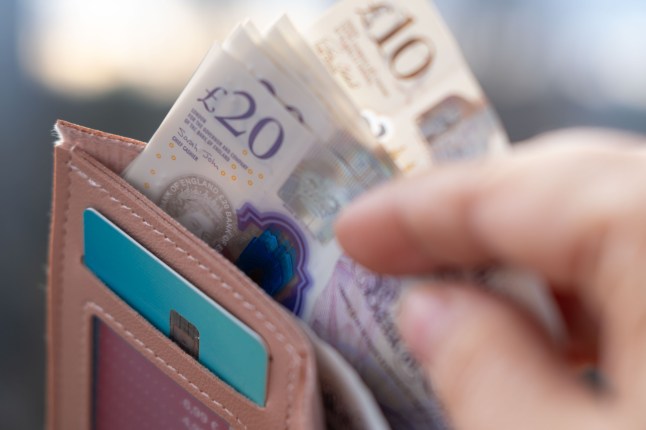
‘Paying yourself first’ can help you prioritise saving (Picture: Getty Images)
Try to remember that something is always better than nothing; as Anthony highlights, ‘even £10-20 per week could equate to £500-£1,000 after a year which is starting to provide some buffer against financial shocks.’
He recommends reviewing your bank statements to see where you could cut back — though it might not seem like you have any spare cash, 10 million Brits pay for a subscription they don’t use, and many pay too much for utilities like broadband when they could get a cheaper deal by switching.
The best savings account for an emergency fund
In terms of where to save, both experts agree that an emergency fund needs to be easily accessible so you can withdraw funds as and when you require.
Anthony also highlights that it should be ‘kept in cash rather than invested’ as ‘you want the value to be stable.’
‘Something like an instant access cash ISA, triple access savings account or premium bonds could work well,’ he says.
‘You should also pick a cash product which generates some interest or return — for example, 3% interest on a £10,000 emergency fund is £300 per annum, so is well worth having!’
Do you have a story to share?
Get in touch by emailing MetroLifestyleTeam@Metro.co.uk.
Arrow
MORE: Tesco Clubcard holders issued urgent warning to act before £16,500,000 in vouchers expire
Arrow
MORE: I sold my car to make ends meet — now our business turns over £130,000 a month
Arrow
MORE: Lidl slashes Christmas dinner prices so you can serve a feast for £1.50 per person
Comments
Add Metro as a Preferred Source on Google
Add as preferred source
The Slice
Your free newsletter guide to the best London has on offer, from drinks deals to restaurant reviews.