
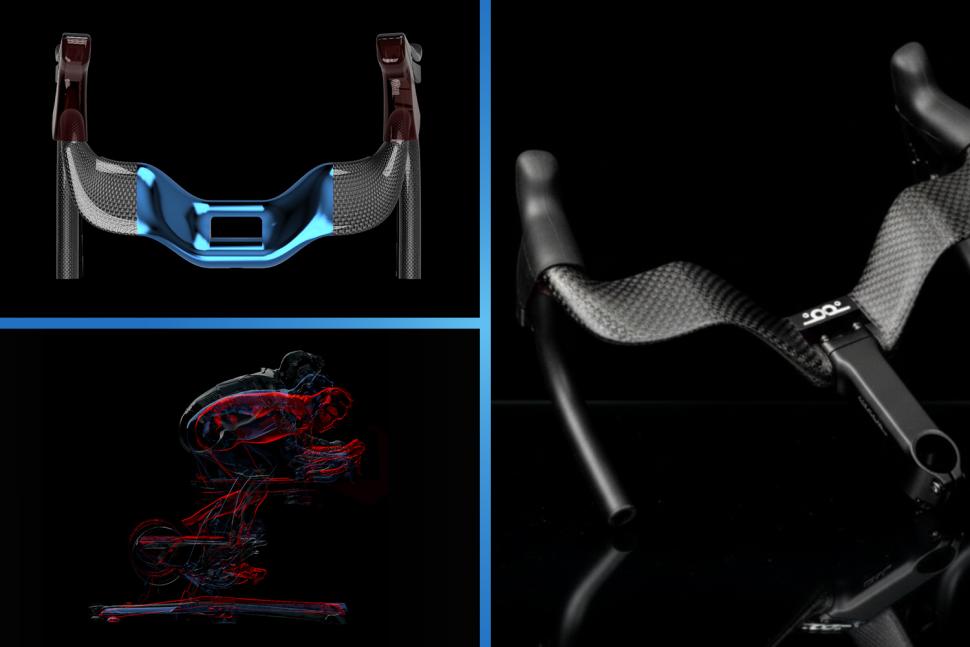
While many across the bike industry are frustrated and baffled by the UCI’s controversial handlebar width rules, coming in from the start of next season and enforcing a minimum 40cm overall width, Toot Engineering has cracked on with designing, manufacturing and testing, this week bringing its latest eye-catching aero bar to market.
The M3 (that stands for Marassha³) is apparently “the first adaptive cockpit for racing bikes based on scientific validation of dynamic stability”. Designed in collaboration with some very smart people at Bianca Advanced Innovations and universities in Pavia and Bari, the M3 comes in three configurations, all priced at an eye-watering €539: M3 Comp for “multi-purpose versatility”, M3 Race for “optimised aerodynamics and guaranteed control”, and M3 Aero for “maximum stability at very high speed”.
A level above that is the custom option, where Toot Engineering will 3D-print a fully custom M3 bar to a rider, the price for that dependant on the time it takes.
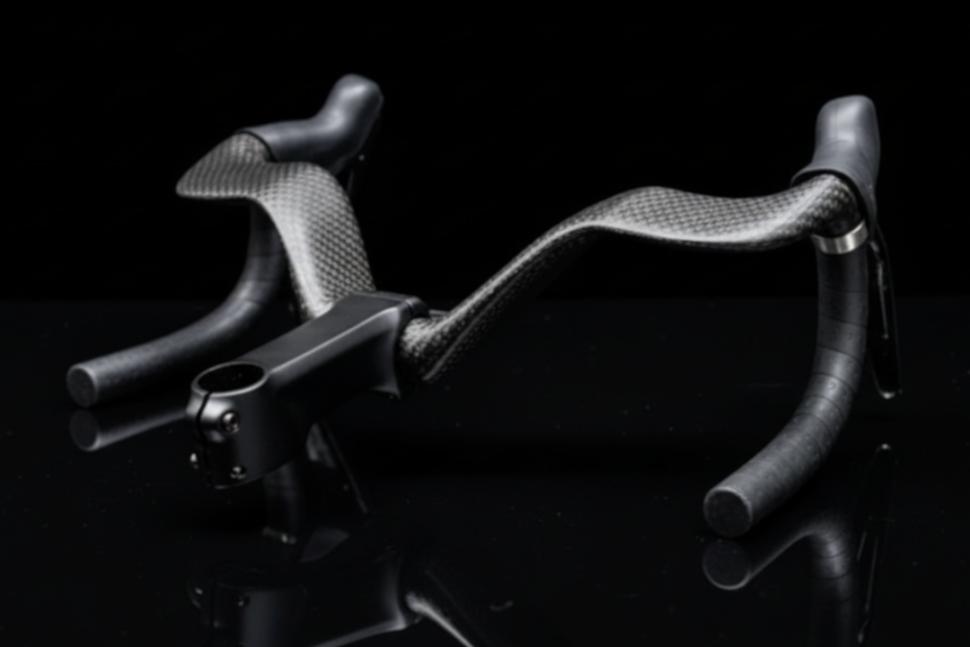 M3 Handlebars Aero carbon side view 2 (credit: Toot Engineering)
The design isn’t massively dissimilar to others we’ve seen in recent times, the Colnago Y1Rs for example introducing a one-piece cockpit with an upward stem leading to the Y-shaped front end, a ‘gull wing’ structure that itself was similar to Cervélo’s V-stem design.
In the M3’s case, the flat tops then create a natural resting place for the wrist to sit and maintain a rider’s tucked position.
Toot Engineering says the M3 is fully compliant with the new UCI handlebar regulations for 2026, the width designed to 399mm so it ticks over the 400mm limit once bar tape is fitted. The internal lever width abides at 280mm, the brand confident each variable reach per configuration will be fine with the UCI suits next season.
While we’re accustomed to many a new product’s press release predictably championing its watt-savings and aero credentials, Toot Engineering tells us its background in motorsport has led the brand to put stability at the centre of its design process.
“When we entered cycling, we found a world that chased watts and CdA but ignored dynamic stability,” a spokesperson from the brand’s design team said. “The M3 puts control back at the heart of performance.”
But what does that mean? Working with researchers from the University of Pavia led to StabFactor (stability and agility factor) being prioritised. For those with the brainpower to process this on a Wednesday afternoon, StabFactor = (reach x stack)/(width of hand rests/2). Simple stuff, really.
In essence, Toot Engineering and its partners believe geometries that maximise this stability factor enjoy greater resistance to oscillations, faster damping of the disturbances, better controllability at high speed, and “synergy between passive stability and active control”. Ultimately, and here comes the more traditional claim of a new cycling product unveiling, Toot Engineering reckons optimised configurations such as its can be up to 3.8 times more stable than traditional handlebars.
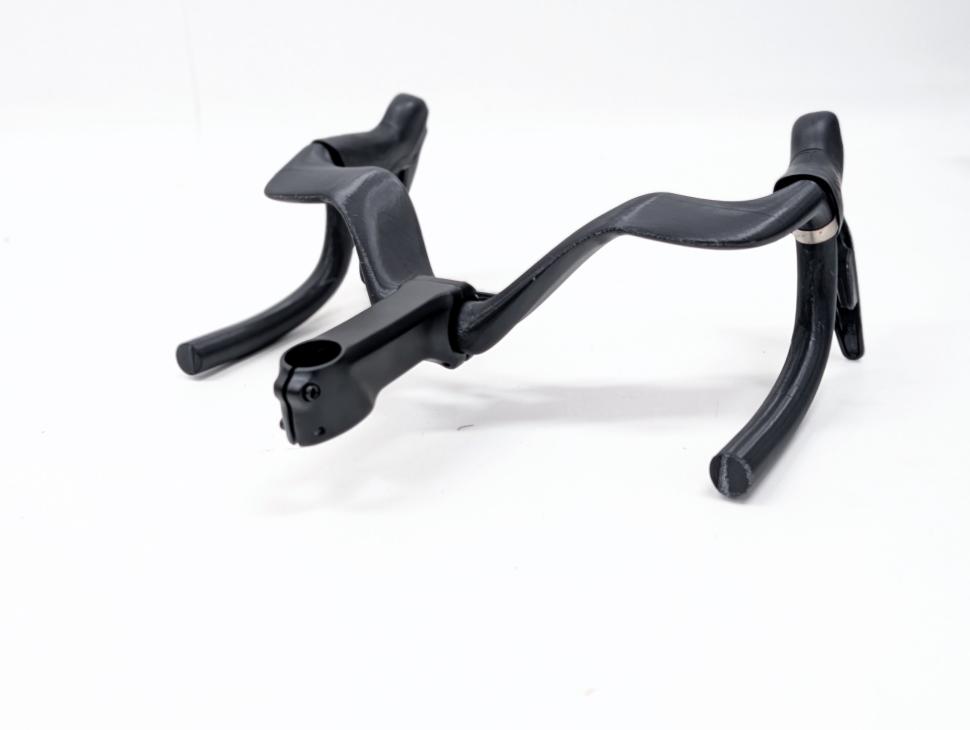 M3 Aero – side view (credit: Toot Engineering)
The brand also believes there’s a “myth” around wider handlebars offering more control and that, while it might be true at lower speeds, at high speeds a wide handlebar becomes a “disadvantageous lever” which “acts like a sail”.
“At high speed, the cyclist does not ‘steer’ by turning the handlebars; they ‘lean’ the bike using their own weight,” Toot Engineering suggests. The brand goes on to add the three-dimensional relationship between width, reach and stack are more important than just width.
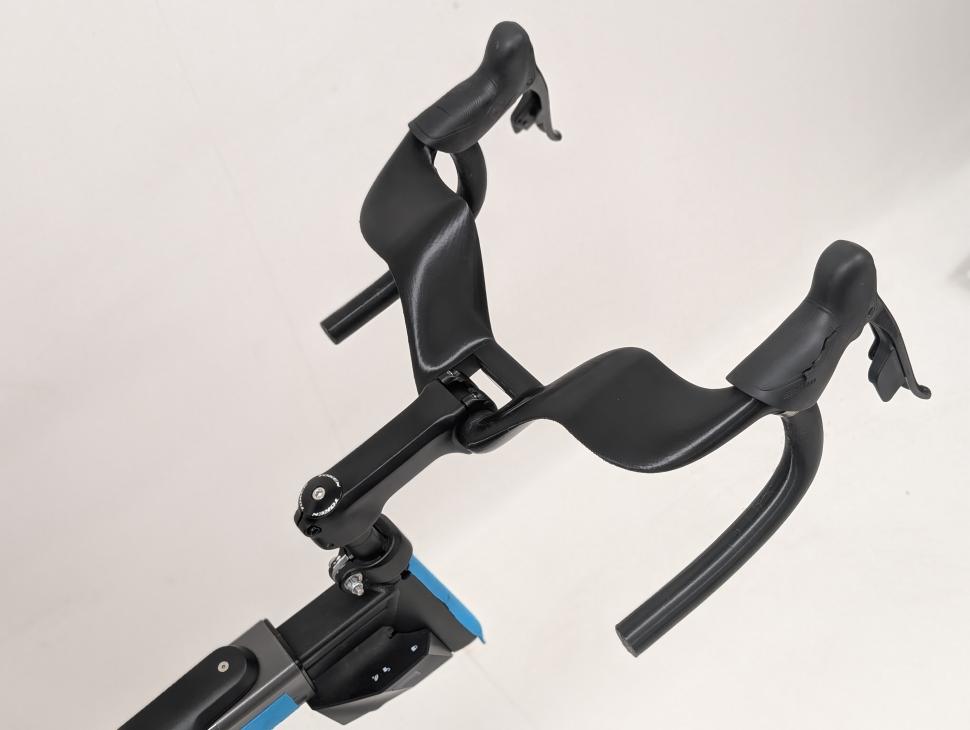 M3 Aero – on simulator (credit: Toot Engineering)
Toot Engineering’s spokesperson continued: “Tests conducted in the laboratory and on the road demonstrate that it is the proportion (ratio) between the width and length of the hand that rests on the controls or on the drop that determines the real rideability, safety and stability generated by the position that the component allows to obtain.
“The advancement of the athlete’s centre of mass produces a greater dynamic balance and allows for more precise and safer riding. By optimising the width/stack ratio within the optimal parameters, the damping time of external stresses also decreases exponentially, guaranteeing greater ease in corrections and stability of trajectories on fast and bumpy paths.”
Ultimately, Toot says its M3 is designed to reduce inefficiencies, making the rider faster by keeping you stable. By prioritising stability, the brand says, parasitic turbulences (generated by instability in movement such as a rider swaying or shifting) are limited.
“Stability is not just safety, it is efficiency,” Toot suggests. “For athletes, this translates into a superior control platform that allows them to maintain the most efficient position for longer with less energy waste.
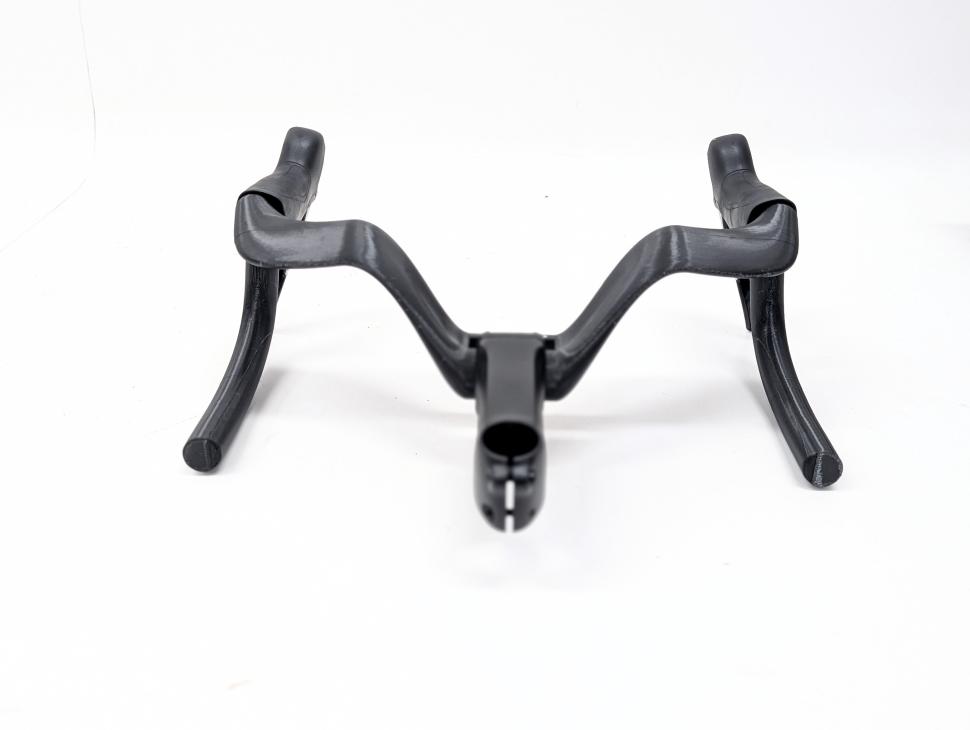 M3 Aero – rear view (credit: Toot Engineering)
“M3 represents a paradigm shift: from the logic of adapting the athlete to the component, to designing the component on an athlete-bike specific system. No one should imitate Pogačar, Evenepoel or Van Schip. Everyone has the right to shape themselves to achieve their best.”
It’s surprising it has taken us this long to hear Van Schip’s name, the Dutch rider with a cult following for his UCI-stressing aero set-ups, involved in the real-world testing of the M3, unsurprising given his previous use of some rather interesting handlebars (and disqualification back in 2021).
Van Schip did use Toot Engineering bars during his most recent tech-related DQ at the Tour of Holland, although the UCI is believed to have taken issue with his seatpost, not the front end.
 Jan-Willem van Schip aero set up (credit: Instagram/Jan-Willem van Schip/Toot Engineering)
The three standard M3 designs (aero, comp and race) are available to order, if you’ve got €539 (around £475) to drop on a handlebar, with delivery anticipated in January. The 3D-printed custom designs apparently take two to three weeks from the point of order, the price for those dependant on time.
When comparing the three configurations the stack, reach, hand reach, weight and Toot Engineering’s beloved StabFactor rise through the range from Comp, Race to Aero. All three are UCI compliant, with full details on Toot Engineering’s website.
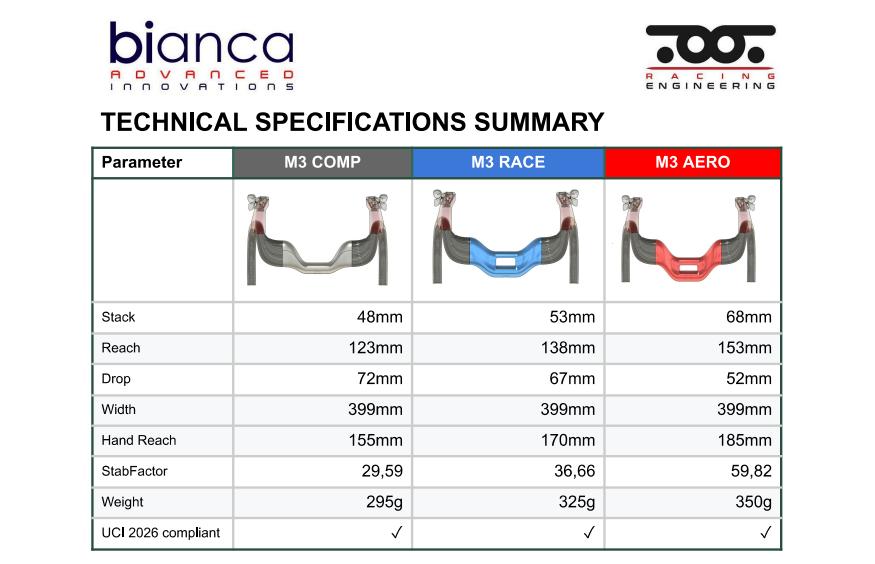 Toot Engineering M3 handlebar technical specifications (credit: Toot Engineering)