
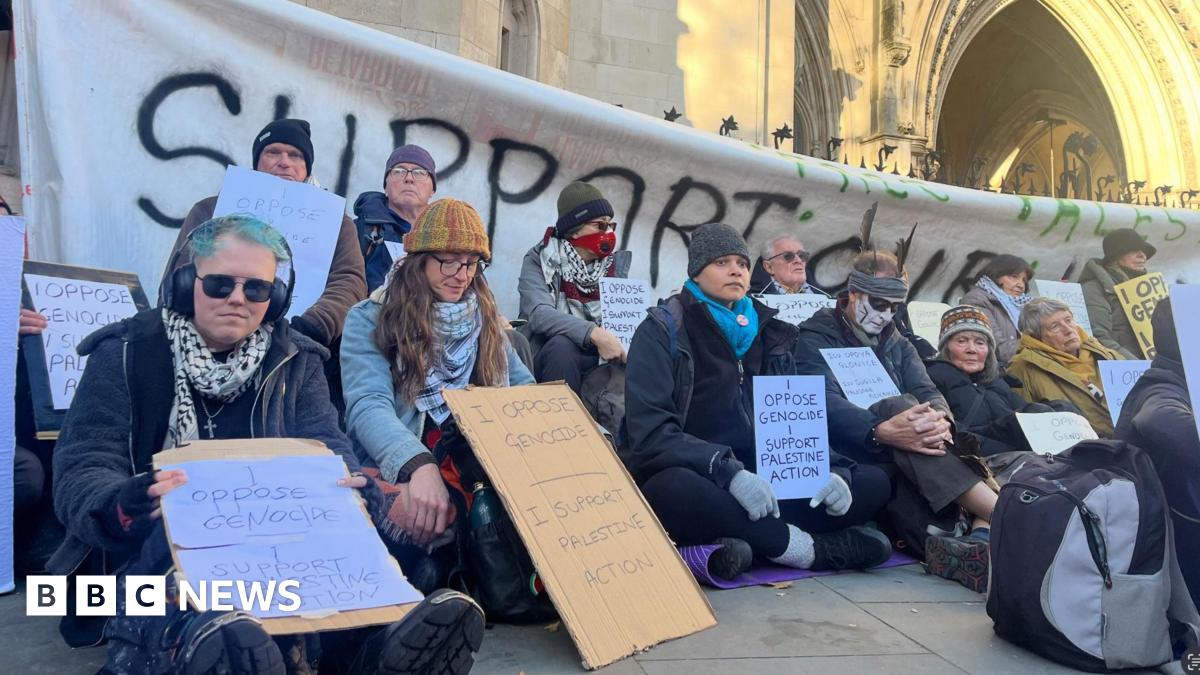
“Palestine Action is the first direct action civil disobedience organisation that does not advocate for violence ever to be proscribed as terrorist,” Mr Husain KC said.
“Ms Huda Ammori has explained that she was inspired by the long tradition in this country from suffragettes to anti-apartheid activists, to Iraq war activists.
“The suffragettes had resorted to direct action, property damage and even attempted arson at Westminster Abbey.”
His written submissions to the court added: “The suffragettes would have been liable to proscription if the Terrorism Act 2000 regime had been in force at the turn of the 20th century.”
Ms Ammori’s lawyers argue that the ban is unlawful because it disproportionately interferes with the right to freedom of expression and assembly – and the then home secretary failed to consider that impact.
They also argue that Cooper should have consulted the group before banning it and that she failed to take into account her own policy that such a decision had to be proportionate.
Owen Greenhall, another of Ms Ammori’s lawyers, argued that the impact of the ban was so wide it had deterred legitimate protest outside a key defence firm that has been targeted by the group since its founding.
Anyone who wanted to take part in such a disruptive protest, as had regularly happened before the ban, would risk being labelled a member of Palestine Action.
The case continues on Thursday, when government lawyers will respond.
In their written submissions to the court, made public on Wednesday, they argue that ministers acted lawfully in identifying incidents which they believed justified a ban under terrorism legislation – and that they did not have to take into account that the vast majority of Palestine Action’s activity had fallen short of that test.
The case then returns to court next Tuesday for final submissions, including a secret “closed” hearing for national security reasons.