
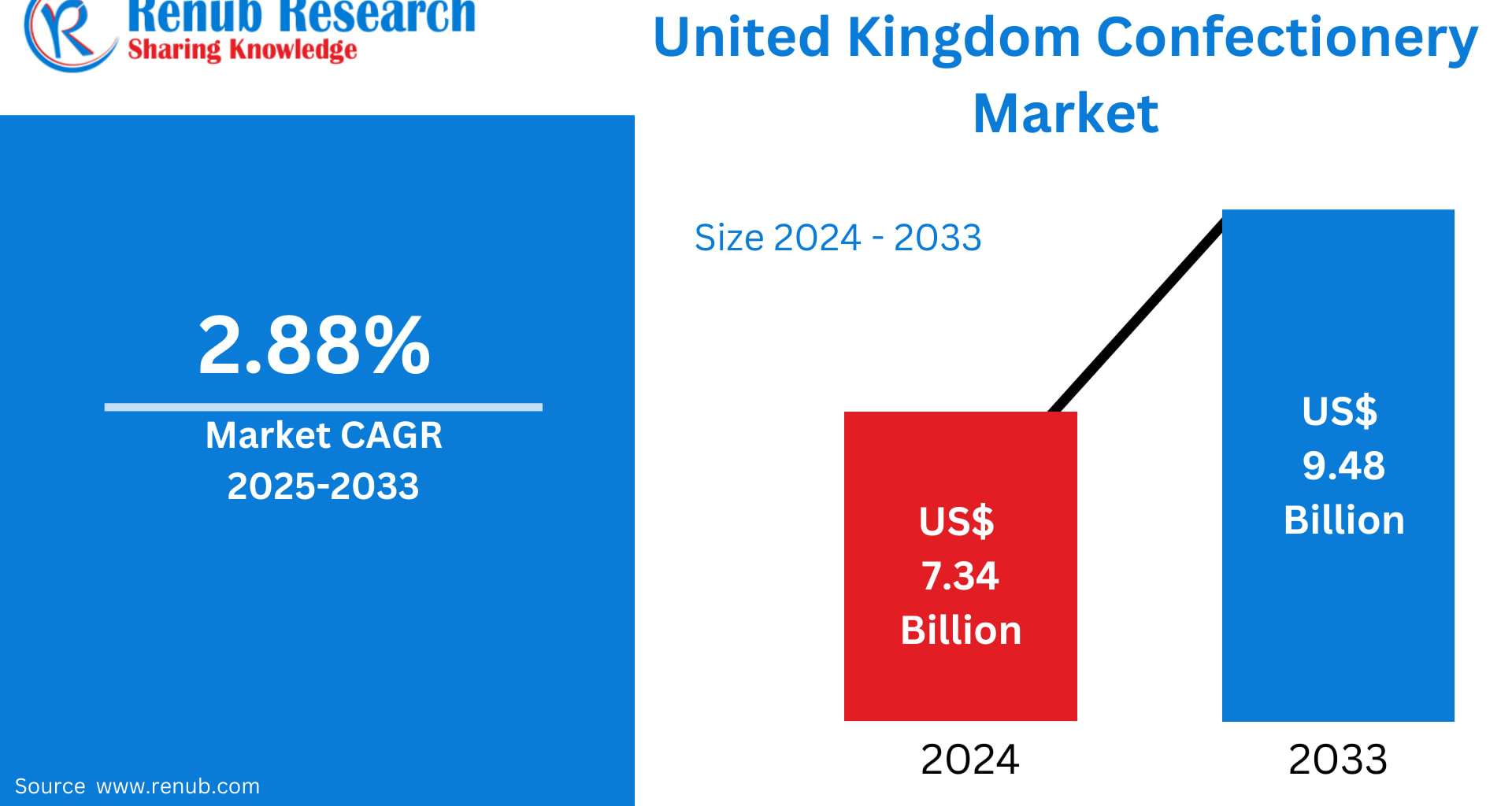
The United Kingdom Confectionery Market is experiencing a steady yet transformational rise, shaped by cultural traditions, evolving consumer preferences, and accelerating retail innovation. According to Renub Research, the United Kingdom Confectionery Market is expected to reach US$ 9.48 billion by 2033, rising from US$ 7.34 billion in 2024, growing at a CAGR of 2.88% during 2025–2033. This development reflects not only Britain’s sustained appetite for sweets but also the strategic adaptations of manufacturers and retailers to modern-day consumer expectations.
As food technology, ingredient innovation, and the push for healthier lifestyles continue to redefine the market, the UK stands as one of Europe’s most dynamic confectionery hubs—balancing indulgence with responsibility, tradition with innovation.
United Kingdom Confectionery Industry Overview
The UK confectionery industry remains one of the most vibrant segments within the broader food and beverage sector. Encompassing chocolate, sugar confectionery, and gum, the market caters to deeply rooted British traditions where chocolates and sweets are embedded in both cultural rituals and everyday life. Seasonal peaks—particularly around Christmas, Easter, and Valentine’s Day—underscore confectionery’s enduring role as a symbol of celebration, gifting, and nostalgia.
In recent years, the market landscape has shifted dramatically due to evolving customer preferences and retail strategies. Convenience stores, for instance, have become a dominant retail force. With over 48,590 convenience outlets across the UK in 2022, accessibility to confectionery has never been stronger. Major retailers are aggressively expanding. Aldi announced its plan to open 100 new UK stores by 2025, while Lidl GB aims to reach 1,100 outlets by the end of 2025, reaffirming the sector’s commitment to strengthening physical retail presence.
At the same time, digital transformation is reshaping how confectionery is purchased and consumed. In 2023, 82% of UK citizens made at least one online purchase, supported by an impressive 97.8% internet penetration and 66.11 million active internet users. Subscription services, curated sweet boxes, and tailored recommendations are now mainstream, pushing confectionery brands—legacy and emerging—to enhance their digital footprints.
Perhaps the most notable shift is towards health-focused confectionery. With 67% of consumers preferring milk chocolate, 22% dark chocolate, and 11% white chocolate, brands are innovating to meet both indulgence and wellness needs. This shift is further influenced by rising health concerns, with 4.3 million people in the UK diagnosed with diabetes in 2023, prompting manufacturers to introduce reduced-sugar, no-sugar, and functional alternatives.
Key Growth Drivers of the UK Confectionery Market
1. Strong Cultural Affinity and Seasonal Consumption
The UK has an unrivaled cultural connection to confectionery. Whether it’s a holiday gathering, office chocolate box, or simple moment of indulgence, sweets hold emotional value in British life. Seasonal periods remain blockbuster opportunities for brands—especially Christmas and Easter, which consistently drive soaring chocolate sales.
These occasions fuel demand for:
Festive assortments
Limited-edition packaging
Themed confectionery products
Gift-ready premium chocolate collections
Confectionery in the UK thrives as both an impulse buy and a symbolic gift. This dual utility makes it a high-frequency purchase category with reliable year-round demand. Seasonal traditions ensure that confectionery remains a central part of celebrations, reinforcing its position as a stable and culturally embedded market segment.
2. Premiumization and Ethical Sourcing Trends
In recent years, UK consumers have demonstrated an increasing desire for premium chocolates, artisanal sweets, and gourmet confectionery. This shift is driven by:
Higher disposable incomes
Curiosity about global flavors
Demand for transparency in sourcing
Growing interest in sustainable and ethical production
Brands promoting fair-trade cocoa, sustainable farming, and eco-conscious packaging have built strong loyalty among modern consumers. Premium chocolates—once reserved for special occasions—are now part of regular self-care and gifting trends.
Ethical sourcing is no longer a niche concern; it is a mainstream expectation. Consumers are willing to pay more for products that align with their values, boosting margins for companies that invest in sustainability.
3. Innovation in Health-Oriented Confectionery
Health consciousness among UK consumers is reshaping product development and marketing strategies. Traditional sugary treats are increasingly accompanied by a broad range of alternatives, including:
Sugar-free and reduced-calorie confectionery
Vegan and plant-based chocolates
Protein-infused or vitamin-enriched sweets
Clean-label offerings
Government regulations aimed at reducing sugar consumption—such as advertising restrictions and nutritional labeling—have forced manufacturers to reformulate and innovate without compromising taste.
This shift is giving rise to a new market subsegment: functional confectionery, appealing to consumers who seek indulgence with added health benefits.
Challenges in the United Kingdom Confectionery Market
1. Raw Material Price Volatility
Cocoa, sugar, and dairy prices continue to fluctuate due to global supply constraints, climate impacts, and geopolitical issues. This creates uncertainty for confectionery manufacturers, especially small and mid-sized businesses that struggle to hedge procurement risks.
Key challenges include:
Rising costs of ethical and sustainably sourced ingredients
Pressure to maintain affordability amid inflation
Difficulty passing cost increases to price-sensitive consumers
As price volatility increases, strategic planning and supply chain resilience remain crucial.
2. Regulatory and Health-Related Pressures
The UK’s push toward healthier eating has put confectionery brands under significant scrutiny. Regulations include:
Sugar reduction targets
Calorie labeling requirements
Restrictions on advertising sugary products to minors
These mandates require major investment in reformulation, packaging, and marketing. Brands must strike a delicate balance between reducing sugar and maintaining the flavors that define their identity. Non-compliance risks reputational damage and legal issues, making regulatory adaptation essential for long-term success.
Regional Market Overview
The UK’s confectionery consumption patterns vary across regions due to differences in demographics, cultural preferences, and retail landscapes.
London
London remains the epicenter of confectionery innovation and consumption. Its multicultural population fuels demand for both traditional treats and international flavors. High disposable income and health-focused lifestyles encourage strong purchasing of premium, vegan, and ethically sourced confectionery.
London’s retail ecosystem—including specialty chocolate boutiques, upscale markets, and robust e-commerce adoption—positions it as a key trendsetter for the entire UK market.
Scotland
Scotland’s confectionery market blends strong affinity for traditional sweets with rising interest in healthier alternatives. Local brands leverage regional identity, heritage flavors, and artisanal craftsmanship to maintain customer loyalty. Tourism boosts demand for giftable confectionery products, while e-commerce expansion widens access to diverse offerings.
West Midlands
Known for its industrial heritage and thriving urban centers, the West Midlands exhibits significant demand for both mainstream and premium confectionery. Affordability remains a primary factor, though health-oriented products are gaining popularity. A strong presence of local manufacturers and distribution networks supports growth across all segments.
Yorkshire and the Humber
As home to several historic confectionery manufacturers, Yorkshire and the Humber has a deep-rooted connection to sweets and chocolates. Traditional favorites maintain steady demand, while a younger, digitally savvy demographic creates opportunities for innovative, low-sugar, and plant-based products. Seasonal sales peaks and regional brand loyalty reinforce the area’s market importance.
Market Segmentations
By Type
Chocolate
Sugar Confectionery
Cookies
Ice Cream
By Distribution Channel
Supermarkets & Hypermarkets
Convenience Stores
Pharmaceuticals & Drug Stores
Specialty Stores
Online Channels
Others
By Region
London
South East
North West
East of England
South West
Scotland
West Midlands
Yorkshire and the Humber
East Midlands
Others
Key Companies Covered
August Storck KG
Chocoladefabriken Lindt & Sprüngli AG
Ferrero International SA
General Mills Inc.
HARIBO Holding GmbH & Co. KG
Kellogg Company
Lotte Corporation
Mars Incorporated
Company overviews, key personnel insights, recent developments, SWOT analyses, and revenue analysis form essential components of competitive benchmarking within the UK confectionery landscape.
Final Thoughts
The United Kingdom confectionery market is poised for steady growth through 2033, driven by the interplay of tradition, innovation, and evolving consumer values. While economic and regulatory pressures create hurdles, the sector’s ability to reinvent itself—through premiumization, healthier offerings, and digital expansion—positions it for resilience and long-term success.
As Britain continues to redefine indulgence in a modern context, confectionery remains one of the most beloved and culturally significant components of its food industry. The coming decade promises a sweet blend of nostalgia, creativity, and sustainable progress.