
Published on: Nov 27, 2025 08:47 pm IST
Incentivising production of rare earth permanent magnets is an economic necessity and a strategic choice
In an ideal world, a country need not manufacture everything at home. It need not even manufacture everything it needs to make things it wants to export to the outside world. But we do not live in an ideal world anymore. It is a world where the largest economy, the US, is on a tariff rampage, and the second-largest economy, China has tried to counteract some of this by holding back what is arguably the most critical component in modern manufacturing: Rare earth minerals.
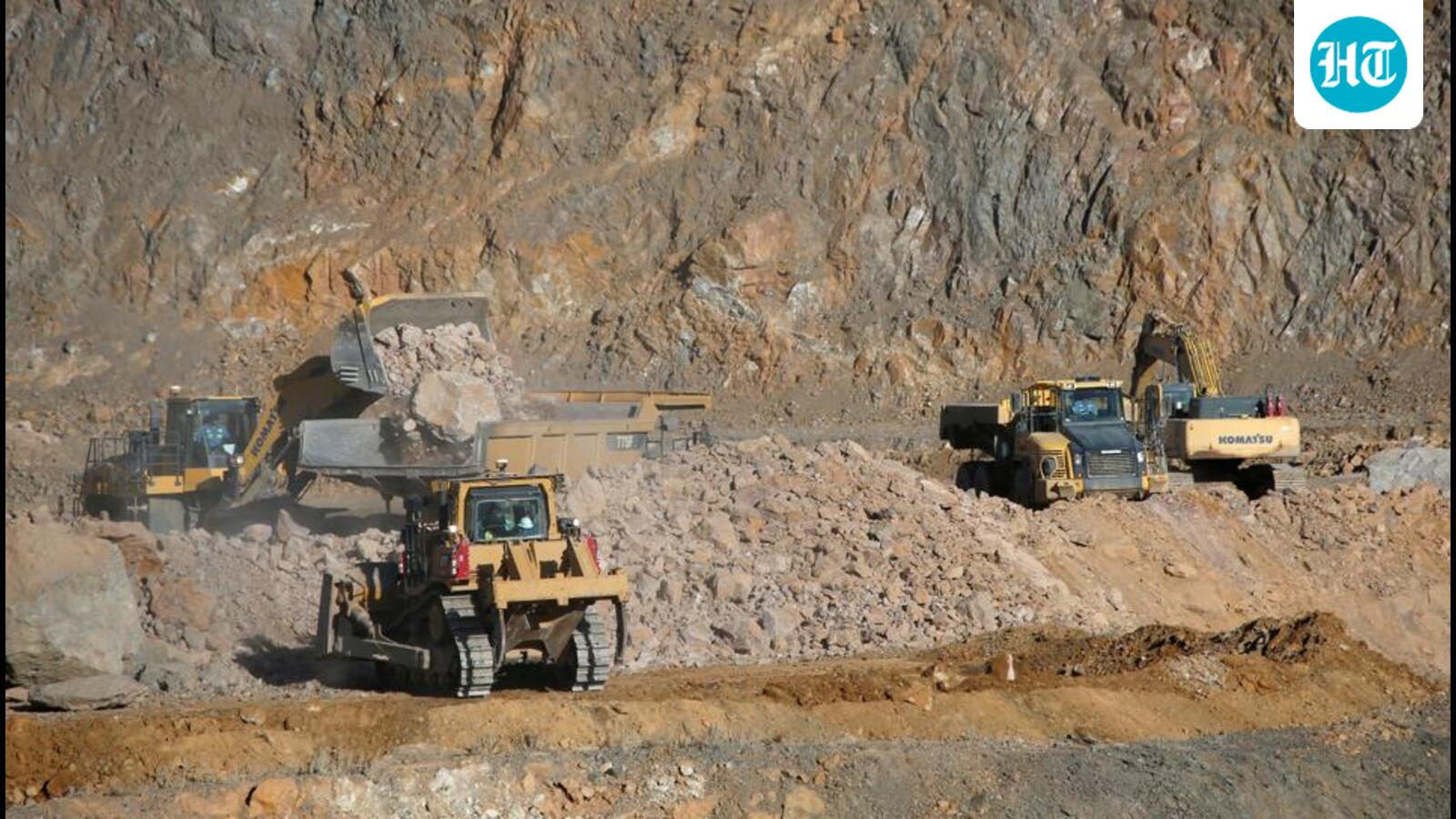
 PREMIUM The scheme, from details that are public, pretty much follows the larger framework of the Production Linked Incentive (PLI) schemes. (REUTERS)
India, like most other major economies in the world, is having to deal with both problems. It is still in trade dialogue with the US and, hopefully, an amicable solution will be achieved soon. However, the supply constraint side of the problem is more difficult to solve, mainly because most of the rare earth supplies are located in China. This, however, can’t be an excuse for doing nothing and remaining at the mercy of others.
It is in this larger context that the Union cabinet’s decision to incentivise production of rare earth permanent magnets (REPM) is welcome. The scheme, from details that are public, pretty much follows the larger framework of the Production Linked Incentive (PLI) schemes: Companies will get subsidies to set up production facilities and even more subsidies if their production crosses a certain threshold.
To be sure, this is not going to solve India’s problem of not having enough rare earth raw material deposits. What it can do is to take care of second-order supply-side vulnerabilities by setting up manufacturing facilities for REPMs once raw material supplies have been taken care of. To oppose this kind of a policy would be tantamount to opposing expansion of India’s petrochemical refinery prowess on the grounds that we do not produce enough crude oil. It is not just economical — on things such as saving foreign exchange, easing logistics costs for domestic electronic industry, etc — but also strategic in a way.
Understandably, no such initiative on its own can get rid of the potential impediments to India’s aspirations to boost its domestic manufacturing and expand its export footprint — but what is important is that the policy framework is gradually expanding to address such gaps.
Unlock a world of Benefits with HT! From insightful newsletters to real-time news alerts and a personalized news feed – it’s all here, just a click away! –Login Now! Unlock a world of Benefits with HT! From insightful newsletters to real-time news alerts and a personalized news feed – it’s all here, just a click away! –Login Now!
See Less
All Access.
One Subscription.
Get 360° coverage—from daily headlines
to 100 year archives.
 E-Paper
  Full Archives
  Full Access to
HT App & Website  Games Subscribe Now Already subscribed? Login