
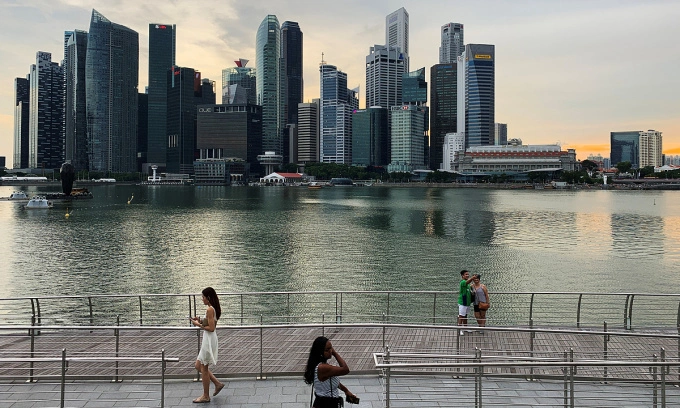
Singapore topped the ranking for generalist adaptive skills, which include soft skills, digital literacy and innovation-oriented thinking, according to the 11th edition of the Global Talent Competitiveness Index.
It also saw a sharp jump in talent retention, rising seven places to 31st from 38th in 2023, buoyed by improvements in physician density, personal rights, and personal safety, CNBC reported.
The index, produced by INSEAD business school and U.S.-based think tank Portulans Institute, evaluates how economies develop, attract, and retain talent across all income groups. It is widely used by governments, companies, and recruiters to inform talent strategies.
It was launched in Singapore in 2013 and is published annually, though it was paused in 2024 for the methodology and framework to be redesigned.
This year’s edition covers 135 economies using 77 indicators across six pillars and introduces new variables reflecting modern drivers of talent competitiveness, such as artificial intelligence adoption, soft skills and employee well-being.
Singapore’s workforce benefits from one of the world’s most robust talent ecosystems, which supports individuals in adapting, growing and thriving, according to Professor Felipe Monteiro, INSEAD’s senior affiliate professor of strategy and one of the index’s three authors.
“For the individual worker, this translates into better opportunities to upskill, greater career mobility and a higher level of protection against disruption, especially as AI reshapes jobs,” he said, as quoted by The Straits Times.
While Switzerland lost its crown, it still achieved top-five rankings for several factors, including first in internet access in schools, second in government effectiveness and fourth in AI skills migration.
Denmark, Finland, and Sweden rounded out the top five, each having improved their positions compared with the 2023 edition.
The U.S. fell from third place in 2023 to ninth in 2025, falling out of the top five for the first time in the history of the index.
Nonetheless, it performed well in areas such as preparedness for future disasters and household financial resilience, highlighting its ongoing institutional and economic strength, as noted by Professor Monteiro.
He said the drop underscores the intensifying global competition for talent, where even established leaders can lose ground if they do not adapt to rapid changes in skills, technology and workforce dynamics.
“No country, however strong, is immune to disruption in the race for talent,” he added.
Paul Evans, INSEAD’s emeritus professor of organizational behavior and co-editor of the report, said this year’s report indicates that talent competitiveness is influenced not just by income level, but also by “strategic policy direction, institutional quality and the effective use of human capital.”
The report highlighted Singapore, South Korea and Israel as examples of countries achieving strong talent outcomes with relatively limited resources, according to the Business Times.
Lower-middle-income nations such as Tajikistan, Kenya, Uzbekistan, Sri Lanka, Myanmar, Pakistan, Bangladesh and Rwanda were also noted for performing well despite modest income levels.
“Economies that align education, labor and innovation systems towards adaptive talent development can achieve high performance even with modest income levels,” Evans said.