
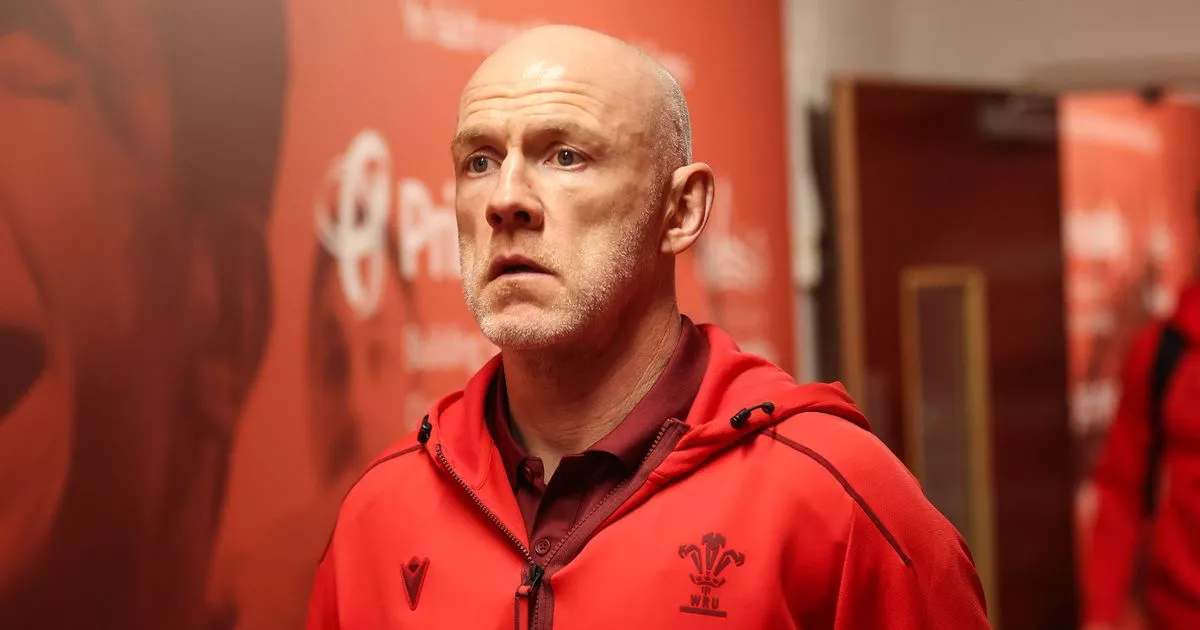
S4C pundit Gwyn Jones gives his views on Wales’ autumn, with Steve Tandy faced with a problem to solve Steve Tandy has to find a strategy that allows Wales to have more possession(Image: Six Nations Rugby)
No matter what happens on Saturday, Wales should emerge from the autumn series with a degree of optimism. With so many changes to both sides, it will be difficult to draw firm conclusions from the South Africa match alone.
If Wales avoid a humiliation, Steve Tandy can view his first campaign with a measure of satisfaction. The standout positive from the opening three games has been Wales’ ability to create chances and score tries. Even in conceding 50 points to Argentina and New Zealand, they still managed four tries against two of the world’s most disciplined defences.
Scoring at Test level is notoriously difficult, yet when Wales enter the red zone they ignite, manufacturing opportunities through skill and vision. It is a stark contrast to the final years under Warren Gatland, when Wales might lose heavily but offered nothing in attack. Think back to last year’s 43–0 defeat in Paris — Wales didn’t land a single punch, it was depressing to watch. These performances have not felt like that, although I admit I am sporting a thick set of rose-tinted glasses at the moment.
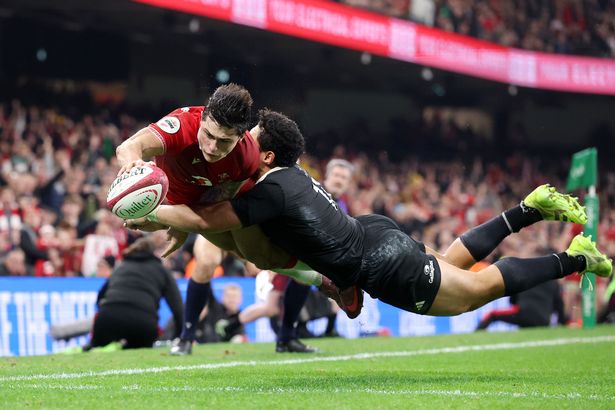 Louis Rees-Zammit of Wales scores his team’s fourth try whilst being tackled by Caleb Clarke(Image: 2025 Getty Images)
That said, there are major areas requiring improvement. The most urgent is the battle for possession. Wales have lost it comprehensively in all three matches; against New Zealand they held just 33% of the ball. This has multiple consequences. The players tire from the sheer defensive workload — even against Japan, the tackle count was 226 to 128. Fatigue leads to missed tackles, defensive lapses and penalties. Referees penalise teams without the ball, with most penalties being awarded for offside and slowing the ball. If you are tackling non-stop, focus drops and infringements multiply.
A key reason Wales see so little ball is their low-risk strategy in the middle third. Reluctant to overplay or risk isolation, they go to the air after only a couple of phases rather than building pressure. That’s understandable as Wales do not want to be exposed unnecessarily, but against teams like New Zealand or Japan, who are comfortable keeping possession for long stretches, Wales end up absorbing wave after wave of attack.
This will be a major strategic question for Tandy and attack coach Matt Sherratt ahead of the Six Nations: how can Wales retain the ball and play through more phases in the middle third without a pack loaded with heavy carriers? It won’t be a simple fix.
Another area demanding attention is the aerial contest, now one of the most influential components of the modern game. Blair Murray is a gifted attacker, but he is being relentlessly targeted in the air — and that pressure will continue. His size counts against him, which is unfortunate, though physical stature isn’t everything. Every international coach in the world would select Cheslin Kolbe if they could, and he stands at just 5ft 7. It may be that Murray needs to shift to the wing, where he is less exposed than at full-back.
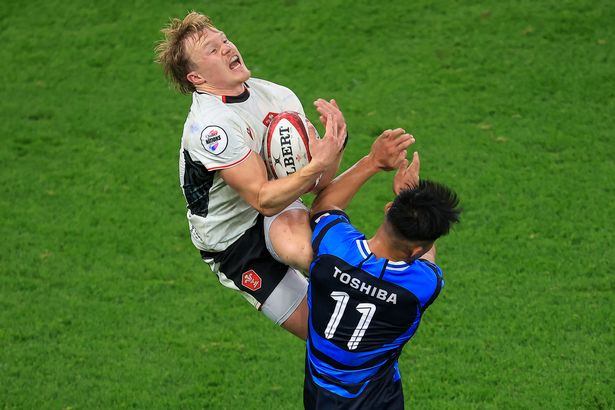 Blair Murray of Wales catches a high ball(Image: Huw Evans Picture Agency)
You would expect every winger in Wales to be practising Aussie Rules-style overhead catching, because anyone who can dominate the airwaves will be in strong contention for selection.
South Africa, meanwhile, have been mightily impressive this series. Their titanic victory in Paris was jaw-dropping in its brutality and clarity of purpose — the match of the autumn and a statement of world dominance. Rassie Erasmus does not allow complacency to creep in. He has no hesitation in making a brutally early substitution if a player is off the pace, regardless of their reputation. That culture of accountability ensures that even a rotated Springbok squad maintain extraordinary intensity and hunger.
Elsewhere, England have taken a significant step forward, and along with France they look the only sides capable of stopping South Africa from claiming a third successive World Cup. One thing that hasn’t changed is Scotland’s tendency to believe their own hype. When will they learn?
Saturday will be a magical experience for the players drafted in by Tandy to face this generational Springbok team. They have nothing to lose, and the crowd will be behind them, urging them to hit their highest level. The danger is that enthusiasm spills over into raggedness and ill-discipline — something Wales simply cannot afford against South Africa.
Supporters making the trip will also have the rare chance to watch the most exciting young talent in world rugby: Sacha Feinberg-Mngomezulu. I think he has the potential to become the greatest player of his generation — a risk-taker, a game-changer, and utterly unpredictable.
The Springboks should finish their season with an imperious win. If Wales can avoid too heavy a mauling, this autumn will be about as positive a return as could reasonably have been expected from Steve Tandy and his men.
Gwyn Jones is part of S4C’s live coverage of Wales v South Africa, which begins at 2.30pm on Saturday, November 29.