
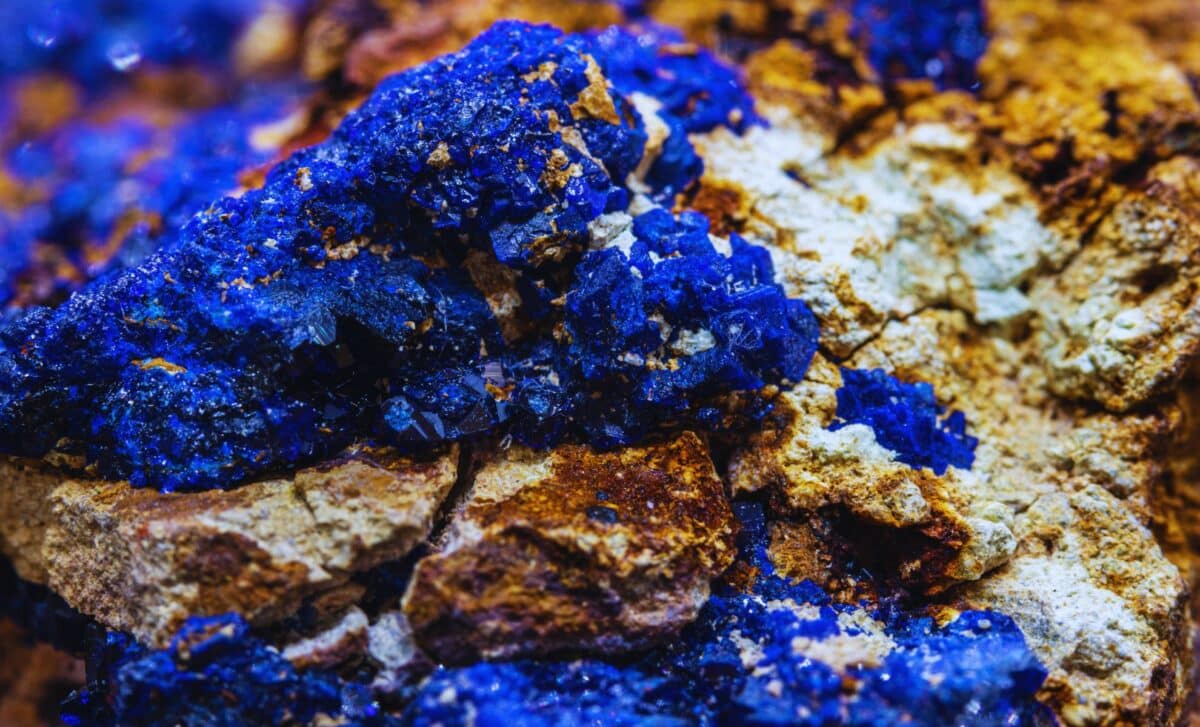
Researchers have uncovered traces of a rare blue pigment on a 13,000-year-old stone artifact from Germany. This groundbreaking discovery suggests that early humans had access to a much wider palette than previously thought.
The stone, found at the Mühlheim-Dietesheim site in Germany, holds faint traces of azurite, a mineral pigment known for its striking blue color. The discovery, made by researchers at Aarhus University, is the earliest known evidence of blue pigment in Europe. For years, experts believed that early humans primarily used red and black pigments, given that most surviving prehistoric artwork only shows these colors.
You’ll Never Guess How Paleolithic People Used Color
Until now, blue had been absent from the known color palette of Paleolithic artists. Archaeologists had long assumed that blue pigments were either too rare or difficult to obtain. “We thought we knew about Paleolithic pigment use,” said Dr. Izzy Wisher, the lead author of the study. But the discovery of azurite on the Mühlheim-Dietesheim stone shakes up that assumption and suggests that early humans may have had access to a wider range of pigments than we realized.
Azurite, which is known for its rich, deep blue color, was not previously documented in Paleolithic Europe. Instead, most known cave paintings and artifacts feature red ochre and charcoal, which are much easier to find and work with. But, according to the study published in Antiquity, the discovery of this mineral pigment suggests that ancient humans had a more sophisticated understanding of color than we’ve given them credit for.
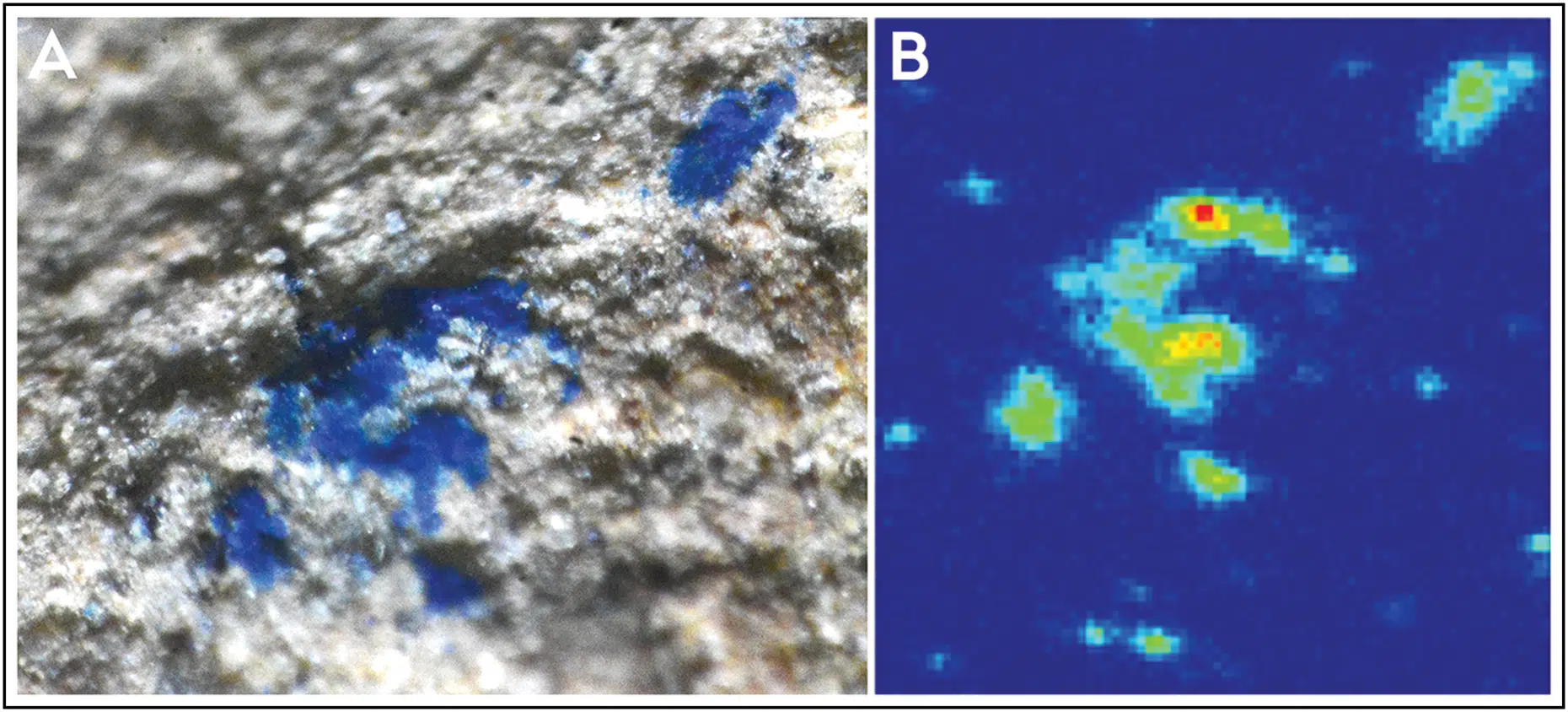 Mapped area from PIXE analysis, highlighting traces of blue pigment residue. Credit: Antiquity
It raises an intriguing question: Could blue have been used in ways that didn’t survive in the archaeological record, like body paint or textile dyeing?
A New Interpretation of the Artifact
The stone that bears the blue pigment was initially believed to be an oil lamp. But after further analysis, researchers now think it might have been a mixing surface for preparing pigments.
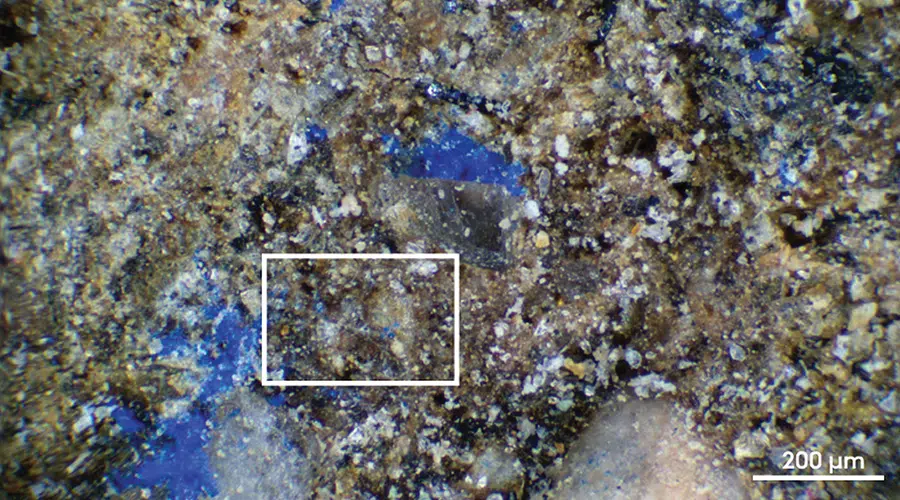 Close-up of nano-sized blue particles, positioned next to visible pigment clusters. Credit: Antiquity
The presence of azurite on the stone suggests it could have been used to create blue pigments, possibly for body decoration or other ceremonial purposes. It’s possible that blue was not just used for painting on cave walls, but also for decorating the body or even coloring textiles.
Identity in Prehistory: What We Can Learn from Ancient Practices
The color blue, in many cultures, carries significant symbolic meaning, could it have been the same for early humans? While we can’t know for sure, the fact that they went to the trouble of using a pigment like azurite suggests that color may have played a role in expressing identity, status, or even spiritual beliefs.
“The presence of azurite shows that Paleolithic people had a deep knowledge of mineral pigments and could access a much broader color palette than we previously thought – and they may have been selective in the way they used certain colors,” Dr. Wisher explained.
The pigments could mean that these early humans had a more complex cultural system than we’ve assumed, with color potentially being tied to rituals or group identity.