

(Credits: Far Out / Open Culture)
Fri 28 November 2025 18:30, UK
There aren’t too many pieces of rock and roll guitar that Jimmy Page hasn’t had his hands on at least once in his career.
The entire history of the guitar riff was practically invented by both him and Keith Richards in the late 1960s, and even when making his acoustic tunes, he found ways to take the instrument in different directions with the strange tunings that he used on everything. But even when looking at his contemporaries, he was the first to say when a song was beyond his abilities.
But there didn’t really seem to be anything holding Page back when working with Led Zeppelin. He was testing the limits of guitar at that point, whether that was working in harmonics or toying with everything behind the nut of the guitar to make everything sound strange on tracks like ‘Dazed and Confused’. And that creative ingenuity didn’t exactly come by accident when he left the Yardbirds, either.
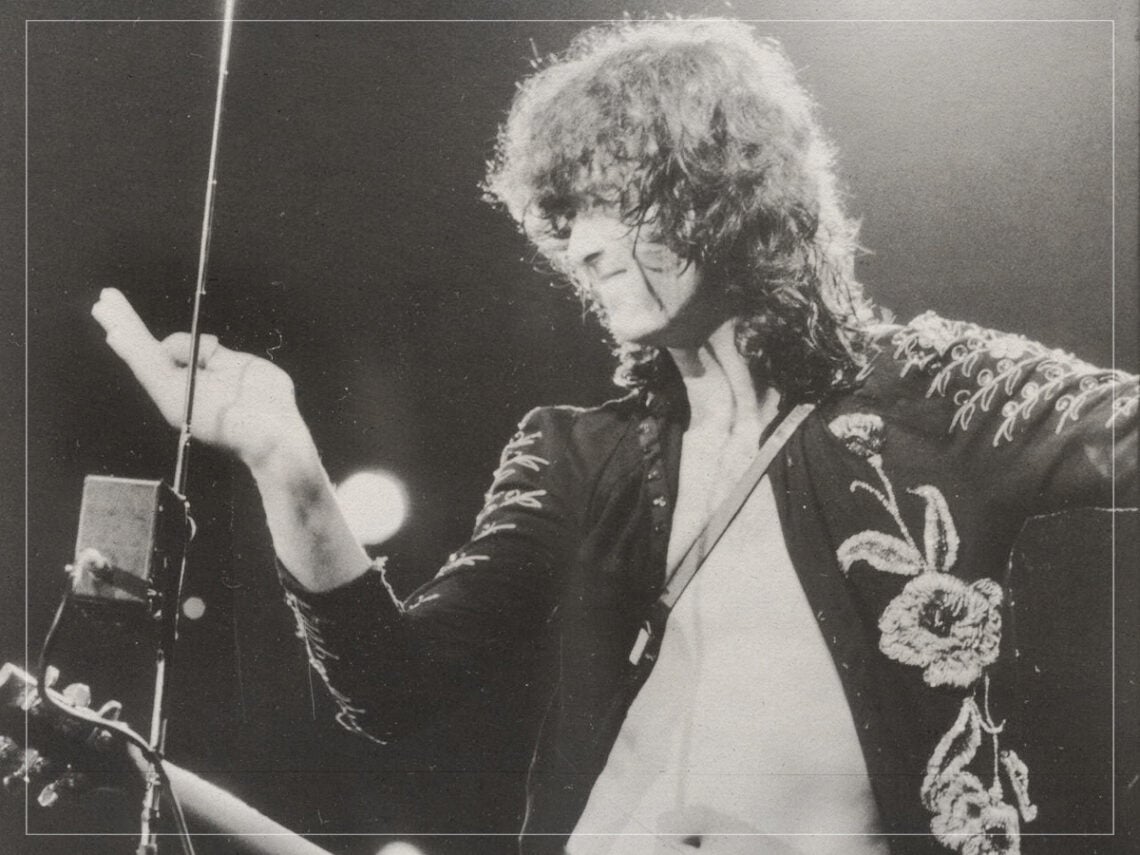
Eric Clapton may have been the blues purist who wanted to keep pushing the genre in other directions, but what Page wanted was to get the sounds that he heard from his favourite artists from other genres on his guitar. That often meant doing everything from tuning the strings into tunings that no one had heard before, using a theremin to create every strange sound that he could think of, and let’s not forget that huge bow that made him look like an almighty wizard of guitar whenever he performed.
When Page was introduced to the world of country music, though, he saw a completely different way of looking at the instrument. Richards had already started pushing a country agenda when working with The Stones, but when Page listened to a band like The Byrds, he felt like they had fingers made out of steel to get the kind of bends that could sing as well as they could on their classics.
While the StringBender was a fairly new tool, Page was dumbfounded listening to what The Byrds could do, saying, “I heard Clarence White as a guitarist on the Untitled LP by the Byrds and all the stuff he was doing I thought was quite amazing. And there were parts that I couldn’t physically do as far as trying to do it on the guitar. And I heard that there was this mechanism within the guitar which was the Gene Parsons/Clarence White StringBender.”
That kind of music may have been what drove David Crosby out of the band, but Page saw the whole thing as a new tool. It’s not like he was going to use the StringBender on everything he touched or anything, but the rare times that he used it were always about trying to get that subtle bit of emotion that he couldn’t have done if he simply tried bending the strings as hard as he possibly could.
Before he had that kind of mechanism, Page was already trying out different ways of making folksy playing on his acoustic. The Byrds may not have been a direct inspiration, but it’s easy to see him taking the basis of ‘Over the Hills and Far Away’ from the years that he spent listening to everyone from Pete Seeger and Joni Mitchell when he first started with the idea of fingerpicking.
Although Page was the first to admit that he couldn’t play what White could on those Byrds projects, it wasn’t like he felt inferior because of it. Anything was possible on guitar for him whenever he started playing, and if he heard a sound in his head, he would travel the ends of the Earth to make sure that made its way to his fingers.
Related Topics