
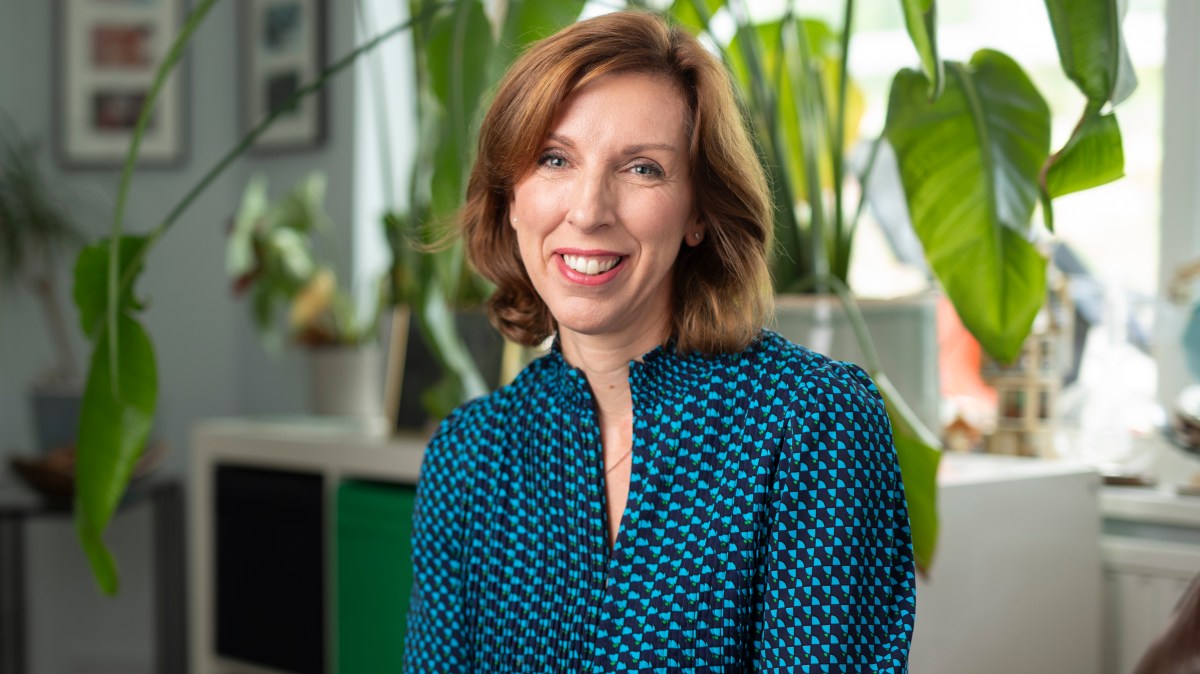
Dr Louise Newson is in a glum mood when we first meet. She came to London for a BBC Woman’s Hour interview about research she had funded into potential links between the menopause, depression and suicide, but is early for our rendezvous, having been pulled from the programme at the last minute. “I’ve come to expect it,” she says. “It’s disheartening, but not surprising.”
Until recently Newson, one of the country’s best known menopause experts, was a fixture in the media. She had a regular slot on This Morning, and her free Balance app had more than a million downloads. Now, after what she calls an “annus horribilis” in which Panorama accused Newson’s private clinic of increasing the cancer risk to patients by prescribing high dosages of hormones, and a timely leak that the leading professional body for menopause medics had stripped her of specialist status, Newson’s reputation has taken a severe dent.
Newson Health, her private practice, which has two centres in Stratford-upon-Avon and London, had been seeing about 4,000 patients a month but that figure slumped. She had to make 26 out of 70 doctors redundant, and slash the amount of menopause research she was able to fund. A pending professorship at a university was dropped, most of her media appearances were cancelled, and the Care Quality Commission (CQC) announced an inspection.
• Dr Louise Newson tells of ‘menopause witch-hunt’
“I have been to some very dark places,” Newson confesses while sipping chamomile tea in an upmarket bar off Chancery Lane in central London.
“It has been very difficult for me. But what really upsets me is the harm to women. Many of them can’t get what they need. I’ve never said hormones are a cure-all. But we shouldn’t be so scared of them.”
When we speak weeks later, Newson appears much more upbeat. She bounces on to a Zoom call with a big grin, hair immaculate as ever, and framed medical certificates on the wall of her study behind her.
She explains that she has been buoyed after meeting a couple at a conference who thanked her for her weekly podcast, which discusses menopause issues and treatment and has had nearly nine million downloads. “The husband said, ‘It’s our anniversary today. Two years ago, my wife thought she had dementia [menopause can cause memory loss]. It’s only due to your podcast that she looked into hormones. Now she’s on HRT, our whole life is transformed.’ And I remind myself, it’s not a placebo, it’s not a coincidence. Those sorts of encounters are really humbling. Women are making choices with my information, and I think that’s really important.
“Yes, the last year has been awful, but I’ve dealt with really hard things in my life before. Like when my dad died [Newson was only nine]. And I’ve made this unwritten rule to myself that nothing is worse than your father dying. So you’ve just got to keep going.”
Besides, she says with a peal of laughter, her three daughters, aged 14, 21, and 23, won’t let her quit.
“They say, ‘You get back out there.’ I respond that ‘no, I can’t do it. I just want to stay at home and make cakes.’ And they tell me, ‘You carry on, because you’re making a difference.’ ”
• The app for GPs promising to revolutionise menopause care
Before her fall from grace, Newson was lauded as the doctor who kick-started the menopause revolution. When she founded her clinic in 2018, 1.3 million women in England took hormone replacement therapy, a treatment designed to replace oestrogen and progestogen, which decrease during the menopause. Her campaign for greater awareness of the benefits of HRT, alongside personalities including Davina McCall and Mariella Frostrup, has driven a surge in prescriptions to 2.8 million last year.

Davina McCall discusses the menopause with Newson on ITV’s Loose Women
ITV/SHUTTERSTOCK
Newson, 55, had not intended to make female hormones her career. A self-described “girly swot” who achieved a distinction in exams, Newson trained as a hospital physician and initially wanted to become an oncologist, but decided it was not compatible with family life.
“I couldn’t find a female role model in the hospital who was happily married,” she says. “They were single, or divorced, or they had back-to-back childcare and never saw their children. And I wanted my daughters to know me.”
Newson, who also has a first-class honours degree in pathology, went into general practice and produced books on evidence-based medicine. She says she realised women suffering a variety of symptoms for menopause and the perimenopause transition period — from physical changes including hot flushes to mental changes such as mood swings and anxiety — were simply not getting the right help. Many were fobbed off, she claims, or given antidepressants with serious side-effects.
About a decade ago, when she began getting night sweats and headaches and experiencing low mood, a gynaecologist explained her oestrogen was extremely low and, with the ordinary daily dose of 100 micrograms, her body was not absorbing enough to make a difference. Her dose was gradually tripled to 300mcg, and her symptoms improved. She opened her clinic the next year, charging from £195 per appointment and promising women “unbiased, evidence-based information” to support their hormonal health.
Newson Health quickly became known as being more proactive in prescribing HRT, which is given as pills, patches or gels, and more willing to give higher dosages than many NHS GPs.
Heart of the controversy
This is where we get to the heart of the controversy. Under guidelines from the Medicines and Healthcare products Regulatory Agency, the highest recommended daily dose of oestrogen is 100mcg when delivered in patches, or its equivalent in tablets or gels. Practitioners are allowed to give higher dosages where necessary. Many specialists do. But the risk of cancer associated with HRT has put many GPs off moving above 100mcg.
A 2002 study linked combined HRT (with both oestrogen and progestogen) to breast cancer, heart disease, stroke and blood clots, leading to panic and widespread abandonment of the treatment. While the dial has since shifted to widespread acceptance that the benefits of HRT outweigh these risks, many experts caution against long periods of higher amounts.
Dr Channa Jayasena, a consultant endocrinologist and lecturer at Imperial College London, says: “The higher doses have not been explored for their ability to add value to the low doses. We know in medicine that more isn’t always better, and more can be dangerous … it’s not a desirable thing to do unless you have a good reason.”
Newson firmly disagrees. There is unlikely to ever be a randomised controlled study on higher doses due to ethical and funding considerations, but she says the medical fraternity needs to look at other evidence. She points to peer-reviewed observational studies of women placed on higher dosages that call into question the claims of higher risk. She also emphasises that the risk of cancer is based on tests of synthetic hormones rather than the body-identical drugs she prescribes, which have the same chemical structure as hormones produced naturally.
The oestrogen/progesterone row
Experts say matching oestrogen and progesterone is crucial because on its own higher doses of the former can lead to bleeding and thickened womb lining, which can be a precursor to endometrial cancer. Newson says she will prescribe higher oestrogen without automatically increasing progesterone, in consultation with the patient, if it is necessary to improve symptoms. She points to a recent peer-reviewed study of 200 of her private patients, which showed no increased risk in women on body-identical HRT.
She says some women need higher doses because they do not absorb the oestrogen from patches and gels. “If I’m prescribing at 300mcg they won’t necessarily get that amount in their body. You could literally fill a bath of oestrogen gel with 100,000 times the maximum dose … I could sit in it and none of it would absorb in my body.”
Critics of Newson highlight that as many as one in four patients at her private clinics are given oestrogen at higher doses. “Women come to me after they have tried the NHS … and can’t get the right dosages,” she says. “It’s not surprising.”
Battle with British Menopause Society
As Newson’s profile rose, she found herself pitted against the British Menopause Society (BMS), a charity that provides education and guidance to medics. In 2023 the BMS and five other bodies, including the Royal College of GPs, issued an alert that oestrogen “should not be regularly prescribed in doses higher than the upper limit” due to safety risks.
The Panorama programme in September last year, which involved two trustees and one specialist member of the BMS, revealed that Newson had been taken off its specialist register because of concerns over her practice. One former patient said she developed endometrial hyperplasia, a thickening of the womb lining that can be a precursor to cancer. She was one of more than a dozen Newson Health patients who made allegations to the BBC about complications.
Newson says “anyone can have cancer, but that does not mean that the hormones have caused it”. She points out that when one of the patients from the programme complained to the GMC the case was quickly dismissed.
There are “literally thousands of patients who have been happy with their treatment”, Newson says. She has passed her required annual appraisal as a doctor and a separate complaint to the GMC about Newson personally was also rapidly dismissed. The CQC inspection is continuing; the process was restarted after one of the inspectors was linked to the BMS.
Although Ofcom dismissed a complaint by Newson about Panorama, she maintains that she is experiencing a “witch-hunt” because she has challenged orthodoxy, and that organisations such as the BMS are too risk-adverse. She says she was astounded when a subject access request — a formal application for personal data held by an organisation — showed BMS trustees had exchanged dozens of emails about her work, describing her as an irritant and the “Joan of Arc of menopause”. The BMS says the messages have been taken out of context, and that it acted on legitimate concerns by removing Newson from its specialist register.
Newson counters that many of her views are being taken out of context too. She says she increases dosages only when “absolutely necessary” and routinely advises patients on other options. “People think I’ve got some fixation with hormones, but I can just see the benefits. I advise on exercise, nutrition and lifestyle changes as well.”
She also feels dismissed by those in the medical profession who believe she is “just a GP” rather than a specialist. “I wrote four books on evidence-based medicine and worked as an academic. I have read literally every paper out there on this subject . The word on the street is that I’m this maverick doctor, and it’s simply not true. I collect my data and I publish more in peer-reviewed journals than any other menopause clinic in the world on original research. And I’m actually a really careful, cautious doctor. But I do want to help women get what they need.”
Louise Rachel Newson: curriculum vitae
Born August 11, 1970
Education Pathology and medicine degrees from University of Manchester
Career GP in Solihull, Birmingham, from 2003 to 2018; writer and editor at GP Magazine for over 20 years, alongside other work in medical publishing. Founded the Newson Clinic in 2018; launched the Balance app to support menopausal women in 2020
Family Married with three daughters
Quick fire
Riot Women or The Assassin? Riot Women — I was a medical consultant in the credits
Private medicine or public medicine? Public medicine if it works properly
Hormones or lifestyle changes? It’s got to be together. Both
Wes Streeting or Matt Hancock? Neither
Mariella or Davina? Davina. I was really involved in her menopause documentary