
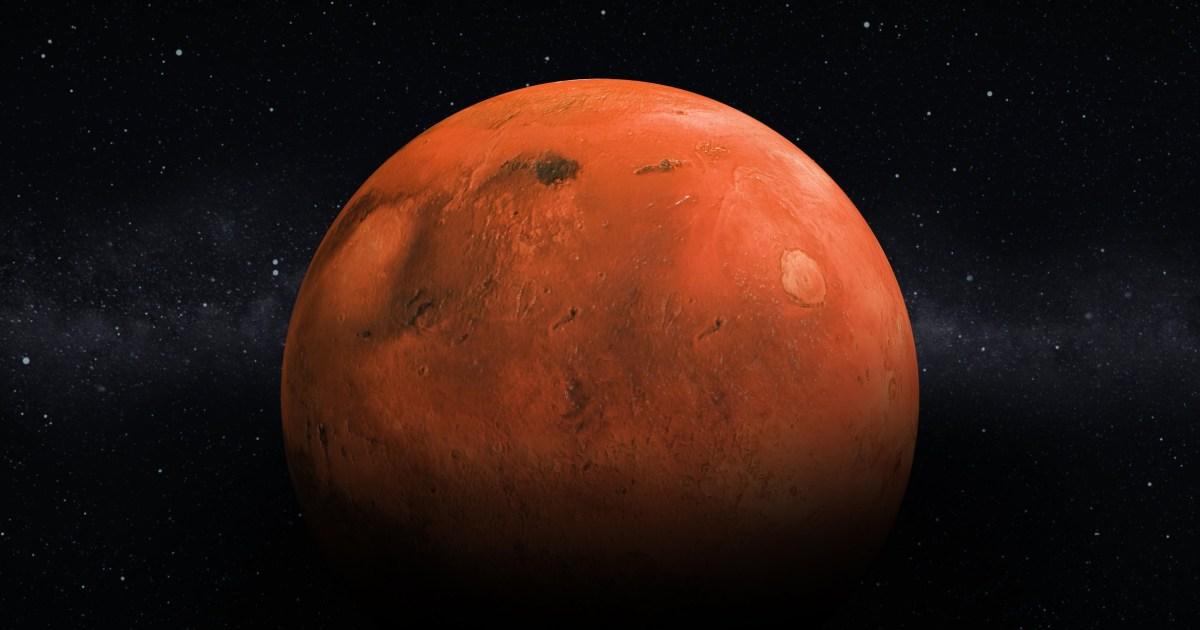
Nasa scientists believe they have detected electrical activity on Mars (Picture: Getty Images)
Nasa scientists believe they recorded electrical activity in the Martian atmosphere.
Electrical discharges – the release and transmission of electricity through an insulating medium – were found in audio and electromagnetic recordings by a NASA robot.
The space agency’s Perseverance rover was sent to Mars in search of signs of biology.
But the miniature lightning bolts, described as ‘little zaps’ similar to ‘static electrcity’ were detected by the robot’s SuperCam – a suite of remote-sensing instruments.
The SuperCam performs remote analyses of rocks and soils with a camera, two lasers and four spectrometres – a scientific instrument used to separate and measure the components of a ‘physical phenomenon’.
Lead author of the research Dr Baptiste Chide said: ‘These discharges represent a major discovery, with direct implications for Martian atmospheric chemistry, climate, habitability and the future of robotic and human exploration.’
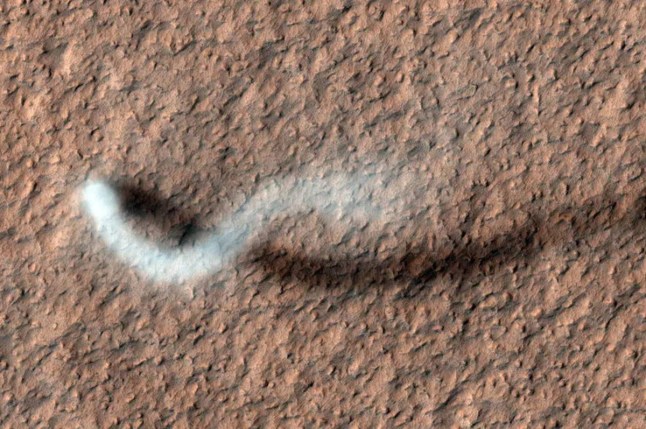
A dust devil on Mars (Picture: Nasa)
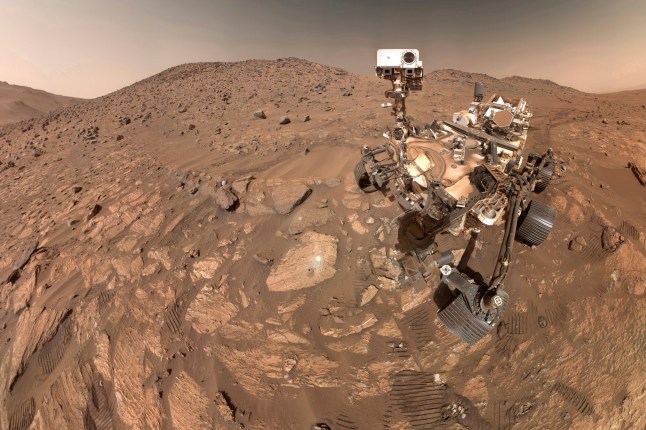
Nasa rover Perseverance on Mars in July 2024, where it has been stationed since 2021 (Picture: AP)
The miniature lightning bolts were smaller than those on Earth but could interfere with the instruments, landers and space suits of astronauts on Mars.
Scientists suspected that the planet’s dust storms and ‘dust devils’, small whirlwinds that form from hot air rising from the ground, might generate electrical activity.
Now, they hope new instruments for measuring electrical discharges could be sent to confirm what they found.
The discovery came from a microphone that was inadvertently recording the sounds of lightning.
Dr Chide said they were ‘little zaps’ similar to ‘what you might feel in dry weather when you touch your car door and there’s a bit of static electricity’.
When tiny grains of dust rub against each other, they become charged with electrons and release energy in tiny electrical arcs around a few centimetres or millimetres long. This creates an audible shock wave.
These discharges happen ‘all the time and everywhere’ on Mars, according to Dr Chine.
Perseverance has previously transmitted other sounds, including the crunch of its wheels landing on Mars’ surface as well as the whir of the blades of its no longer flying helicopter counterpart, Ingenuity.
The rover has been scanning a dry river delta on the planet since 2021.
It has collected rock samples in search for signs of microscopic ancient life, with Nasa currently exploring cost effective methods for transporting them to Earth.
Get in touch with our news team by emailing us at webnews@metro.co.uk.
For more stories like this, check our news page.
Arrow
MORE: In pictures: how have space suits looked across the years?
Arrow
MORE: Is ‘alien’ comet 3I/ATLAS now targeting Jupiter? Harvard scientist lists 13 anomalies
Arrow
MORE: NASA unveils new close up images of 3I/ATLAS comet
Comments
Add Metro as a Preferred Source on Google
Add as preferred source
News Updates
Stay on top of the headlines with daily email updates.