
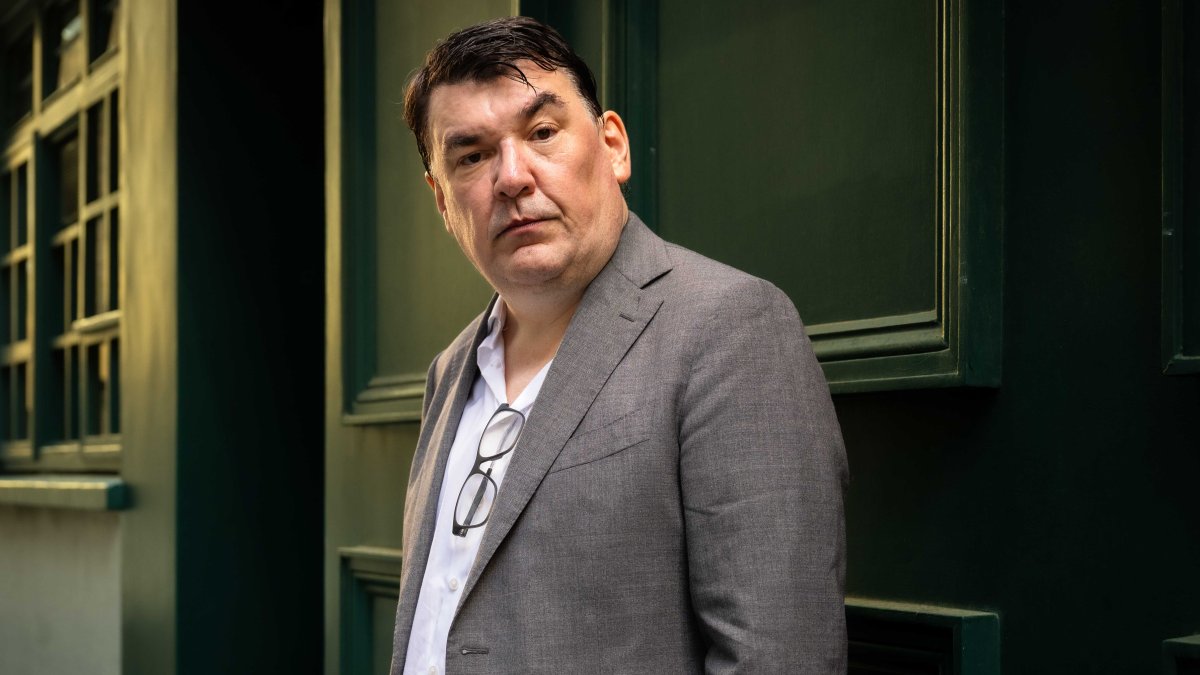
As the comedy writer Graham Linehan shuffled toward the cameras outside Westminster magistrates’ court on Tuesday morning, you wouldn’t think he’d just been convicted of a criminal offence. “I’m very pleased by today’s verdict,” he told the waiting media. “There are a group of dangerous men who are determined to bully women and girls and misuse the courts and police in furtherance of a misogynistic agenda. I’m proud to have stood up to them and I will continue to do so.”
True, Linehan had been fined £500 for damaging a trans activist’s mobile phone, but a more serious charge of harassment had been dismissed. I sat in court throughout Linehan’s trial (over three days in September and October) and was there for the judgment last week and as I navigated the crowds outside, it struck me that maybe, just maybe, Linehan might just have shifted the dial on free speech.
Afterwards, we jumped in a cab and made our way to Linehan’s barrister’s chambers for an interview. The mood was cheerful as we settled down in a meeting room lined with law books. Linehan said he was disappointed at being found guilty of criminal damage “but I did understand it”. The harassment charge was the big one. “As long as I was found innocent of that, I didn’t care.” So a triumph; sort of. In her closing arguments on Tuesday, District Judge Briony Clarke, described Linehan’s tweets, which were directed at a trans activist as, “deeply unpleasant and insulting and even unnecessary”.
By now it is clear that Linehan does not shy away from a scrap. As well as being the writer and creator of some of Britain’s best-loved sitcoms, including Father Ted, Black Books and The IT Crowd, the 57-year-old is a longstanding and vehement critic of gender identity ideology. To politely express such views ten years ago was to invite social and career death. Linehan went in two-footed, and lost everything, including his marriage.
But his abrasive approach and the case which was brought against him as a result has exposed the methods used by some trans activists to force cases to court.

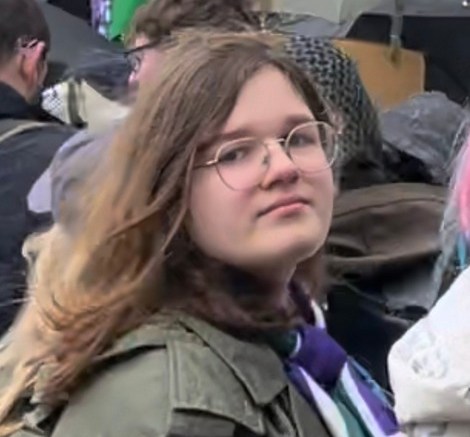
The criminal charges Linehan faced were brought following a series of online postings and interactions with a young trans activist called Sophia Brooks. Brooks confronted and filmed Linehan outside a conference in central London in October last year. Linehan called Brooks an “incel”, “groomer” and a “sissy porn-watching scumbag”. Brooks, a biological male who identifies as female, had already been removed from the conference for filming various female attendees, some of whom said they felt intimidated. Outside the venue, Brooks challenged Linehan. The Irishman snapped, grabbed the phone the 17-year-old was using to film him, and threw it across the road.
In the days following the incident, Linehan posted multiple tweets seeking more information on Brooks and warned people to keep their distance. Linehan called Brooks “severely disturbed”, an “absolute psycho” and a “sociopathic misogynist who harasses women”.
Brooks complained to the police and Linehan was charged with harassment and criminal damage. While awaiting trial, Linehan gave up on the UK and moved to Arizona. He now develops scripts for a production company set up by the American comedian Rob Schneider.
The new job didn’t stop Linehan tweeting. In April he suggested women who encounter “trans-identified males” (meaning males who identify as female) in women’s toilets should “punch them in the balls”. A trans activist called Lynsay Watson complained to the police, and at the beginning of September this year, as Linehan flew into the UK to face trial, he was arrested by five armed police officers on suspicion of “inciting violence”.
Linehan wrote a blog from his hospital bed — his blood pressure had spiked — and instantly became front page news on both sides of the Atlantic. JK Rowling called the arrest “totalitarianism”. Nigel Farage, speaking before the US Congress, spoke of an “awful authoritarian” climate in the UK.
Watson’s ability to mobilise the police was not a one-off. Over the course of Linehan’s trial it transpired Watson had also contributed to the Met’s decision to bring the original harassment charges in the Brooks case too. Watson is a disgraced former police officer, sacked by the Leicestershire force for gross misconduct after sending “abusive and defamatory” tweets.
In October last year, while Linehan was tweeting about Brooks, Watson contacted the Met, telling them a crime had been committed, and that Linehan “has many extremely radicalised followers who applaud reports of transgender people being killed … Please act with haste, this is an emergency safeguarding matter that is rapidly getting out of hand.”
On the same day, Brooks also approached the Met, which logged a report saying the victim was a “police cadet … being assisted by a former police officer”. Brooks reported Linehan for stalking and sent a further report stating that Linehan “may” have damaged the phone.
The Met decided within two weeks there was not enough evidence to pursue the allegations and closed the case.
Brooks demanded the police reopen the investigation, with a threat to “complain to professional standards, escalating to the IOPC [Independent Office for Police Conduct] or judicial review where necessary”, adding: “The Metropolitan Police has breached my rights under the Victims’ Code which came into effect on the April 1, 2021,” going on to list the supposed breaches.
The police were persuaded, and Linehan was formally charged in February this year. Reflecting on it now, Linehan says the whole experience has been “completely surreal”. In the course of a few months he has been charged, arraigned, arrested, hospitalised, plastered all over the news and, as of Tuesday, partially exonerated. His hands shake when he talks about it. “I’m only one of dozens of people who’ve had their shoulder tapped,” he tells me. “The police have spent the last ten years just jumping to these guys’ [trans activists] orders … they’ve been so misled by organisations like Stonewall. They just fell for it hook, line and sinker.”
He has already said he intends to appeal his conviction. Brooks, who was not in court on Tuesday, responded to the judgment by calling Linehan a “bigoted, bad tempered thug … and a criminal”.
Though the judge highlighted the “unpleasant” nature of Linehan’s tweets she ruled that they “do not cross the boundary from the regrettable to the unacceptable such that the gravity of the misconduct is of an order which would sustain criminal liability”.
It was a clear message to the police and the latest sign that the dial does seem to be shifting. Immediately following Linehan’s arrest the Met Police commissioner, Sir Mark Rowley, said his officers should not be “policing toxic culture wars debates” and called for a change in the law. The Met have subsequently announced they will no longer investigate so-called non-crime hate incidents.

Sir Mark Rowley
JOSHUA BRATT FOR THE SUNDAY TIMES
Linehan is defiant about what he says and how he says it. “I fight fire with fire,” he says. He hopes the fuss over his arrest and the ruling will stop the authorities from leaping into action every time a trans activist makes a complaint. “I think the police might finally be waking up to who they’ve been dealing with and who they’ve been victimising.”
The police will take no further action after detaining Linehan at Heathrow, but he is suing them for wrongful arrest, with the help of the Free Speech Union, who also assisted at his trial. I wonder why — for the sake of his health if nothing else — he doesn’t just drop his appeal, go back to Arizona, which he adores, to write more scripts and rebuild his career. “I’m just bloody-minded,” he says, “and I still have that feeling that I am pointing at very important things, and everyone’s still looking at my finger.”