
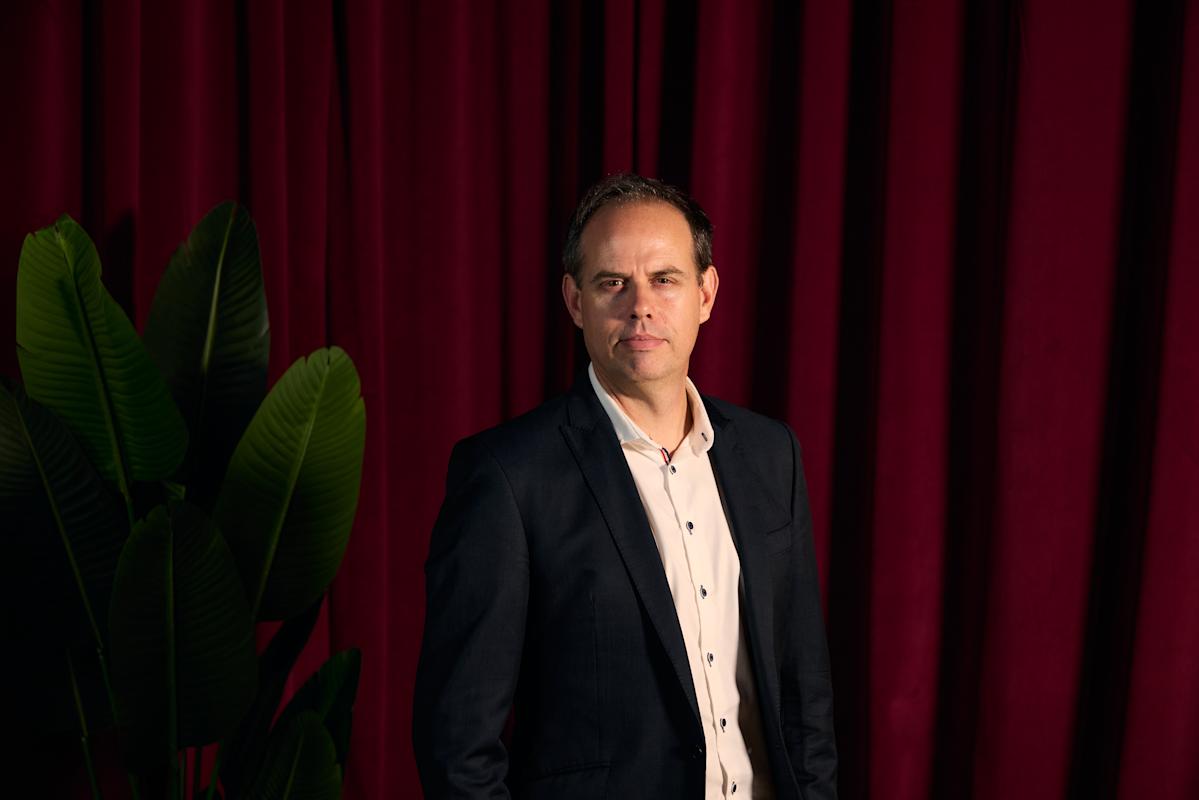
 Robin Brattel is a British digital entrepreneur and CEO of Lab 1.
Robin Brattel admits he’s never stopped working. His grandfather once told him “don’t die with regrets” and the serial entrepreneur has made it his business mantra ever since he started earning money with five newspaper rounds, rode the dotcom boom in the late 1990s to being at the helm of AI data intelligence application Lab 1.
The Briton had worked for the same engineering company in his gap year and then through his degree at University of Plymouth. When he graduated he took up a research job, which led him to internet startup justpeople.com in 1999.
His boss there, Lucian Hudson, was the former director of programming at BBC Worldwide, the CTO was ex CTO of Mastercard and the CEO had been global HR director of UBS. “It was an insane talent pool,” recalls Brattel.
Read More: ‘I pitched my car finance idea to my mother-in-law and she got it straight away’
“Everyone was so excited by tech startups and you could attract such amazing talent. I learned that startups are chaotic, I enjoyed the hard work and learned how to code on the job.”
The job was initially a webmaster journalism role, but Brattel said in his first meeting he wanted to be the link between the back and front ends. At that moment, the CTO came in and told Hudson, “We need to have someone who can link the front end and the back end”. Brattel got the job on the spot.
Over 25 years ago, the concept of hacking was disjointed compared to the wave of corporate data breaches heightening today’s cybercrime and reputational risk.
“I’ve seen how tech has developed massively, which is why when people talk about AI I think I was there at the start of the web and how pervasive it is now,” says Brattel. “AI will be so transformative in 20 years.”
Today’s cyber gangs are behaving like data scientists, says Robin Brattel. · seksan Mongkhonkhamsao via Getty Images
Lab 1 uses AI to scrape and analyse data from breaches used by businesses to learn the extent to which their content was exposed – from commercial contracts to HR documents and CVs – in order to make sense of unstructured data sets and manage the risk.
Bringing the four co-founders together in 2019 was akin to an ‘Avengers Assemble’, says Brattel. With a trio of engineering expertise, Brattel was the linchpin in bringing the product to market and selling to the security industry. The company, which employs around 15 staff, has taken on £5m investment since launch.
“It’s of its time and of the moment,” says Brattel. “We are focused on exposed data intelligence or public domain data dumps from ransomware attacks, how to help people recover from the incident, deploy within the enterprise or help them understand data before any incident happens and to unlock the value within it.
Story Continues
“Unstructured data is a big problem for all enterprises. We all create content data, store it in spreadsheets, word documents and it goes into drives and backups and over time it grows. If you’re now trying to use that to drive value you have a big problem as the data is so messy under the surface.”
Read More: My laundrette closed early so I set up a £27m global laundry service
Lab 1’s intelligence comes into play when any data enters the public domain via a criminal group. If it is freely available, Lab 1 will ingest and process the data and its customer will know how exposed they are by any breach through algorithms.
Brattel tells the story of how one financial brokerage recently had a leak of 174,000 files. Investment banks he spoke to didn’t know about the incident, while Lab 1 linked the relationship after finding multiple wealth statements with people who had millions of dollars in accounts.
“We felt it would become too great a problem for human beings to manually analyse the content,” Brattel says of Lab 1’s reasons to launch. “And that’s exactly what’s happened from megabytes to today’s terabytes of data.”
Brattel’s previous pursuits include founding San Francisco-based WeGoDo, a ‘social network of interests’ which scaled quickly before hitting funding problems, and Inapub, which supplies digital marketing solutions for Britain’s pub trade and grew into a seven-figure business before he exited.
Robin Brattel has led multi-million pound projects and achieved an exit across a career in tech and business.
He has also been entrepreneur in residence at Bristol University where he helped to create the award-winning Centre for Entrepreneurship and Innovation.
“One of the big things there is that failure is part of the process,” says Brattel. “You have to learn what’s working and what’s not. Sometimes you might panic prematurely and so you have to really dig in and understand what the customer wants.”
Brattel says he wouldn’t have the confidence of building his own ventures and products had he not gained the knowledge from early stage startups. The growth of Lab 1 has led to some calling it the “British Palantir” after the US software company that provides data analysis.
Read More: ‘My company is helping thousands of over-50s feel inspired and not retired’
Last summer, a major Lab 1 study found the majority of leaked data includes sensitive financial documents. The cybersecurity platform analysed 141 million leaked files from over 1,000 public breaches, with bank statements present in 49% of incidents. Brattel says that cyber gangs are now “behaving like data scientists”.
“It is no longer the credential drops that impacted you and me and our friends, and the credit card bin data which are now smaller scale fraud issues,” adds Brattel. “Criminal groups want to get into a big company, encrypt the system and be paid the millions in ransom.
“There have always been criminals going back to the Wild West when they broke into banks and filled sacks with dollars. I spoke to someone in financial services recently who said bank robberies had gone to zero. It’s the cyber criminals who are the ones being successful now.”
How to avoid failure in business
I get the most satisfaction when I solve a problem for someone or getting value for something you have created. That’s been at the heart of it.
But there were times when it would have been so much easier to be paid a salary rather than watch a business die like WeGoDo. I worked on it for seven years before the personal and financial fallout. That was really tough.
I try to watch Leadership Lessons from Dancing Guy every year. For one it’s hilarious but it’s also correct in building a business.
I encourage all young entrepreneurs to go out and try and sell something. I find it amusing when someone shows me a pitchdeck or a model that shows sales going up and right. When I launched Inapub, I was going pub to pub trying to get them to buy digital services and the idea of bringing people together around shared interests.
Building of value is one aspect but getting people to pay for it is another. For the record I got 94% of the pubs I went to in Brighton to sign up. But it was brutal going door to door and dealing with rejection, which is what you have to cope with in your career.
Read more:
Download the Yahoo Finance app, available for Apple and Android