
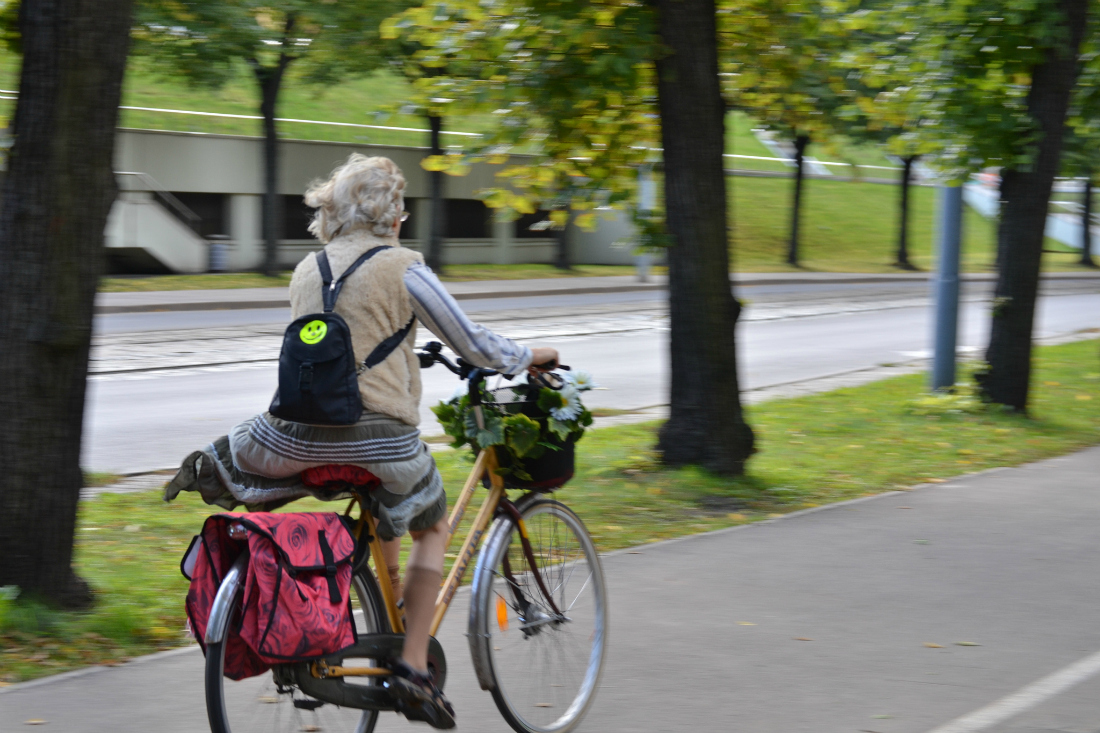
If you’re looking for yet another reason to hop on your bicycle today—especially if you’re in your 60s or beyond—new research out of Japan has delivered a big one. A 10-year study from the University of Tsukuba has found that older adults who cycle regularly aren’t just feeling better day-to-day—they’re actually living longer and avoiding long-term care at significantly higher rates.
And here’s the part cyclists everywhere will appreciate: the benefits were strongest among older adults who don’t drive. In other words, for people who use a bike as everyday transportation, cycling is doing a lot more than replacing a car trip—it’s acting as a genuine lifeline.
Japan’s Cycling Culture Offers a Unique Window Into Healthy Aging
While countries in Europe and North America tend to treat everyday cycling as a lifestyle choice, many older adults in Japan treat it the same way they always have: as a practical, reliable way to get around. As a result, a much larger share of seniors bike to shops, social activities, and appointments.
That’s important because earlier studies already hinted at what we all know intuitively—people who ride tend to move more, connect more, and stay more engaged with their communities. This new decade-long study finally puts numbers behind the idea and shows how those habits add up over time.
What the Researchers Actually Studied
The team at the University of Tsukuba followed older adults over 10 years, digging into two key questions:
Were people who cycled in 2013 less likely to need long-term care or die by 2023?
Did different cycling “patterns”—starting, stopping, or consistently riding—change someone’s health trajectory between 2013 and 2023?
They also focused on a subgroup of older adults who no longer drive, a demographic that’s growing fast in Japan as seniors voluntarily turn in their licenses.
The Results: Keep Pedaling, Keep Living
Across the board, cycling came out a winner.
Older adults who cycled were less likely to need long-term care and less likely to die during the 10-year period than those who didn’t ride.
The effect was especially strong among nondrivers, who rely more on their bikes for transportation and daily activity.
Those who kept riding consistently between 2013 and 2017 had the lowest risk of long-term care needs and early mortality in the years that followed.
And here’s the encouraging part: older adults who started cycling during that four-year period also saw benefits—again, especially if they no longer drove.
That last point matters because it pushes back against the myth that cycling only helps people who already consider themselves active. The study shows it’s never too late to turn a bike into part of your everyday routine—and reap the rewards.
Cycling as a “Lifestyle Companion”
The researchers describe the bicycle as a kind of “lifestyle companion” for older adults—a tool that keeps them physically active, mentally sharp, socially connected, and confidently mobile. That combination appears to delay the need for long-term care, preserve independence, and ultimately extend life.
But they don’t stop there: the team also stresses that as more older adults give up driving, communities will need to support cycling with infrastructure, programs, and social encouragement. The study essentially makes a case for aging-friendly bike systems—something many cities in North America and Europe are only beginning to take seriously.
Why This Matters for Cities Everywhere
Japan may have unique demographics, but the takeaway travels well. As populations age worldwide, cities are looking for ways to help people stay healthy without relying on expensive medical systems. Everyday cycling—especially for errands and short trips—is one of the simplest, most affordable public-health strategies available.
Build safe bike lanes. Add protected intersections. Ensure seniors have access to bikes that fit their needs—uprights, e-bikes, e-trikes, cargo bikes. Create social programs that help people ease into riding.
The study’s message is clear: supporting cycling is supporting healthy aging.
Bottom Line
Whether you’ve been riding for decades or you’re thinking about getting back in the saddle, the evidence is piling up: your bike isn’t just a way to get around—it’s a long-term investment in your health, independence, and longevity.
And the best part? You don’t need to ride far or fast. Just ride.