
Earlier this year, I expressed my appreciation for Fantasy Life i: The Girl Who Steals Time. It was a whimsical, cheery action RPG that understood what made the economy of building up multiple job classes compelling. I wasn’t a Fantasy Life series fan prior to its most recent entry and I ended up loving Fantasy Life i after putting 60 hours into it. Although that game certainly had a rocky development cycle (so rocky that even Level-5 CEO Akihiro Hino detailed what happened to it in a blog post), there was another game at Level-5 that had even more development problems stacked against it. I was so curious on how it would land after its decade-long journey to a final release.
Advertisement. Keep scrolling for more
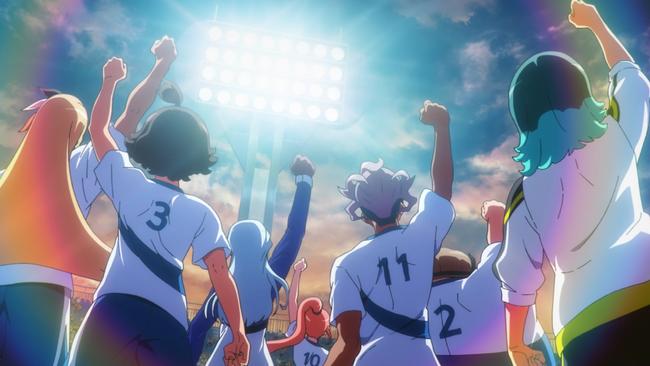
Inazuma Eleven: Victory Road feels like a game project that always tried to swim against the current. Before it became Victory Road, the latest entry in the Inazuma Eleven series was first announced as Inazuma Eleven Ares in July 2016 at the Level-5 Vision 2016 event. It was supposed to coincide with a TV anime series under the same name, though the game would face numerous delays while the anime aired in spring 2018. There were multiple instances of Hino explaining what hurdles Level-5 was facing with its development, including a detailed briefing on why it wouldn’t release till after May 2019 and a blog that was meant to chronicle what was going on with the Ares game.
Eventually, Inazuma Eleven Ares became Inazuma Eleven: Great Road of Heroes; it targeted a spring 2020 release in Japan. Of course, it missed this release window as well, and yet another development update was shared in April 2020 as to why its release date was “likely” to be pushed back to 2021. This is where Level-5 first revealed Unmei Sasanami (named Destin Billows in English), who would end up being the main character in Victory Road. Another delay announcement was shared in April 2021, and this time it was pushed back to 2023. The July 2022 news update brought another name change from Great Road of Heroes to Victory Road of Heroes. Finally, this point in its development cycle started to resemble what finally shipped a few weeks ago.
From then on, Victory Road’s journey was still met with a few delays obviously but its path was relatively smoother from here on out. Level-5 would eventually drop Victory Road’s release to mobile devices in favor of focusing their efforts on modern consoles and PC. There was even a worldwide open beta last year that was held for several months, which allowed Level-5 to gather feedback from the community over an extended amount of time.
So… I had no clue what to expect after I finally fired up Inazuma Eleven: Victory Road’s full release for the first time.
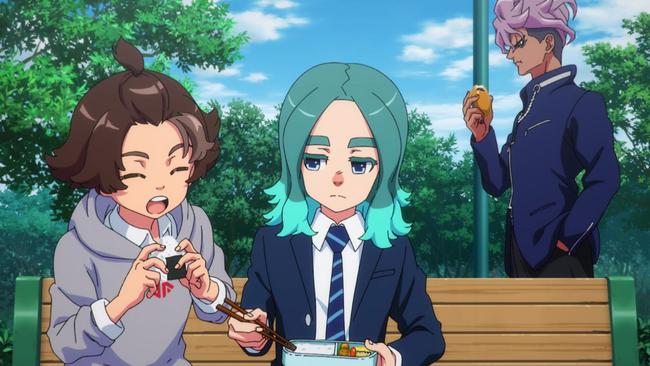
I was, once again, pleasantly surprised and impressed with another Level-5 game that, on paper, felt doomed because of its troubled development history. Much like Fantasy Life i, there is a certain earnestness in its presentation from head-to-toe. It feels like it’s striving to be the ultimate Inazuma Eleven package for newcomers and veterans, in order to prove that it was worth the enormously long wait to all those who were anticipating it along the way. Victory Road wants to leave its mark on the world, and it certainly did for me in a way that few games this year did.
Naturally, I did what any sane newcomer to Inazuma Eleven did when they first got to the main menu of Victory Road – I selected Story Mode and decided not to bother with the rest until I was done with that. I should probably establish a few things before diving in.
Advertisement. Keep scrolling for more
As mentioned earlier with Unmei/Destin, Inazuma Eleven is a series that has many of its characters’ names changed to sound more western. For instance, the first game’s protagonist Mamoru Endo is named Mark Evans overseas. Victory Road allows players to keep each character’s Japanese name in its English subtitles, so there’s no dissonance when playing with Japanese voices. This is how I chose to play it, therefore I’ll be referring to characters by their Japanese names throughout this feature.
Of course, I’ll be mentioning soccer a lot because it’s the core of Inazuma Eleven. We all know that the terms “soccer” and “football” clash depending on the region, since American football caused this divide many years ago. For the purposes of this piece, I’ll refer to the sport as soccer.
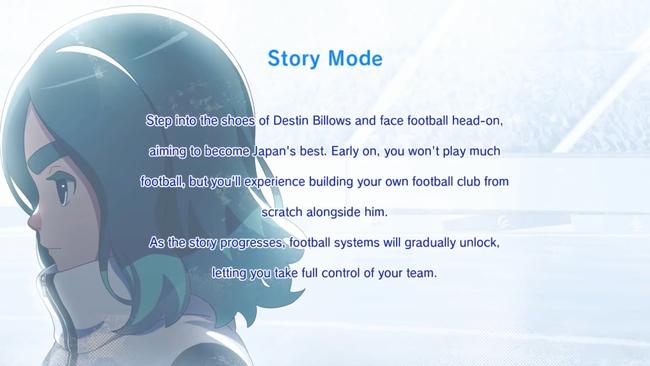
Playing through Victory Road’s main story mode reminds me of my time with Megaton Musashi W: Wired. Both Level-5 games unravel like a season of anime, and I was playing through them to see what would happen next. Although I spent a hefty sum purchasing the Deluxe Edition of Victory Road for its early access period, I didn’t really look into what the story of the game had in store for me. Choosing the story mode option gives a peculiar warning before starting it that there would be no soccer for a good chunk of time… what an odd thing to say.
There is a beautiful melancholic atmosphere that immediately molded the tone of Victory Road’s opening introduction.
After a brief scene of a soccer match teasing characters to come in its inevitable soccer-filled future, the story hones in on a bus with a silent Unmei staring out the window. He’s dropped off and begins walking towards his new school. Some nearby children playing with a soccer ball accidentally lose it towards his direction; Unmei quietly passes by the ball without any consideration to throw it back to them. His first voiced line in Victory Road’s story mode is that he wishes soccer would just disappear from the world.
Before even taking control of Unmei, Victory Road establishes a compelling premise to start from – a main character in a sports story that is antagonistic to the sport itself. Mere moments after I began to move Unmei around for the first time, there’s imaginary soccer balls that act as treasure chests as well. Unmei even acknowledges that he’s seeing them, though why would that be the case if he doesn’t like soccer?
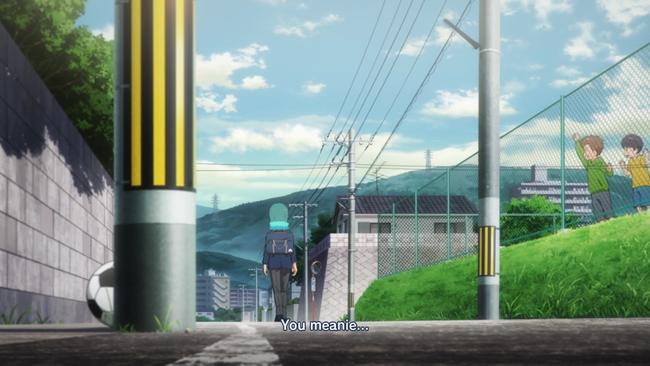
A brief stroll through Unmei’s new academic home at Nagumohara Junior High provides some tidbits of information, such as how the school is known for its baseball team and lately, there’s been a notable delinquent student named Joji Sakurazaki that Unmei should avoid. Plus, Nagumohara used to have a soccer club, but it was disbanded several years ago for unknown reasons; this lack of a soccer club is the primary reason why Unmei decided to attend this school.
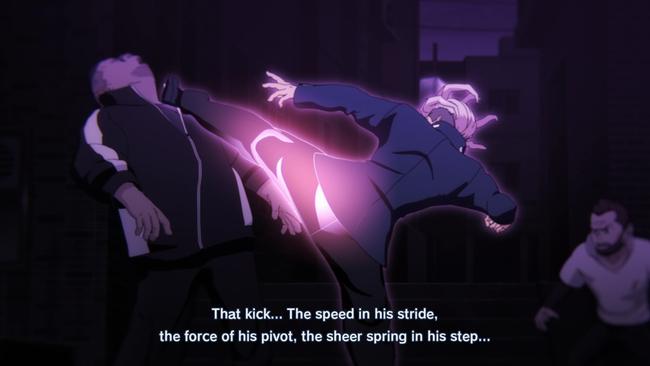
More events unfold in Unmei’s first day of school until an important scene occurs on his way home. He spots Joji getting into a fight with some thugs down an alleyway. Unmei instantly notices that his movements and the strength of his kicks resemble that of a soccer player. Strangely dazzled at the situation, Unmei eventually takes the hit of an incoming pipe meant for Joji’s legs. A steel pipe to the back of the head after the first day of school. Welcome to Inazuma Eleven: Victory Road.
Advertisement. Keep scrolling for more
I won’t go into every single detail about what makes Victory Road’s story mode special, but I wanted to paint a vivid picture about what kind of main character Unmei Sasanami is at the start of it. There are a handful of segments throughout Victory Road in which players must seek out marked NPCs to gather info about a specific subject, and then go into a database in a menu to analyze them one-by-one. In isolation, this task seems mundane but it is deliberately done in Victory Road to showcase the analytical nature that defines Unmei’s characterization.
He is a character that routinely and meticulously scopes out a situation from multiple angles before reaching a decision, yet can occasionally commit to brash decisions instinctively. Victory Road’s major turning point occurs roughly an hour in as the Nagumohara baseball club is goofing around by swinging their bats on dirtied, damaged soccer balls on the mound. The incident that shuttered the soccer club at Nagumohara was so severe that it became socially acceptable to look down upon and drag the sport of soccer through the mud.
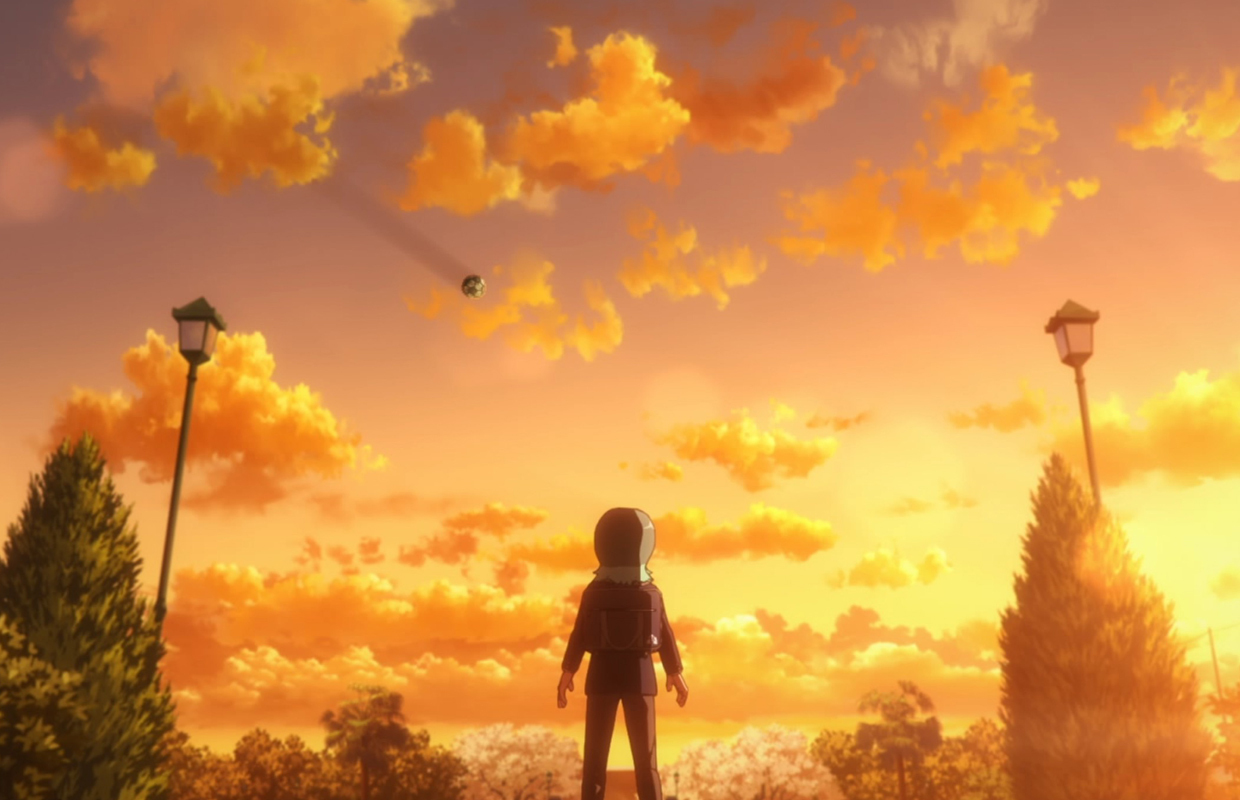
A soccer ball in a dismal condition lands by Unmei and Joji amidst a setting sun. Before Joji kicks it back to the baseball team, Unmei intercepts him. A flashback sequence provides the answer as to why Unmei detests soccer.
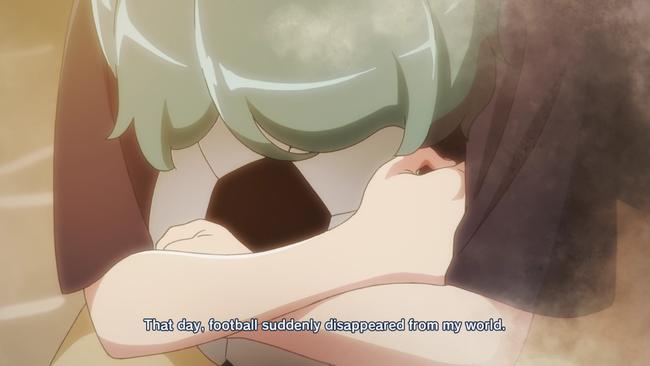
When Unmei was younger, he regularly played soccer and unfortunately developed a rare heart condition that forced him to completely stop playing. This condition prevented him from doing high-intensity activities, so soccer was out of the question. Soccer was the world to him and it was stripped away from him in an instant. In order to cope with his situation, Unmei tried to continue with his life away from soccer as much as possible, yet the insistence to disgrace soccer in such a public fashion has driven Unmei to his limits. Just because he wanted to avoid soccer because he could no longer directly engage with it doesn’t mean that he should quietly accept others making a mockery out of the sport he dearly loved.
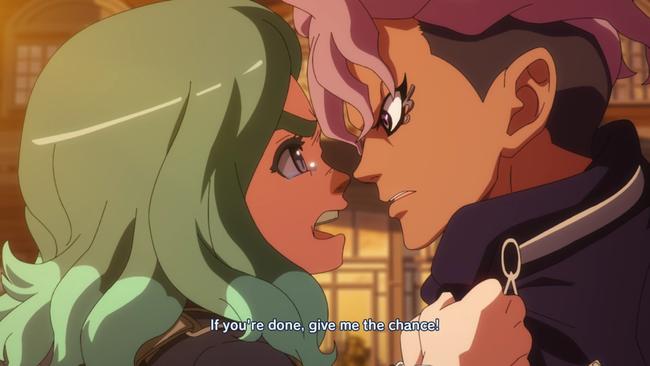
Unmei grabs Joji’s collar in a fit of rage. He’s been looking into his background and learned that Joji once played soccer, but he quit because his parents felt it didn’t fit with the future they laid out for him and because of the school’s ban on it. Joji was pressured to quit due to social conditions, while Unmei had to forcefully quit out of a health necessity. Unmei pours his heart out to Joji during this exchange because he’s frustrated that he can never return to playing soccer, while Joji still has that option yet chooses to be subservient to those that separate soccer from him.
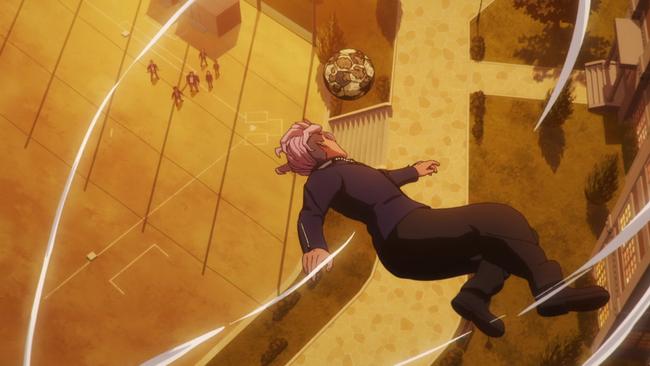
Right as Unmei is about to kick the soccer ball back to the baseball team finally, Joji now stops him and says he’ll take it from here. He makes a firm resolve to return to soccer from here on out and brazenly leaps several meters into the air with the soccer ball to deliver a devastatingly powerful kick toward the baseball captain’s face directly.
Many Victory Road players, including myself, fondly reflect on how absurd this scene must have played out in real-time. The baseball team asks for the soccer ball back from two nearby students; after five minutes of the students talking amongst themselves, one of them launches sky high into the air to violently kick it back to their captain’s face. Obviously, the baseball club is pissed. Unmei boldly challenges them to a soccer match and if he wins, the baseball players must cease their public mockery of soccer.
Advertisement. Keep scrolling for more
Unmei and Joji begin discussing their plan the following day. They don’t have enough players, so this sets off their initial journey to form a soccer club. One of their classmates, Heita Kisoji, offers himself to join the club; it’s easy to see him as the Junpei/Yosuke/Ryuji equivalent from the Persona series for now and his character arc doesn’t surface till much, much later into the story. Heita introduces the duo to Inazuma Eleven’s version of Discord – Inacord. As more members join, Inacord becomes a hub of some of the most amusing character interactions throughout the story. Players will quickly see another side of Joji through his Inacord habits.
Meanwhile, the soccer match declaration against the baseball club is causing ripples throughout the school because it is considered a taboo sport in Nagumohara. Both the administration and student council aren’t sure if they should allow it, because of the incident that caused its ban five years ago. As confusion and excitement runs rampant among Nagumohara, the first chapter of Victory Road concludes with the discovery of a rundown, abandoned shed that can house the fledgling soccer club’s operations.
Every chapter of Victory Road’s story mode concludes with a “next episode preview” that dramatically presents some out-of-context stills and voiceovers from the next chapter. It served its purpose well every single time, and got me excited to play through the next chapter.
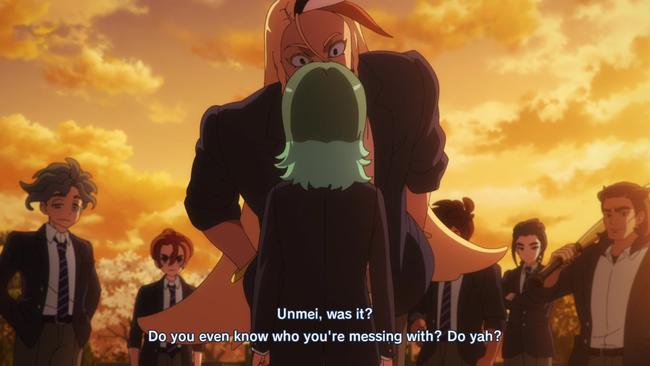
Victory Road’s story truly encapsulates the feeling of starting from nothing and working your way up, which is an unexpected predicament to manifest from a sports RPG. Remember the warning I mentioned earlier; y’know, the one where the game told people its main gameplay wouldn’t be happening for a while? The average time it takes to get to the first soccer matches in story mode doesn’t occur till roughly four hours into it. Until then, most of the interactive gameplay comes in the form of basic active turn-based rock-paper-scissors battles that can be automated shortly after they’re introduced. I wouldn’t call them bad, but they’re simply not that engaging or riveting compared to the main soccer gameplay. Still, I never felt bored of them because it was all in service of living out Unmei’s life as he interacted with Nagumohara’s residents.
The primary factor of what makes Victory Road’s story captivating from beginning to end is the attention to detail in fleshing out Unmei Sasanami himself. Even though he’s the protagonist, Unmei is relegated to a tactician role rather than a player. That causes his relations to both his allies and foes to undergo a different angle of trust, respect, and admiration. Unmei’s approach to tackling challenges isn’t simply a matter of superior physical finesse or technique; instead, it revolves around strategic excellence that often incorporates thinking outside of the box. Sometimes, Unmei comes off as a personified version of Sun Tzu’s The Art of War… but for soccer.
There’s a fascinating dichotomy that Unmei shares with the story mode’s main “antagonist” – Haru Endo, the son of the first Inazuma Eleven protagonist Mamoru Endo. Although Haru can be seen as an antagonist under a strict narrative framework, he is more so treated as a second main character that just happens to play for a different team, so Unmei will inevitably face off against him.
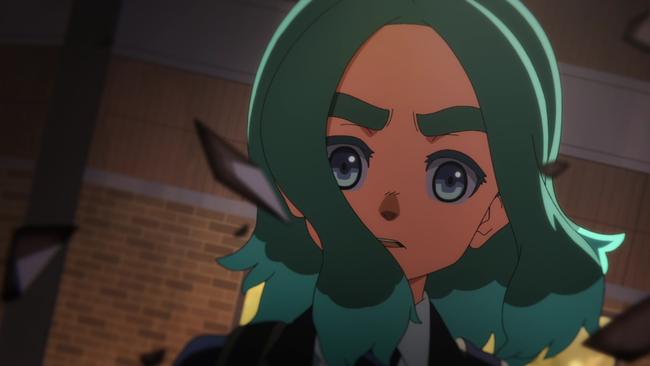
Haru is the direct antithesis of Unmei. He is considered the best player among the reigning national soccer champions at Raimon; his exceptional skills and talent are virtually second to none. Despite his amazing display on the field, Haru has gradually lost his passion and drive for soccer. The extraordinary feats he achieves have become a routine that no longer pushes him to become better. I won’t go further into detail of how his story arc develops, but Victory Road’s story mode does portray some diametric parallelism between Unmei and Haru’s journeys.
The first encounter between Unmei and Haru changes their lives. They struggle to understand one another. Unmei is frustrated that Haru no longer takes soccer seriously enough to play to his full potential, while Haru can’t fathom why Unmei would continue to engage with soccer even though Unmei can’t play it himself. It presents a fundamental paradox that shakes the philosophical foundation of these boys’ relationship to soccer. Victory Road’s story mode is filled with these sorts of clashing perspectives that tackle themes of how we’re all our own worst enemies when we try to improve ourselves.
Advertisement. Keep scrolling for more
Over time, these core narrative tentpoles gradually made Unmei one of my favorite characters in RPGs this year. His opposition comes to realize that although Nagumohara’s soccer players are all individually capable and talented, he is the beating heart of that team. Although he can’t participate in the action himself, Unmei’s extremely keen eye and data-driven analysis allows him to wield an uncanny amount of unshakeable confidence in himself and his team to pull through the worst situations.
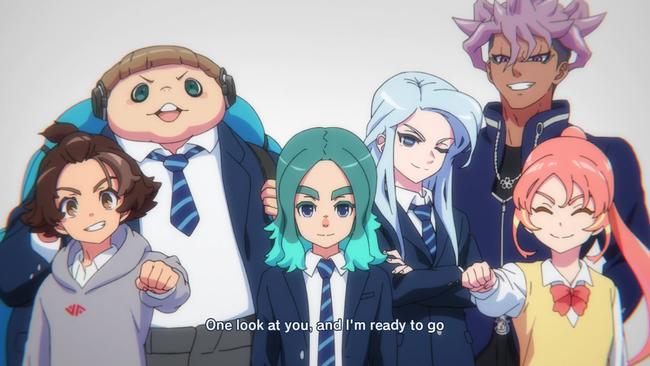
I’ll be the first to admit that I don’t really care about soccer itself. I admire it from a distance due to its historical legacy, and hold a lot of respect for everyone who can play the sport decently. You don’t need to have a fondness for soccer to fall in love with Victory Road’s story. The strength of how it characterizes and humanizes its cast amidst the over-the-top version of soccer that Inazuma Eleven portrays is a testament of its narrative excellence. There’s an earnest down-to-earth tale about how people shouldn’t abandon the things they love due to developments that may bar it from them; explore different ways to keep yourself connected to what you’re passionate about.
While there is much to celebrate about Victory Road’s release as it recently surpassed 500k sales, some aspects of its development and marketing were crafted with generative AI. An article from December 2023 describes how Level-5 utilized several generative AI tools to touch-up some art assets and create temporary voices for some characters during its development. I confess that I don’t know if there are any generative AI elements present in the final release of Victory Road. Its Steam page doesn’t disclose any usage of generative AI.
What I will tell you is the credits that rolled at the end of Victory Road’s finale was over 20 minutes long; hundreds, if not thousands, of human beings across the globe were credited in the production of it – voice talent, key animators, model designers, musical composers, recording engineers, and all the numerous studios throughout the planet that assisted in making this video game.
I fully understand that for many people – if a piece of media has ever interacted with generative AI at any point in its production no matter how little it might be, it is unacceptable and must be avoided at all costs. Many popular games at this moment in time, such as Arc Raiders, Where Winds Meet, and Call of Duty: Black Ops 7, also employ AI — generative and/or borderline generative — for certain elements. The upcoming Let It Die: Inferno recently revealed that it’d be utilizing generative AI in significant parts of it.
This has begun important discussions and conversations as to what is an “acceptable amount” of generative AI in games, and to “what degree is it ok” to have them. Should it even be “acceptable” at all because the wealthy corporations driving this initiative want to gradually make generative AI’s presence more acceptable so if you give them an inch, they will absolutely take a mile.
Obviously, the purpose of this piece isn’t meant to answer these questions. I do want to make it absolutely clear that I abhor generative AI because it fundamentally robs the creativity of humanity and relies on plagiarism to fuel it. Of course, its severe detrimental impact on the environment to power their datacenters is also a major cause of concern, and how it’s giving companies an excuse to replace jobs that people should be doing instead.