
NEWYou can now listen to Fox News articles!
The Associated Press is maintaining the credit for the iconic “Napalm Girl” photo taken during the Vietnam War as a new Netflix documentary claims a different photographer took it.
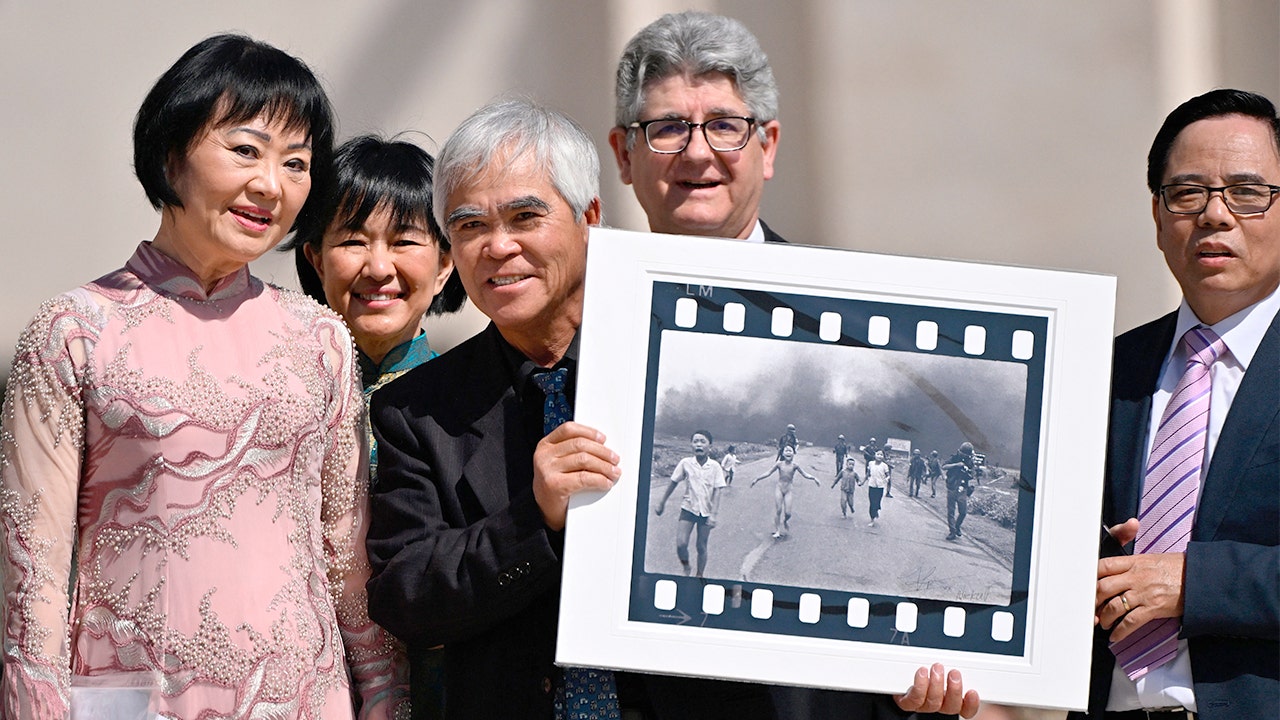
For more than 50 years, Vietnamese-born AP photographer Nick Ut was credited for taking the photo titled “The Terror of War” featuring 9-year-old Phan Thị Kim Phúc running naked from a napalm attack in 1972. The photo landed him and the Associated Press with a Pulitzer Prize.
However, the Netflix film “The Stringer: The Man Who Took the Photo” disputes that Ut took the award-winning photo, and that it was actually taken by a stringer named Nguyễn Thành Nghệ.
“Nick Ut came with me on that assignment, but he didn’t take that photo,” Nghệ asserted in the documentary.
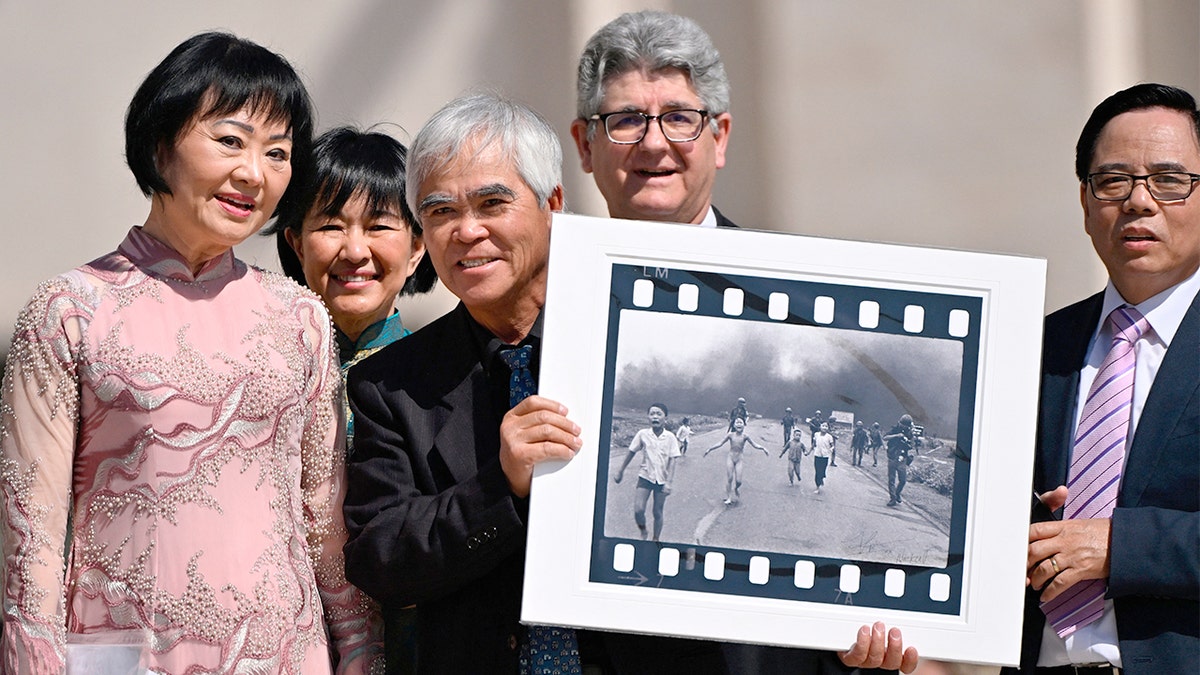
Retired Associated Press photographer Nick Ut has been celebrated for the iconic “Napalm Girl” photo from the Vietnam War. (Alberto Pizzoli/AFP via Getty Images)
The most prominent voice crediting Nghệ is Carl Robinson, an AP photo editor who was working in Vietnam at the time the photo was taken. Robinson said Ut had taken an image of the girl from a side angle but that it was Nghệ who had taken it from the front.
Robinson said he was directed by his supervisor at the time, photojournalist Horst Faas, to credit Ut instead of Nghệ and that he did so in fear of losing his job, regretting what he had done ever since. Faas died in 2012 and Ut did not participate in the documentary.
The Netflix film shows Robinson meeting Nghệ for the first time and offers him an apology.
“I feel bad that we stole your name,” Robinson told Nghệ in the film.
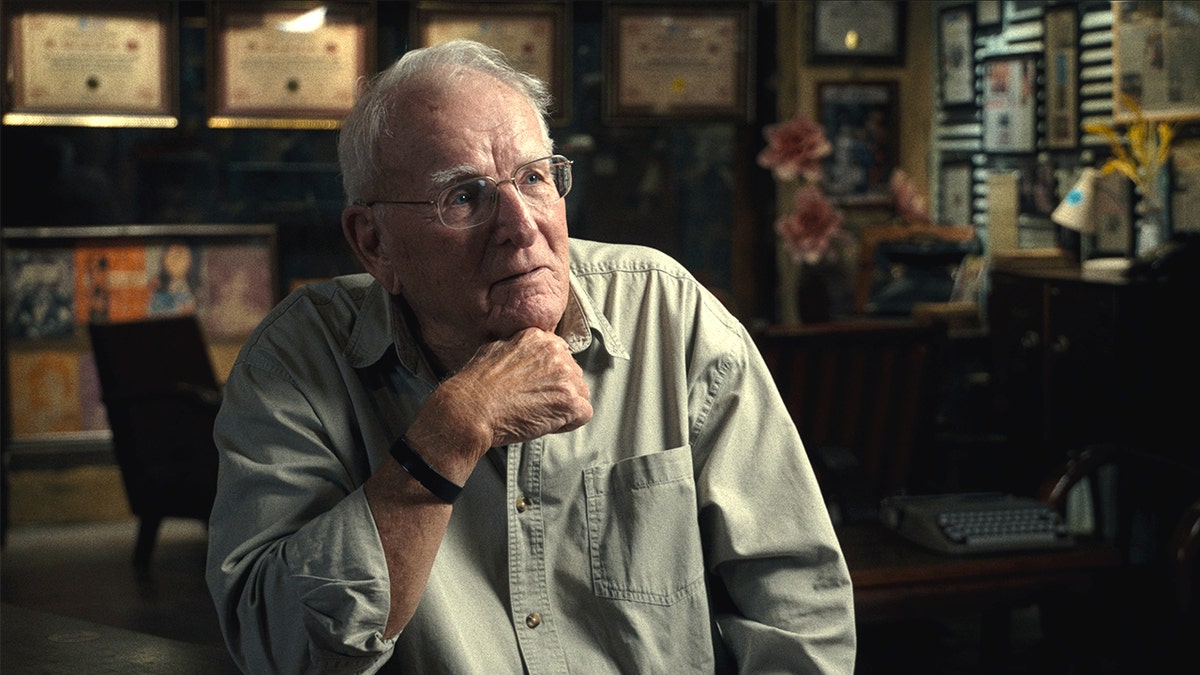
AP photo editor Carl Robinson recalls how the “Napalm Girl” photo was in the Netflix documentary “The Stringer: The Man Who Took the Photo.” (Courtesy of Netflix © 2025)
The Associated Press published its own extensive investigation into the origins of the photo earlier this year and concluded “it is possible” Ut took the photo but cannot definitively prove it “due to the passage of time, the death of many of the key players involved and the limitations of technology.” And while new findings raise unanswered questions and that the AP concedes it remains open to the possibility that Ut didn’t take the photo, there’s “no proof” Nghệ took the photo either.
“AP standards require that a photo credit be removed if definitive evidence shows the person claiming to have taken a photo did not. In the absence of such proof, the photo credit remains,” an Associated Press spokesperson said.
CLICK HERE FOR THE LATEST MEDIA AND CULTURE NEWS
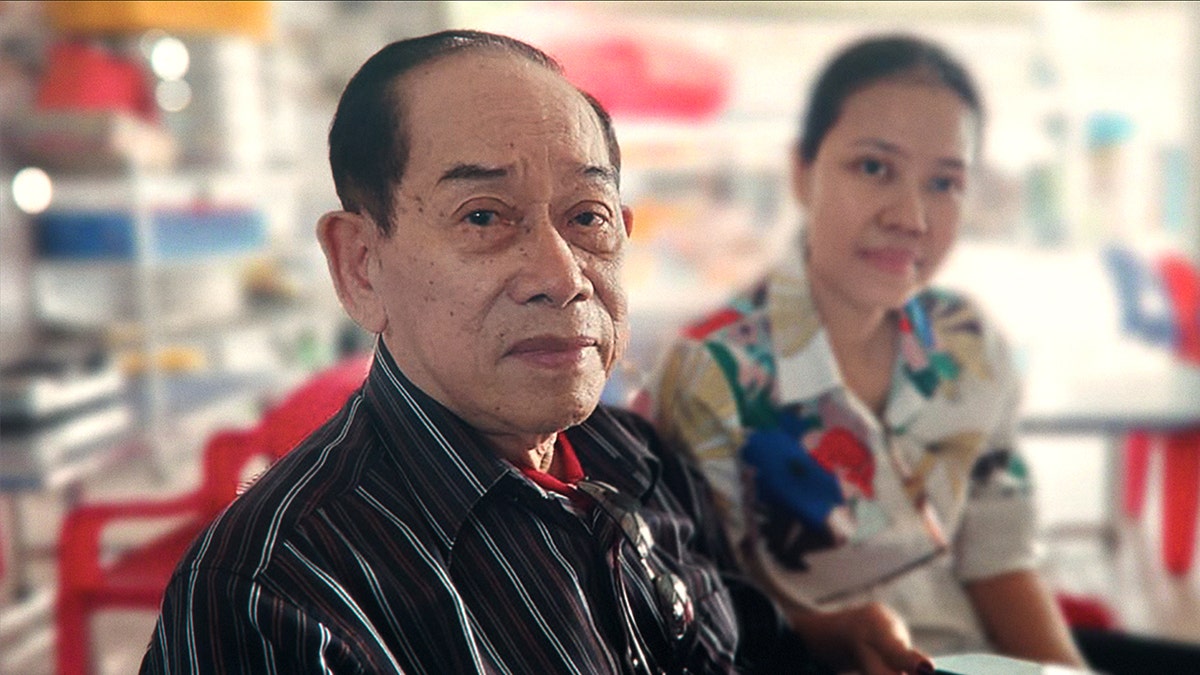
Netflix’s new documentary “The Stringer: The Man Who Took the Photo” argues Nguyễn Thành Nghệ took the iconic “Napalm Girl” photo during the Vietnam War. (Courtesy of Netflix © 2025)
In a statement to Fox News Digital, Ut’s attorney, James Hornstein, said the Netflix documentary provides no new evidence — “no negative, no contact sheet, no print, no contemporaneous note, and no photographic archive” to dispute Ut took the photo, highlighting that only “a very narrow circle of individuals” are arguing that he didn’t.
“Aside from Carl Robinson and his wife, who put forward a 50-year delayed and uncorroborated account of events in the AP bureau, the only other proponents of the alternative thesis are Nguyễn Thanh Nghệ himself, and certain members of his family,” Hornstein said in the statement. “Not a single independent journalist present at Trảng Bàng supports this view. No AP staff members who worked in Saigon on the day of the attack support it. No documentary evidence — no negative, no print, no contemporaneous contact sheet — supports it. And no historian, archivist, or photographic expert with access to the AP archives has ever endorsed it.”
He continued, “The absence of broader support is striking, given the extensive coverage the photograph has received over the past half-century. If credible evidence existed to challenge Nick Út’s authorship, it would not have remained confined to a handful of individuals whose accounts emerge five decades after the fact and contradict the overwhelming body of contemporaneous testimony. The isolation of this thesis underscores the weight of the historical record — and further highlights the speculative nature of the narrative presented in the documentary.”
Netflix did not immediately respond to Fox News Digital’s request for comment.
CLICK HERE TO GET THE FOX NEWS APP
Joseph A. Wulfsohn is a media reporter for Fox News Digital. Story tips can be sent to joseph.wulfsohn@fox.com and on Twitter: @JosephWulfsohn.