
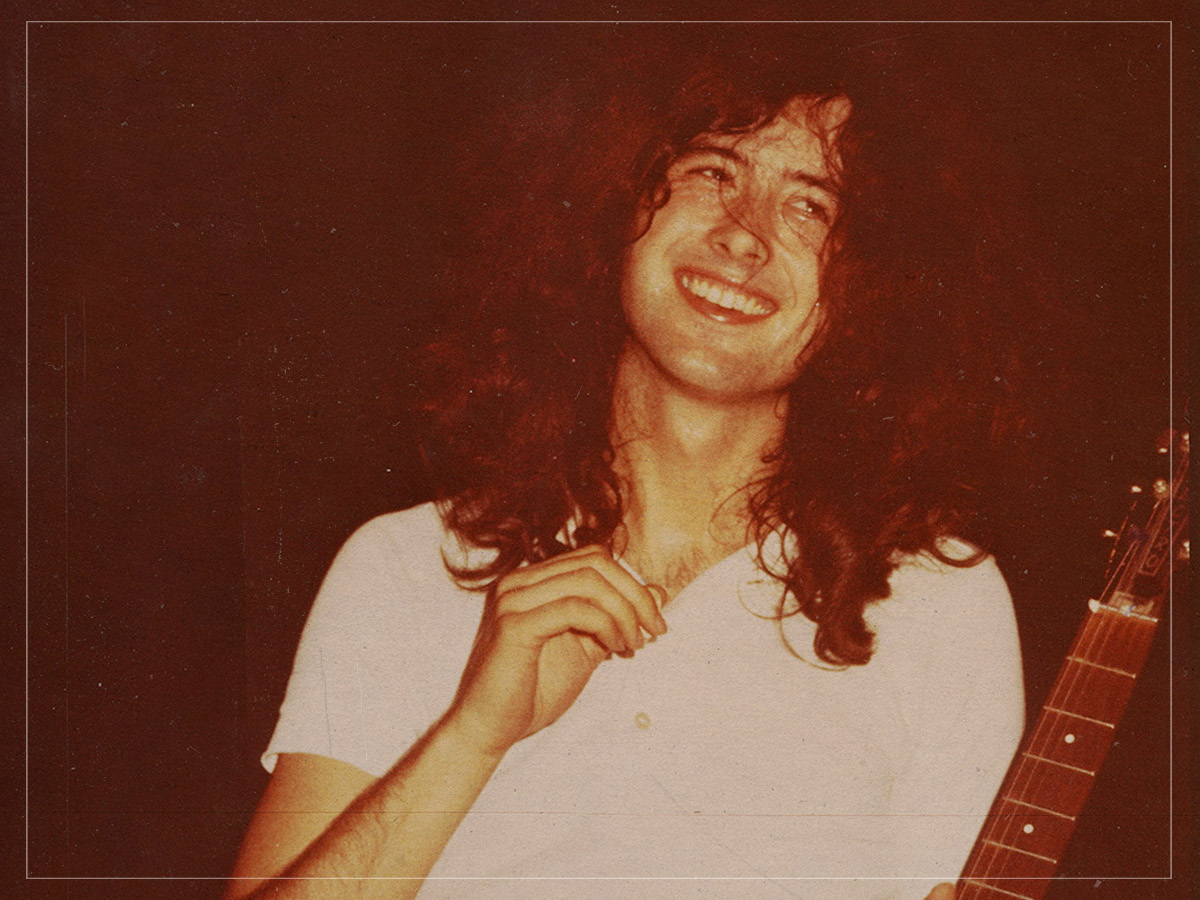
(Credits: Far Out / 2025 Paradise Pictures Ltd)
Mon 1 December 2025 18:00, UK
The year is 1980, and Led Zeppelin is virtually dead in the water.
The band had released the next major advancement in their sound only a few months ago, but with the death of John Bonham, there was no sense for any of them to continue on without that signature heartbeat. But if Jimmy Page wasn’t going to remain the best guitarist of the best band in the world, the hunt was on for him to find a different band.
Then again, saying that and doing it are two very different things. There was still a lot of grief wrapped up in Jimmy Page’s feelings about Bonzo, but as long as he had Paul Rodgers with him, he knew that he would be alright with The Firm. They were never attempting to be the best band in the world, but as long as Page had a musical canopy over him while he recovered from Bonham’s death, he at least had a way forward other than sinking into his own vices.
If there was one vice that would never leave, though, it was music. Page was never going to give up on playing as much as he could, and even if people were eager for more Zeppelin, it was better for him to start taking chances that weren’t always the logical route. Sometimes it would be making a solo record, other times it would be seeing what he and Robert Plant could create together, or it could be trying to get the next best thing when working with people like David Coverdale.
That free agent status may have led him to some ill-advised collaborations, but for every time that he would snap a picture with people like Puddle of Mudd and Limp Bizkit, he could always find a home working with the likes of The Black Crowes as well. Had he been born a little bit later, though, he would have found the perfect kindred spirit in Jeff Buckley when he saw him play for the first time.
A lot of Buckley’s greatest moments came almost directly from Zeppelin, but whereas Plant would get up into that higher register with ease, there was almost this birdsong register Buckley hit that no one could quite understand. Page knew he chose right by getting Plant in the band back in the day, but he had no problem calling Buckley the most natural successor to what his frontman could do.
Although Plant had his own distinct character, Page felt that no one else could ever compare to what Buckley did, saying, “Technically, he was the best singer that had appeared in two decades. I started to listen to Grace obsessively. It was close to being my favourite album of the decade. We made a point to hear him play, and it was actually scary. One of the things was that I was convinced he did things in alternate tunings, but it was all standard. And I said, ‘Oh my god, he really is clever, isn’t he?’”
And that’s not some minor compliment coming from someone like Page, either. This is the same person who practically invented his own warped tunings while making songs like ‘The Rain Song’ and had opened the door for what unconventional tunings could be, so when he heard there was someone like Buckley making strange jazz chords work so well within a rock and roll context, it must have felt like a musical hurricane hit him.
Even if he was singing his tunes without any guitar accompaniment, though, Buckley could hold the entire music community in the palm of his hand with a single note half the time. Not everything that he played needed to be right on the money, but when listening to tunes like ‘Hallelujah’, no other artist could have created the same energy on that recording.
Related Topics