
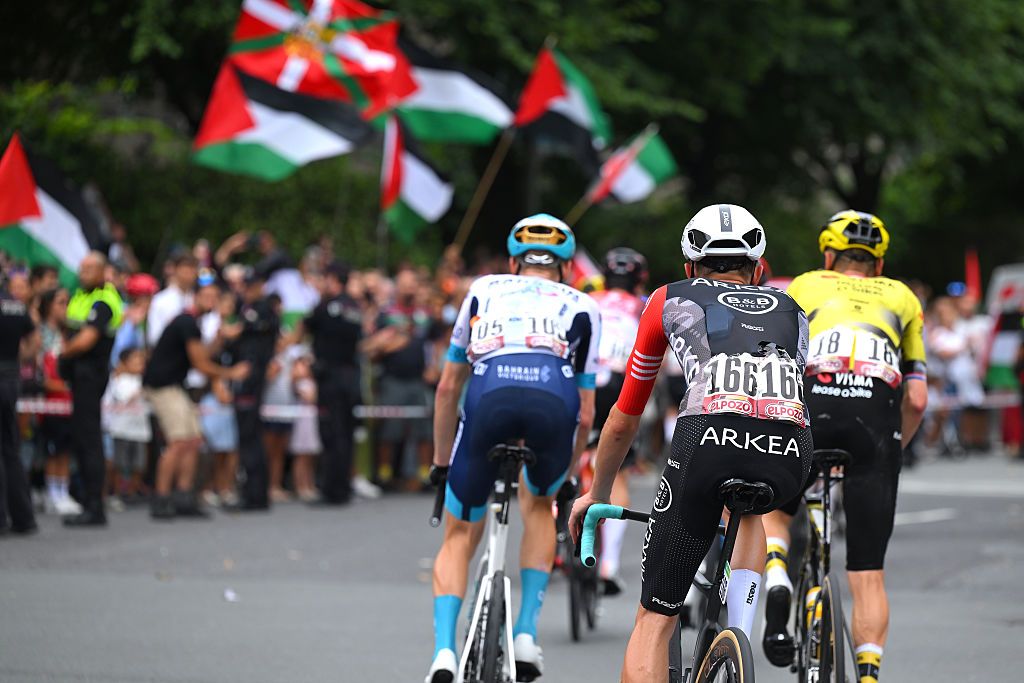
In the latter part of this season, the biggest questions facing cycling weren’t about anything to do with sport or performance, but about an ethical issue, more specifically, the existence and branding of the Israel-Premier Tech team.
Despite being in the team’s name, Israel as a state doesn’t sponsor the squad – as in the case of UAE Team Emirates-XRG or Bahrain Victorious, for example – but the team was, until this autumn, branded with the Israel identity, registered in Israel, and closely linked with Israel via their owner, billionaire Sylvan Adams.
Best picks for you
Protests were present through all three men’s Grand Tours where Israel-Premier Tech were racing, from the regular but non-disruptive demonstrations at the Giro d’Italia, to a few stunts at the Tour de France, and then race-ending chaos at the Vuelta a España. Cycling tried to ride through the problem, but at the Vuelta and the end-of-season races, it became a question that was way, way too big to ignore.
But at the same time, I’m glad that cycling is beginning to open its eyes – or is having its eyes opened – to questions around whom it wants to advertise or endorse through sponsorship, and that we don’t exist separately to a wider worldwide context.
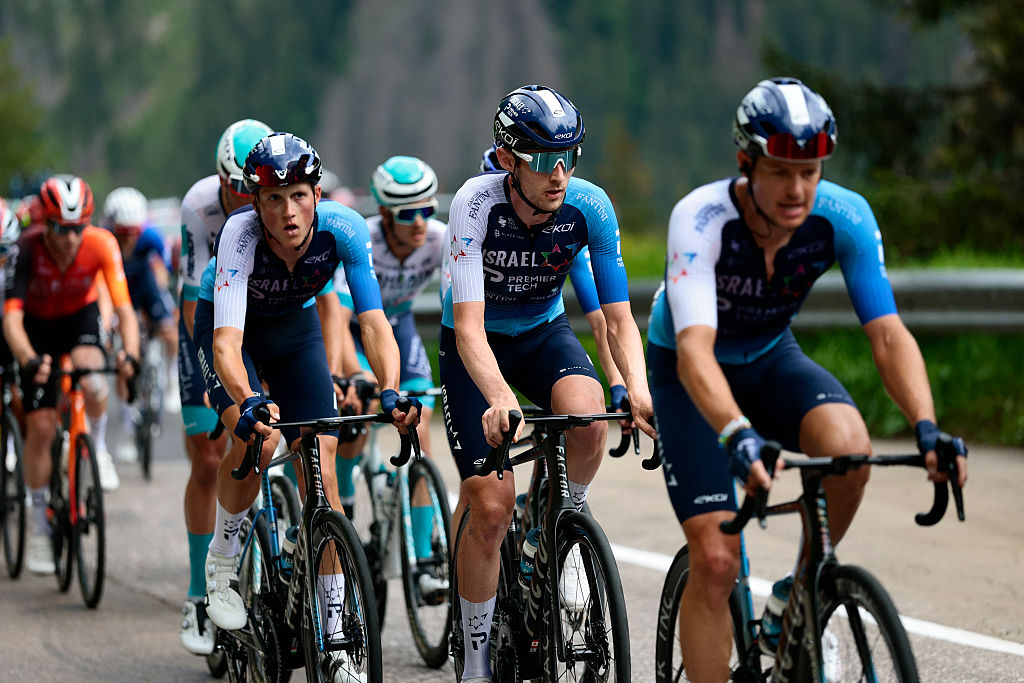
Israel jerseys won’t be seen in the peloton in 2026 (Image credit: Getty Images)
So that is one moral issue largely dealt with, and I think that is a good thing, for the health of our sport, which needs to be able to take place without disruption and negative connotations. But my question is: will this make a lasting change in cycling? Are we going to wake up to all the other moral questions surrounding the sponsors the sport advertises, or the nations it publicises? Israel was not the last contentious issue in cycling – there are so many more things we should be talking about.
Don’t miss these
Unfortunately for me, I’m never going to be able to separate politics and morals from sport, not fully. To take one recent example, I worked at the World Championships in Rwanda this year, and before I committed to going, I had to check if it was a crime to be gay there, to assess if it would be safe for me to go and do my job there.
For the record, it is legal to be gay in Rwanda, but there aren’t any laws against homophobic discrimination, so if I did become a victim of harassment, there would be no protections for me. I had to decide whether I still wanted to visit under those circumstances. In other countries cycling visits, like the UAE, homosexuality is illegal. Until a few years ago, as a woman, I wouldn’t have been permitted to enter Saudi Arabia to attend the AlUla Tour without male supervision. I choose not to visit these countries to cover these races (I can’t claim to be morally superior on this – I still have to cover them remotely in my role as a journalist – but I have to draw a line for my safety).
So, as a travelling, working cycling journalist who also happens to be a queer woman, I literally cannot ignore or separate these things, and I constantly have to evaluate what I am comfortable with doing, and what I have to do because it’s my job. We don’t exist in a utopia where we can always make the most morally correct decision, but I at least always try to think about it, and make the best choice I can.
With this all in mind, and in the wake of the Israel-Premier Tech debacle, my hope is that cycling – riders, teams, governing bodies, the media – at least start to think about the other questions and controversial issues facing the sport. I’m not suggesting any nation or sponsor with a policy I don’t agree with should be ousted tomorrow, far from it, but I’d like these questions to at least enter the wider consciousness of the sport.
If we can question the ethics of Israel’s involvement in the sport, and we can ban Russia for its invasion of Ukraine, perhaps we can also start thinking about the UAE’s foreign policy around the devastating war in Sudan, or the safety of women and LGBTQ+ people in Saudi Arabia, or the treatment of indigenous people in Australia, Canada and the USA.
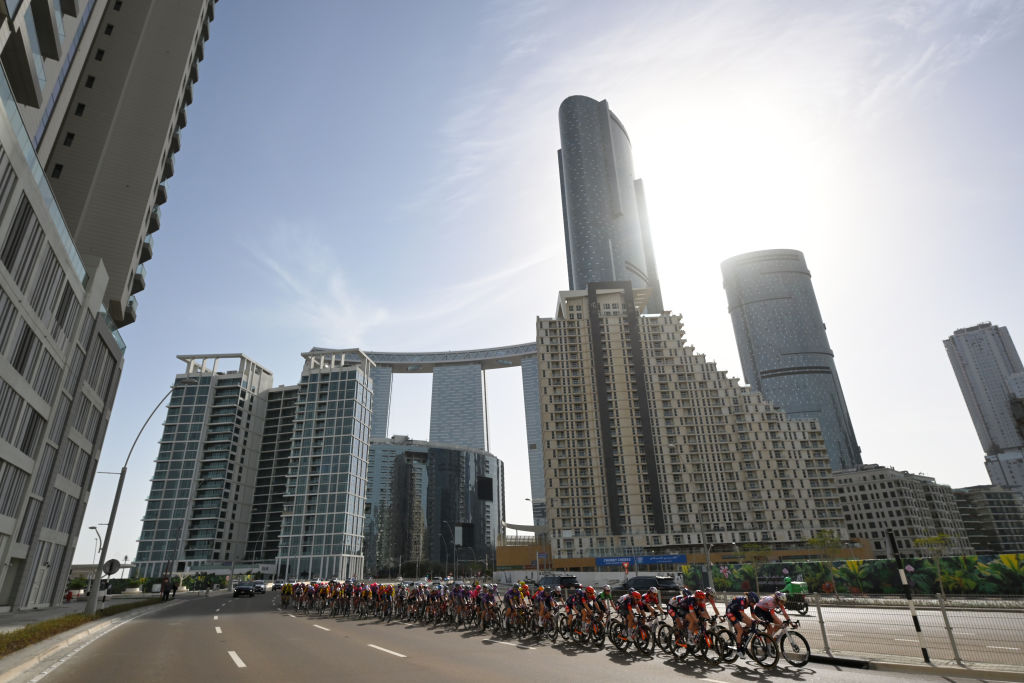
More and more races are being held in the Middle East (Image credit: Getty Images)
Aside from the question of whether cycling should associate with these nations as sponsors and stakeholders, there’s also a real people-led question: should we oblige riders who might not be straight or white or male to race in countries where they feel unsafe? That’s an issue for Black and Asian riders in Europe and North America, too. Or even those who just don’t feel comfortable with a country’s laws, like Søren Wærenskjold who declined to race the AlUla Tour this year over the nation’s human rights record.
And that’s before we even start thinking about the environmental questions facing sponsors like Ineos, TotalEnergies, Santos and others. Cycling is a relatively poor sport compared to the Goliaths like football or F1, which can lead to us turning to questionable sources of money. That’s understandable, but there is also surely a limit – a point at which association with a brand or nation could actually cause more harm than good.
I’m not saying there is some sort of blanket solution to all of these questions, nor that it would do cycling any good to only subscribe to Western ideals and shun globalisation, but as the sport grows and expands around the world, we at least need to be cognizant of these topics, and know where the line might be drawn.
The situation with Israel has surely shown us that we can’t try and brush these things under the rug, or pretend that cycling’s position in the wider context doesn’t matter. UCI president David Lappartient is always saying that he wants the sport to be a tool for good, a movement of unity, and inclusive of all. I want that too, I’m sure many people do, but if that’s truly going to happen, we’re going to have to keep facing these ethical questions. Hopefully, this year was just the beginning of that process.