
Editor’s note: Huseyn Sultanli, expert at the Center of Analysis of International Relations (AIR Center). The views expressed are the author’s own and do not necessarily reflect those of News.Az.
Throughout the tenure of the current Labour government, debates over the UK’s role in the world have taken a central place in domestic political discourse. The Starmer government inherited a unique situation: although the UK remains an influential actor with multiple levers of power, it has been forced to adapt to a rapidly changing environment in which its status differs significantly from what it was over the past half-century.
A military struggling to meet modern standards, inconsistent economic performance, uncertainty surrounding core alliances, and an inability to assert itself on key international issues created an uneasy atmosphere within the Foreign Office. This was reflected in Labour’s pre-election manifesto, which emphasized the need for progressive, yet pragmatic, steps to reintegrate Britain into the international system.
While the government offered little clarity on the ultimate “end goal,” it was clear that Labour intended to launch a process focused on maximizing existing partnerships and, where possible, exploring new directions. To date, its foreign policy efforts can be grouped into three areas: peace diplomacy, with an emphasis on supporting Ukraine and upholding territorial integrity; strengthening core alliances in Europe in response to both domestic shortcomings and global systemic shifts; and maintaining positive momentum in other relationships to enhance the UK’s image as a competitive and reliable global actor.
‘Peace diplomacy’
A considerable part of the Labour government’s foreign policy initiatives to date has focused on peace negotiations. This primarily concerns Ukraine, where the UK has clearly led a concerted effort to support Ukraine’s defense of its territorial integrity.
By spearheading the creation of the “coalition of the willing,” the UK has cemented itself as Ukraine’s most vocal and consistent supporter. As of November 2025, the UK has committed up to £21.8 billion to Ukraine. This includes £13 billion in military support, £5.3 billion in non-military support, and £3.5 billion directed toward reconstruction and other defense-related projects.
On the diplomatic front, particularly through its leadership role in the “coalition of the willing,” the UK has advocated for Ukraine’s comprehensive integration into Western alliances and encouraged similar approaches among its European partners. It has taken the lead by advancing its bilateral relationship with Ukraine into a long-term framework that recognizes existing challenges and ensures that support remains as forward-looking as possible.
The 100-year partnership signed between the two countries in January 2025 is designed to ensure cooperation across nine key pillars, is fully institutionalized, and generates both near-term and long-term impact.
It is in the military domain, however, that the UK has proven most decisive. In addition to the support already provided, the UK has committed to delivering £3 billion annually until 2030–2031, repeatedly stressing that assistance will continue “for as long as needed.” In fact, support is increasing, with official figures indicating that 2025 is expected to mark the highest volume of aid delivered so far.
Beyond supplying weapons and advanced equipment, the UK has demonstrated a willingness to support Ukraine “on the ground” without deploying troops. In June 2025, the countries signed an agreement to share battlefield technology, enabling expanded UK domestic production of drones for Ukraine. More than 600,000 Ukrainian personnel have also been trained in the UK, with the program expected to continue through the end of 2026. This reflects a profound commitment to Kyiv’s war effort — a commitment the current government unmistakably considers a core foreign policy priority.
Identifying the underlying issue

Source: The Guardian
Recent debates about British foreign policy have focused heavily on questions of identity. In the aftermath of Brexit, the UK found itself in a highly challenging international environment. The weakening authority of multilateral institutions, the spread of geopolitical competition between key centres of power, and the regular emergence of new minilateral cooperation frameworks not only drive change but also have the potential to sideline powerful actors that lack meaningful rule-making capacity.
This debate is best captured by Lawrence Freedman, who described the UK’s recent shift as a transition from being a rule-maker to a rule-taker. In the face of Brexit, the UK experienced an unprecedented and system-altering shock even before broader system-level changes began to take effect.
The global pandemic, followed by the war in Ukraine and the resulting energy crisis, harmed European economies, including the UK’s. In addition, the fallout from the Brexit vote, including several years of unsuccessful negotiations, cast doubt on both the nature of the EU–UK relationship and the UK’s place in European security.
Although a Trade and Cooperation Agreement was reached in December 2020, it was clear that the relationship required new momentum if it was to mirror, even loosely, the kind of cooperation that existed before Brexit.
The previous government recognised the need for new ideas and implemented fresh approaches. This included the ‘Global Britain’ strategy, aimed at diversifying the UK’s economic relationships and substituting the benefits of EU membership with new opportunities that more clearly advanced British interests.
However, despite milestones such as AUKUS — a security pact with Australia and the United States — and the Comprehensive and Progressive Agreement for Trans-Pacific Partnership (CPTPP), which provides UK businesses with preferential market access to 11 countries, these steps proved insufficient. The gap between London and other centres of power in international relations continued to widen.
The UK’s military has also been shown to be in decline from previous levels of proficiency and global stature. The Strategic Defence Review published in June 2025 concluded that the UK is not prepared for modern warfare and that comprehensive reforms are urgently needed.
One of the review’s key proposals is the creation of an ‘Integrated Force’, which seeks to combine artificial intelligence with conventional capabilities and narrow the gap with the world’s most technologically advanced militaries. The government’s willingness to identify problems and make them public is a step in the right direction, but only time will tell whether the review’s findings are met with appropriate urgency and funding.
The challenge, however, extends beyond any single sector. In today’s international system, a country needs far more than military strength. It requires assertiveness and decisiveness in policymaking, the continuous evolution of core relationships to anticipate system-level changes, and a sustained effort to build new partnerships. This combination offers the best chance of maintaining regional and, ultimately, global relevance.
Strengthening ‘core’ alliances

Source: Reuters
In 2025, the Labour government has been proactive in resetting the ‘core’ relationships that underpin any actor’s foreign policy. The first UK–EU summit, held in May 2025, set in motion a series of initiatives, including the first attempt at a common security framework post-Brexit through the Security and Defence Partnership (SDP). Although some have pointed to a lack of detail, the sides committed to regular dialogue, with the UK foreign and defence secretaries expected to meet the EU’s High Representative for Foreign Affairs and Security Policy once every six months. The UK pursued similar reset formats with individual EU states: both the UK–France and UK–Germany summits, each outlining numerous areas of renewed cooperation, were held within weeks of one another.
However, and arguably most consequentially for London’s foreign policy aspirations, its relationship with the United States has received renewed impetus. Donald Trump’s return to the White House and his immediate adoption of a critical stance on the state of the transatlantic relationship were inevitably going to pose a challenge, particularly given the Labour government’s emphasis on renewing ties with the EU and pursuing — though not to pre-Brexit levels — a reintegration of the UK into the European security architecture. This challenge was compounded by the strained relationship between Trump and leading European figures, with the American president urging allies to increase defence spending.
This period also touched on economic ties, as Trump made clear that his treatment of European allies would differ from his treatment of the UK. Tariff rates applied to the EU and China were softer in the UK’s case — a development welcomed in London but treated with caution, given the struggling British economy.
Nevertheless, the UK’s leadership managed this delicate balance effectively. London avoided the harsh criticism the American president levelled at several European capitals, with Trump regularly emphasising both a personal attachment to the UK and his view that it remained the only ‘European’ ally willing to fight alongside the United States in the event of armed conflict.
Maintaining positive relations with Washington has undoubtedly been a key foreign policy priority for the UK government. In addition to diplomatic efforts, the relationship has benefited in recent months from new initiatives that further deepen an already comprehensive and institutionally embedded alliance — one that represents the most significant intelligence partnership in the world.
During Donald Trump’s official state visit to the UK in September 2025, which symbolically reaffirmed the alliance’s strength, the two countries announced a Technology Prosperity Deal. This launched bilateral cooperation on artificial intelligence, including a joint flagship research programme between the two countries’ science agencies; on civil nuclear energy, with plans to deploy advanced nuclear reactors in both states; and on sectors such as quantum computing and critical national infrastructure. Most significantly for the UK economy, the government secured £150 billion in investment from American companies.
Major firms including Microsoft (£22 billion) and Google (£5 billion) intend to pursue large-scale investment programmes, expected to create nearly 7,600 jobs. These extensive efforts, which span numerous fields, point to an undeniable reality: the United States continues to regard the UK as its closest transatlantic ally, resulting naturally in the broadening of day-to-day cooperation.
For the UK, however, strengthening ties with European partners must not, and does not, come at the expense of the Special Relationship, even as relations between Washington and Brussels fluctuate between periods of stability and tension.
Maximizing existing relationships
Source: AA
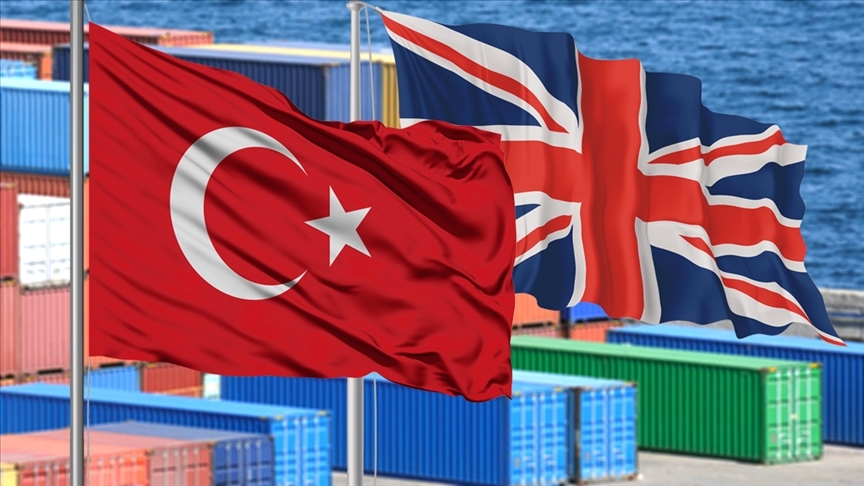
In addition to its core relationships, the Labour government has been equally keen to develop other partnerships that provide the UK with opportunities to re-establish itself as a competitive player in key industries and regions. With Türkiye, for example, the UK enjoys a comprehensive relationship in which strong economic and trade ties serve as the backbone of cooperation in other areas. Recently, Türkiye and the UK signed a groundbreaking deal on Eurofighter Typhoon jets, under which Ankara will purchase 20 aircraft from the UK, amounting to a total investment of £8 billion.
The two sides also emphasized the establishment of an inaugural cooperation framework and underlined their desire to work together as NATO partners with similar defense and security interests. This deal, alongside the UK’s growing engagement with regions such as the South Caucasus, demonstrates that the current foreign policy strategy is not short-sighted and is open to new initiatives. For example, in August 2025, the UK announced the elevation of relations with both Azerbaijan and Armenia to the level of a strategic partnership. In Baku’s case, this momentum has only continued to grow: the two sides have become more active on the military front, with representatives meeting on several occasions to discuss cooperation opportunities. This positive dynamic has spread to business and civil society as well, with the Azerbaijan-UK Business Council established in London in October 2025.
The UK’s comprehensive ties with both Baku and Ankara present another opportunity. With the two countries already in a military alliance, trilateral security cooperation among the UK, Azerbaijan, and Türkiye could further advance regional security.
As government officials work through the Strategic Defence Review, reassess their approach to crucial areas such as international aid, and adapt to the rapidly changing international environment, discussions about waning authority and strategic stagnation will undoubtedly persist. Nevertheless, during its time in office, the current government’s actions indicate a clear recognition of the urgent need for change. In an uncompromising world in which national interests are increasingly shaped by action or inaction, this can only be viewed positively.
Having accepted the inevitability of widening power and influence gaps, the search for new ways to shape international outcomes is fully underway. Although leadership in evolving spheres such as artificial intelligence and emerging regions will be vital, correcting existing imbalances in key alliances will be just as important. The ability to balance these priorities, along with continued support for Ukraine, will be crucial in determining how the UK’s global role develops in the near future.
(If you possess specialized knowledge and wish to contribute, please reach out to us at opinions@news.az).