
You are as old as your arteries is a much used medical adage and rightly so. Prematurely diseased arteries in any part of the body are cause for concern, but the ones I worry about most are my coronaries, the small vessels that supply my heart. Might yours be older than your chronological age? How do you tell? What can be done to slow the ravages of time? And if they do let you down how can modern medicine help?
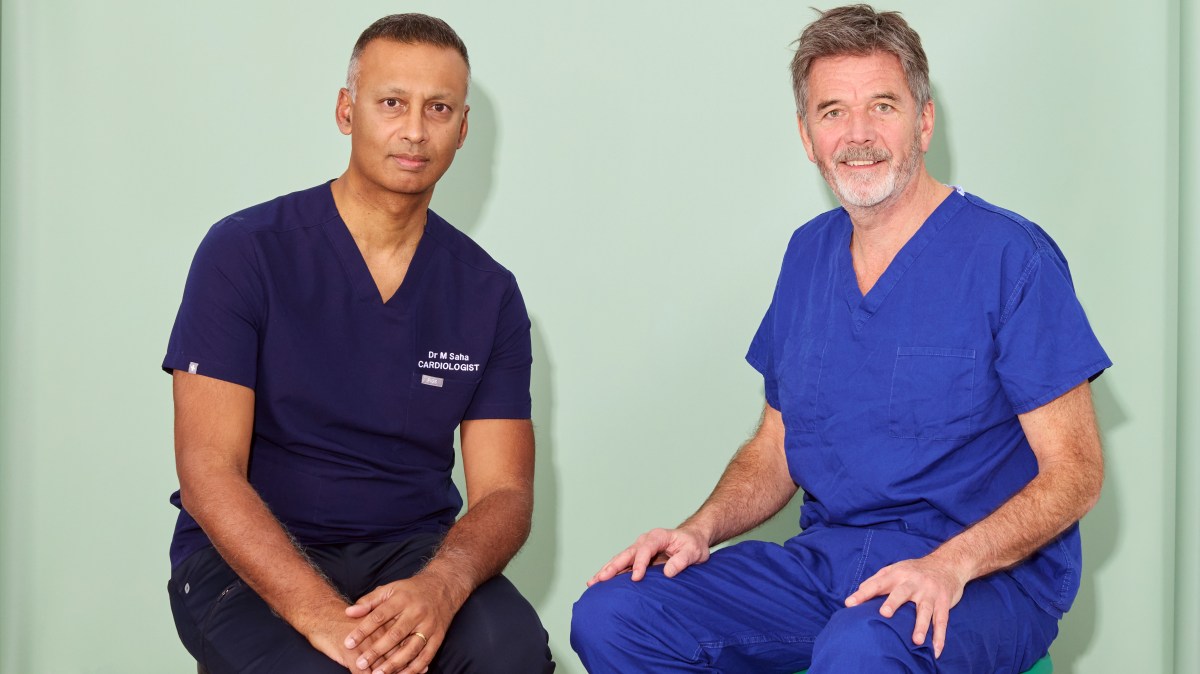
To answer these questions and more I spent a morning in the catheter lab — the heart specialist’s equivalent of an operating theatre — at Gloucester Royal Hospital with the consultant cardiologist Dr Mrinal Saha. GRH is my local district general and its lab is typical of those now found in larger hospitals across the UK, “providing 24-hour, seven days a week emergency care for people with chest pain and heart attack, many of whom will receive life-saving treatment within an hour or two of developing symptoms”. And given how common coronary heart disease is — half of 40-year-old men and a third of women develop it at some stage — there is a fair chance I may end up there one day.
The outlook for people with coronary heart disease (CHD) has been transformed during my lifetime. When my grandfather was admitted to hospital in the Seventies following a heart attack he was simply given pain relief and confined to bed for a week. Today the clot blocking his coronary would be dissolved or sucked out and/or any dangerous narrowings stretched and stented to restore normal flow in time to save the part of the muscular heart wall that depended on it. And all done using wires and tools pushed through a tiny hollow tube (catheter) inserted into an artery at the wrist or groin, and guided to the right spot using X-rays.

An MRI heart scan
GETTY IMAGES
These techniques, combined with advances in medication, have had a dramatic effect on survival rates and quality of life. Back in my grandfather’s day you were lucky to return home after a heart attack: about three quarters of people, including Grandad, didn’t. Today you are unlucky if you don’t: three quarters now leave hospital, often within two or three days, and thanks to rapid restoration of coronary blood flow, with less damage to their hearts than survivors in the past.
Who is at risk?
“We all develop some fatty deposits in the walls of our coronaries as we get older,” Saha says, “but there are a number of factors [see below] that accelerate the process.” Furring up of the arteries can start in childhood but the impact is typically felt from middle age, when the build-up of plaques on the walls, made up of fatty molecules such as cholesterol, calcium and other substances, start to restrict or block blood flow.
While litres of blood pass through the chambers of the heart every minute, its muscular wall depends on the coronaries that encircle its surface for oxygen and nutrients. Energy-hungry heart muscle can’t survive long without a good blood supply and significant restriction quickly leads to chest pain, impaired pumping, breathlessness and, if electrical activity becomes disrupted, even cardiac arrest.
In a heart attack the blockage is typically acute on chronic: the plaque has been present for years, often silently, until a bit breaks off, leading to a blockage that suddenly occludes the artery.
On the other hand, angina — chest pain on exertion normally felt in the chest, neck or left arm — is a warning sign that blood flow is restricted. In milder cases you might only get symptoms walking up a steep hill on a cold day but in more severe ones the discomfort can be brought on by the slightest exertion and sometimes even at rest.
QRisk (https://qrisk.org) is the tool most doctors in the UK use to work out who is most at risk of CHD and, although it is designed to be used with a healthcare professional, you can try it at home too. It uses recognised risk factors such as smoking, family history (a heart attack or stroke before the age of 60), blood pressure, diabetes, kidney disease, cholesterol levels and your body mass index to estimate your heart age, as well as the odds of having a heart attack or stroke in the next ten years.
• How to protect your heart — the cardiologist’s guide
Ideally you want a heart age that is below your chronological one, and if yours is higher I suggest adjusting modifiable parameters on the calculator, like your blood pressure, smoking habits or weight, to see what impact that could have. Age remains the biggest driver of heart disease so the risk of a heart attack will rise however healthy and clean living you are. The trick is to try to have a “younger” heart than your peers.
A strong family history of heart disease isn’t modifiable. However, the underlying inheritable causes — such as high cholesterol levels or other lipid abnormalities — can often be mitigated by medication and modifications to diet and lifestyle. And the earlier this mitigation is started, the better the outcome. So if you have a worrying family history do mention it to your GP, who will probably want to investigate further.
What about screening tests?
QRisk only gives an estimate of your risk but, in symptom-free people, the criteria it uses — such as blood pressure and cholesterol levels — are likely to be the only screening tests you are offered on the NHS, unlike in the private sector, where there are plenty to choose from.
Simple options include an ECG and further blood tests, including an apoprotein screen (a cholesterol-related risk factor that can explain a family history of heart disease), and both can help fine tune risk assessments.
What would Saha choose? “Probably a CT coronary angiogram with calcium scoring, which gives a detailed image of your coronaries and how healthy they are, but is expensive.” Expect to pay £1,000 to £1,500 or more. And while it only gives a snapshot in time, it’s reassuring if you have one in late middle age (55-60) and the results are good.
Looking after your coronaries
“It’s not all about medicine, you have to do your bit too,” Saha says. “It is vital not to underestimate the importance of self-help — keeping trim and active, not smoking and eating a good diet should be the mainstay of any strategy.” However, this article is about medical options, so let’s start with drugs.
Over the past 60 years the number of deaths from CHD in the UK has more than halved thanks to factors like better public awareness, fewer smokers, better treatment of conditions like diabetes and high blood pressure, and improved treatments. However, it’s the role of statins that Saha is keen to highlight. Love them or loathe them, as many as 10 million people in the UK now take a daily statin and they do work, not just by lowering cholesterol levels and slowing the ageing of arteries but by stabilising existing plaque on the walls of the coronaries and reducing the likelihood of heart attack.
The benefits are small for most people taking them to prevent their first heart attack (or stroke) but the greater your risk, the bigger the difference they make, and if you already have CHD then they are even more beneficial. Indeed I often refer to them as risk reducers rather than cholesterol lowerers as you can still benefit even if your cholesterol levels are normal.
As a rule GPs looking to prevent someone from having their first heart attack or stroke are likely to start offering statins to anyone with a 10 per cent or more chance of developing either in the next ten years (as determined by QRisk), and pushing hard in those with a 20 per cent or more chance. At the 10 per cent threshold the National Institute for Health and Care Excellence estimates that 40 strokes and heart attacks could be prevented for every 1,000 people who take a statin for ten years, increasing to 150 for those at 40 per cent.
• Can you heal a damaged heart? Scientists have found a way
And statins are just part of the modern armoury of medicines that reduce the risk and keep people well. Antiplatelet drugs like aspirin and clopidogrel reduce blood stickiness, blood pressure treatments like ACE inhibitors (eg ramipril) and beta blockers help protect the heart, and some of the newer diabetes treatments help it work more efficiently.
Put it this way, if you develop angina or have a heart attack, rather than just being sent home with nothing more than a glyceryl trinitrate tablet to slip under your tongue to ease your angina — it temporarily increases blood flow to the heart — you will be given a carrier bag full of medicines designed to ease your symptoms and protect your arteries and heart. And this will apply even if you end up having any restriction or blockage in your coronaries fixed in a catheter lab like Saha’s.
Stents, vacuums and balloons
The gold standard treatment for a heart attack these days is to reopen a blocked coronary before any heart muscle is irreversibly damaged — typically no more than 12 hours after the onset of symptoms, and ideally within 60 to 90 minutes. And while clot-dissolving drugs — “clot-busters” — are one option, “direct intervention in a catheter lab is normally the best” according to Saha, “but time is of the essence”.
Like the other consultants in the team at GRH, he has to live within 30 minutes of the hospital so that on his one in five nights and weekends on call he can get to the lab quickly. Indeed paramedics attending the patient, at home or elsewhere in the community, can send the heart trace (ECG) directly to his phone so he can set off even before the patient has arrived at the hospital.
Once in the lab, and with the catheter inserted and manoeuvred to the heart, the blockage is identified using squirts of radio-opaque dye that show the coronaries on a screen above the operating table. What happens next depends on a number of factors but might involve sucking a clot out or enlarging a tight restriction with a tiny balloon inflated to 10-20 BAR pressure (tyres on a car are typically 2-3 BAR) and leaving a tubular mesh stent in place to hold the artery open.

A balloon angioplasty and stent insertion
ENCYCLOPAEDIA BRITANNICA/GETTY IMAGES
Stents are made of metal and sized to fit, with a typical one being 15-20mm long and 2-5mm in diameter. The latest types (drug-eluting stents) are covered in an outer layer that contains a drug to stop scar tissue growing, a development that means they are very unlikely to become blocked up as the artery tries to heal — at least not for a decade or so. If all goes well the whole procedure is over within an hour, restoring blood flow to the heart before long-term damage occurs.
The catheter lab also deals with lots of people who haven’t had a heart attack (yet) but who have coronary artery disease identified through symptoms like angina and breathlessness, along with changes on their ECG or on scans like MRI and CT. Injecting dye into the coronaries helps identify the trouble spots which can then be further assessed to see what effect they are having using tiny pressure probes and/or high tech ultrasound scanning.
Once narrowings that need treatment are identified, stents can be inserted and it’s not unusual to put up to four or five in different arteries. However, stents are not always required. Drug-eluting balloon (angioplasty) technology now means even the short 30 to 60-second contact with the drug on the surface of the balloon as it is inflated to stretch a pinch point is enough to prevent the area constricting back down, even without a stent to hold it open.
And for harder, more calcified obstructions that can’t be stretched, Saha uses tiny diamond-tipped drill bits to burrow through them, or blast them into microscopic particles using high-powered ultrasound probes, all introduced through the narrow catheter at the wrist. Put it this way, if you want to be an interventional cardiologist, it helps if you are good with your hands.
• Read more expert advice on healthy living, fitness and wellbeing
Not everyone will be suitable for these less invasive techniques, particularly those with severe or widespread disease and underlying conditions such as diabetes, and these people can be referred on to a surgical unit to see if coronary artery bypass surgery — bypassing the blockages by grafting in new vessels taken from elsewhere in the body — is an option.
But fancy drugs and techniques aside, if there is one message I would like you to take home it is this: never ignore exertion-related chest discomfort or unexplained breathlessness.
Oh, and if you — or someone you are with — develop chest pain and you think it could be a heart attack, please dial 999. And if in doubt, assume it is. Do not go to the nearest emergency department as you are likely to get quicker treatment, and be safer, if brought in by paramedics. Not least because they can wake Saha up and show him your ECG long before you get to the hospital.