
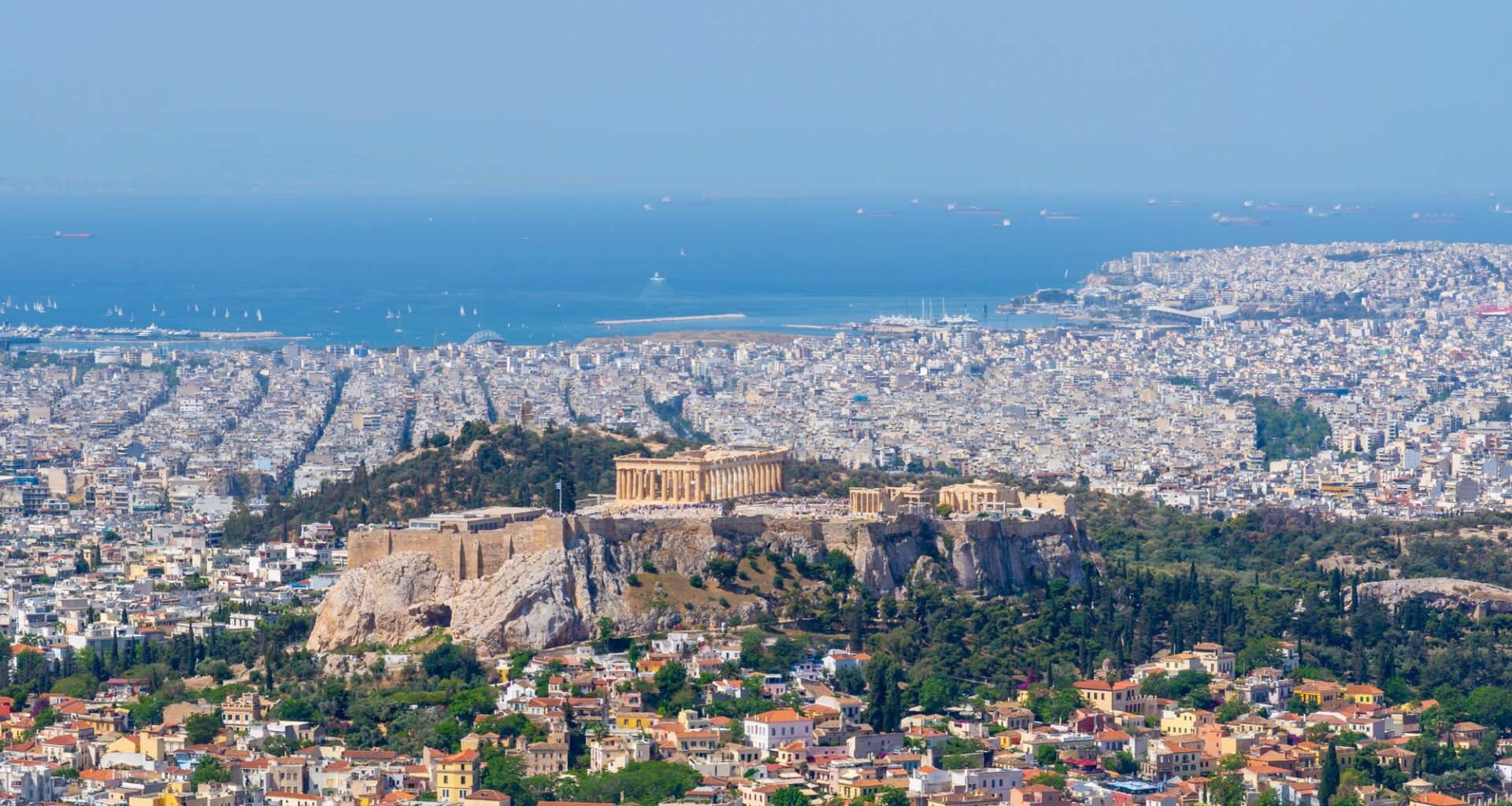
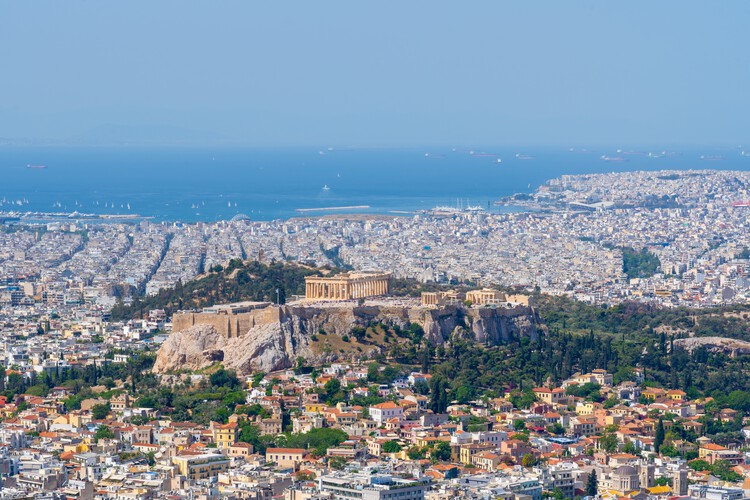
 Athens, Greece. Image © JHVEPhoto via Shutterstock
Share
Or
https://www.archdaily.com/1036590/urban-regeneration-in-greece-the-ellinikon-master-plan-and-beyond
Greece‘s built environment is shaped by the coexistence of multiple architectural layers, where historic structures, modern interventions, and evolving urban systems intersect. Classical landmarks and their surrounding urban fabrics continue to inform the spatial character of cities, while postwar developments, infrastructural upgrades, and contemporary projects add new dimensions to the country’s architectural landscape. This continuity between past and present provides the foundation for current design approaches, which increasingly focus on balancing heritage, environmental considerations, and contemporary urban needs.
In Athens, ongoing development activity is reshaping the metropolitan area through the introduction of new coastal districts, expanded green spaces, and mixed-use neighborhoods. The Ellinikon master plan, situated on the grounds of the former international airport, stands out as one of the most significant initiatives. Envisioned as a large-scale urban extension, the project incorporates residential areas, office and commercial zones, cultural venues, and what is planned to become Europe‘s largest coastal park. Its design framework emphasizes connectivity, climate-responsive strategies, and the integration of public space within new urban districts, reflecting broader shifts in how the city approaches long-term planning and coastal redevelopment.
Comparable developments are taking place in Thessaloniki, Piraeus, and other regions, where new academic buildings, cultural institutions, sports facilities, and workplace environments are contributing to a more diversified architectural landscape. These projects often engage with existing industrial sites or emerging districts, incorporating adaptive reuse, public-realm improvements, and ecological considerations. They illustrate ongoing changes in Greece‘s architectural and urban development, shaped by updated planning priorities and a growing interest in integrating social, environmental, and infrastructural objectives within contemporary design.
Related Article Athens Architecture City Guide: 26 Architectural Works From Ancient Grandeur to Modern Innovation 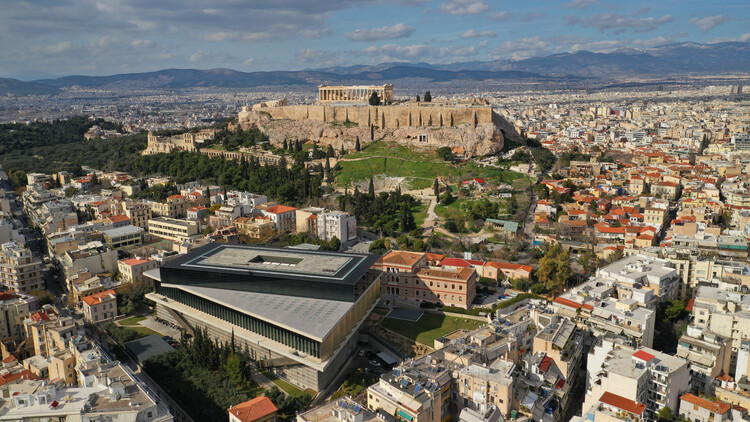 Athens, Greece. Image © Aerial-motion via ShutterstockUrban Regeneration and Coastal Transformation
Ellinikon represents the most extensive urban regeneration initiative currently underway in Greece, reshaping a former airport site into a new coastal district composed of residential neighborhoods, commercial areas, and large public landscapes. The development introduces a range of architectural interventions that prioritize connectivity, environmental performance, and access to open space along the Athenian shoreline. Within this framework, recent proposals by international and local practices highlight different approaches to high-density living, workplace integration, and large-scale park design.
Park Rise Residences, Ellinikon / BIG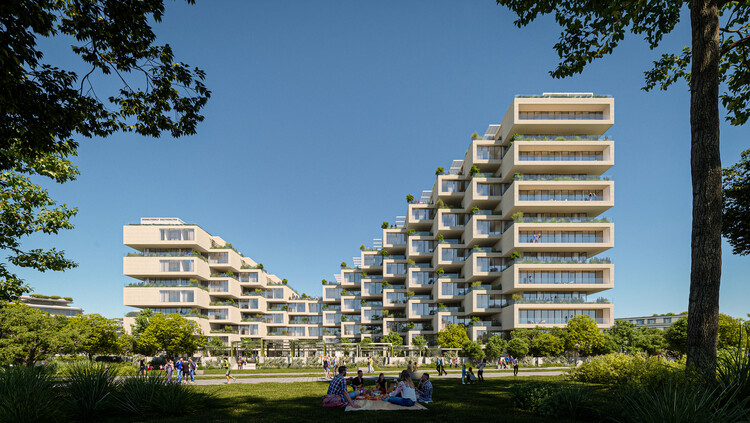 Park Rise Residences, Ellinikon / BIG. Image Courtesy of BIG
Located at the center of Little Athens within the Ellinikon development, BIG’s Park Rise introduces 88 residential units shaped by a curved concave form generated from the varied heights of its five cores. The off-white, glass-reinforced concrete façade combines fluted and smooth textures with exposed aggregates, creating a geometric expression that references the surrounding landscape. Residents have access to amenities including fitness facilities, a 20-meter indoor pool, and private gardens connected to the adjacent Metropolitan Park. A shaded pavilion with lounge and play areas incorporates photovoltaic panels that support on-site energy production. At ground level, pathways link the building to the future pedestrian axis and tram line within Ellinikon‘s planned 15-minute city network.
Marina Tower, Ellinikon / Foster + Partners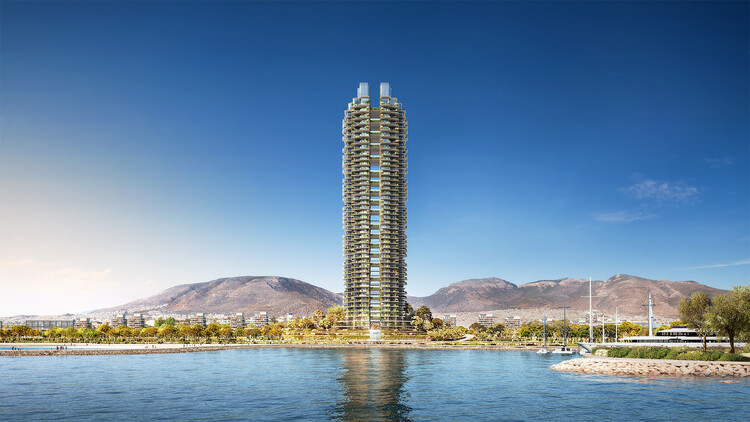 Marina Tower, Ellinikon / Foster + Partners. Image © dbox / Foster + Partners
Foster + Partners‘ Marina Tower is planned as the tallest building in Greece, a 200-meter residential tower positioned along the coastline of the Ellinikon redevelopment. Designed with a permeable relationship between interior and exterior spaces, the tower features dual-aspect apartments, generous natural ventilation, and landscaped platforms integrating water elements and greenery. Its form is composed of two slender volumes linked by multiple terraces that reference the character of the Greek coastal landscape. Presented as the first green high-rise in the country, the project incorporates environmental strategies aligned with Ellinikon‘s broader vision for sustainable, mixed-use districts organized around a major coastal park. Upon completion, it will be one of six tall structures within the master plan.
Ellinikon Metropolitan Park / Sasaki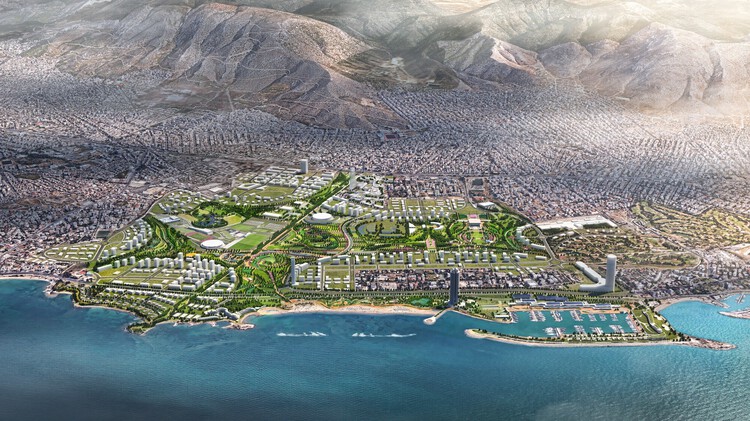 Ellinikon Metropolitan Park / Sasaki. Image © Sasaki
Sasaki‘s Ellinikon Metropolitan Park will transform 600 acres of the former Athens International Airport into Europe’s largest coastal park, creating a restorative landscape shaped by the site’s layered history and ecological potential. The design combines organic topographies with linear elements referencing the airport runways and Olympic venues, while preserving the 1960s Eero Saarinen terminal as a central event space. More than 30,000 trees from 86 species will contribute to a new biodiversity corridor, supported by reclaimed-water irrigation and stormwater strategies that repurpose existing Olympic infrastructure. With extensive material reuse, including concrete from the former runways, the park aims to reach carbon neutrality within 35 years and significantly expand public green space for Athens.
Civic Architecture and Cultural Infrastructure
Across Greece, new civic and cultural projects are contributing to a broader effort to enhance public amenities, educational facilities, and community-oriented spaces. These developments illustrate how architecture is being used to support institutional growth, expand cultural programming, and strengthen urban connections in both established and emerging districts. In cities such as Thessaloniki and Piraeus, recent proposals introduce new forms of engagement with landscape, public space, and contemporary cultural production.
PAOK FC Stadium, Thessaloniki / Populous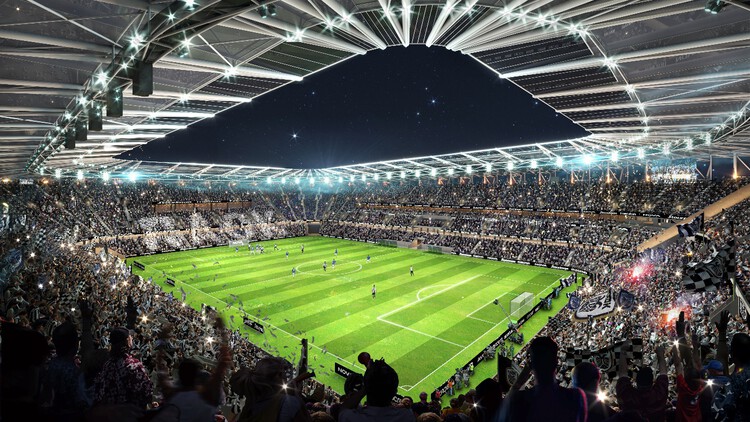 PAOK FC Stadium, Thessaloniki / Populous. Image Courtesy of Populous
Populous‘ design for PAOK FC’s new stadium in Thessaloniki positions the venue as the anchor of a broader masterplan to revitalize the Toumba district. The proposal integrates green corridors, public plazas, and an underground rerouting of Kleanthous Street to create a more connected and pedestrian-oriented setting. Architecturally, the stadium draws inspiration from the club’s emblematic eagle, expressed through a dynamic exterior form, while the continuous seating bowl emphasizes intimacy and atmosphere during matches. Dedicated hospitality areas and supporter zones, including a redesigned Gate 4, combine contemporary amenities with long-standing fan traditions.
Anatolia College Academic Building, Thessaloniki / PILA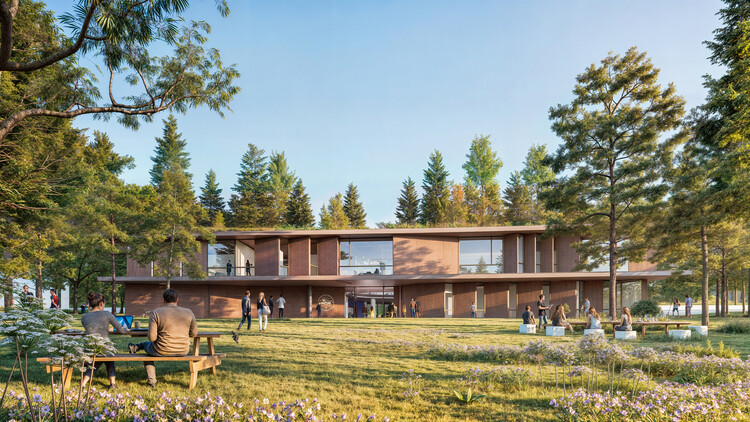 Anatolia College Academic Building, Thessaloniki / PILA. Image Courtesy of PILA
PILA‘s design for a new academic building at Anatolia College forms part of the institution’s long-term campus master plan and supports the expansion of its tertiary-level programs. Conceived as a porous, landscape-integrated structure, the building introduces outdoor learning areas, open-air gathering spaces, and an amphitheater that strengthen connections between the campus and its natural setting. Its massing incorporates landscaped voids and transitional zones that promote permeability, while an inward-curving ground floor enhances circulation from the central quad. Inside, flexible teaching spaces, including adaptable amphitheaters, a media center, and classrooms designed for optimal daylight and acoustics, accommodate evolving academic needs.
KYKLOS Cultural Center in Piraeus / Renzo Piano Building Workshop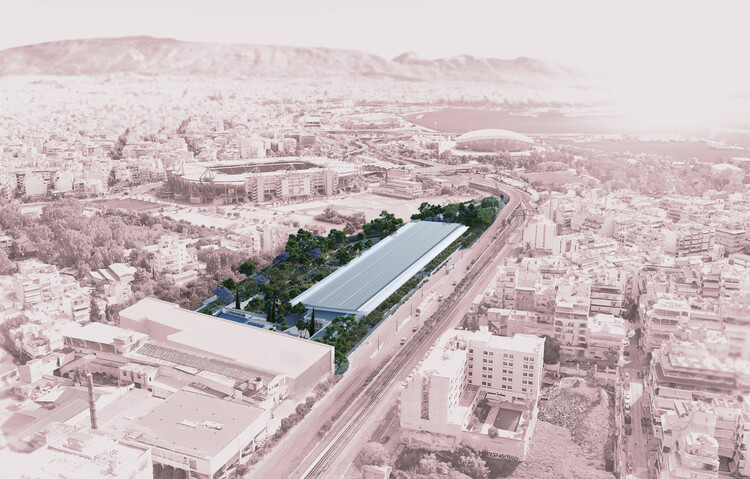 KYKLOS Cultural Center in Piraeus / Renzo Piano Building Workshop. Image Courtesy of RPBW
Renzo Piano Building Workshop, working with Betaplan Architects and landscape architect Camille Muller, is developing KYKLOS, a new cultural center in Piraeus commissioned by the Dinos and Lia Martinos Foundation. Conceived as an accessible hub for contemporary art and public life, the project combines glazed gallery spaces with extensive Mediterranean gardens, dedicating more than half of the site to planted areas that mediate between the building and the city. The design emphasizes openness, spatial clarity, and environmental performance, with indoor–outdoor transitions that encourage visitors to slow down and engage with the surroundings.
Workplace Architecture and Emerging Urban Districts
New workplace developments and mixed-use districts in Greece highlight shifting approaches to how commercial environments are integrated into the urban fabric. In Athens and Thessaloniki, recent proposals combine adaptable office spaces, landscape-led public areas, and strategies for reusing existing industrial structures. These projects reflect a broader interest in creating flexible, accessible, and environmentally responsive work environments that support diverse occupant needs while contributing to wider urban regeneration efforts.
The Grid, Athens / Foster + Partners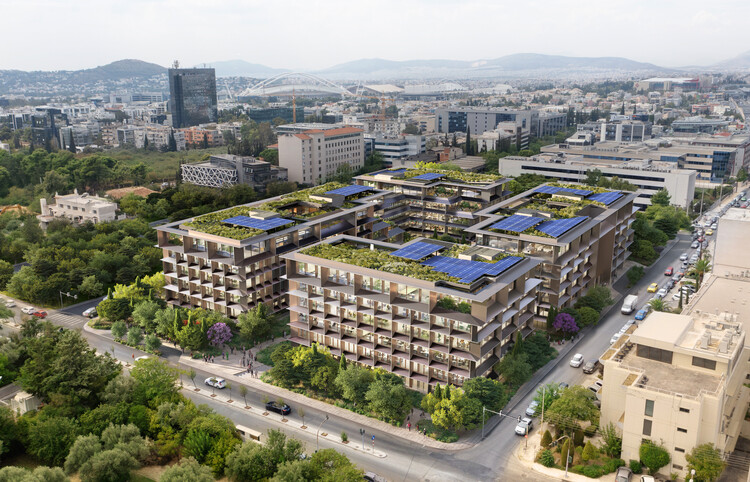 The Grid, Athens / Foster + Partners. Image Courtesy of Foster + Partners
Foster + Partners‘ The Grid is a new office complex under construction in Marousi, spanning an entire city block within one of Athens‘ key business districts. The scheme organizes modular building volumes around a central courtyard, creating a social hub connected to landscaped green areas and an adjacent public park. Designed to accommodate adaptable workspaces, the project incorporates planted terraces, preserved olive trees, and shaded outdoor areas to reinforce links between workplace and landscape. Atriums and skylights bring natural light and ventilation into lower floors, while a façade system of metallic fins provides solar protection and contributes to energy efficiency.
Nature-Integrated Office in Athens / Georges Batzios Architects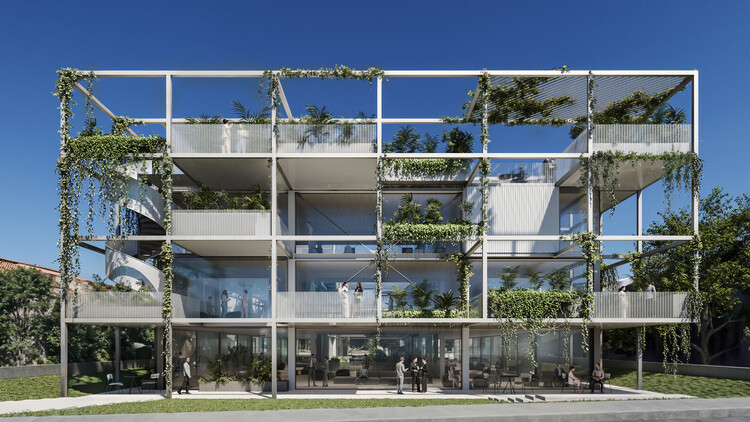 Nature-Integrated Office in Athens / Georges Batzios Architects. Image © Georges Batzios Architects
Georges Batzios Architects have proposed a modular office building in Athens that reconceives the workplace as an adaptable, nature-integrated environment. Inspired by Cedric Price’s Fun Palace, the design employs a scaffold-like structural framework that supports continuous spatial reconfiguration, prioritizing collaboration and user-driven change over fixed hierarchies. Flexible layouts, mobile walkways, and layered communal zones, such as atriums, verandas, and planted terraces, allow the building to function as a living system responsive to evolving needs. Rather than pursuing monumentality, the proposal emphasizes openness, permeability, and long-term adaptability, reflecting broader considerations about how workspaces may respond to shifting social and ecological conditions.
Redevelopment Masterplan for Thessaloniki / Foster + Partners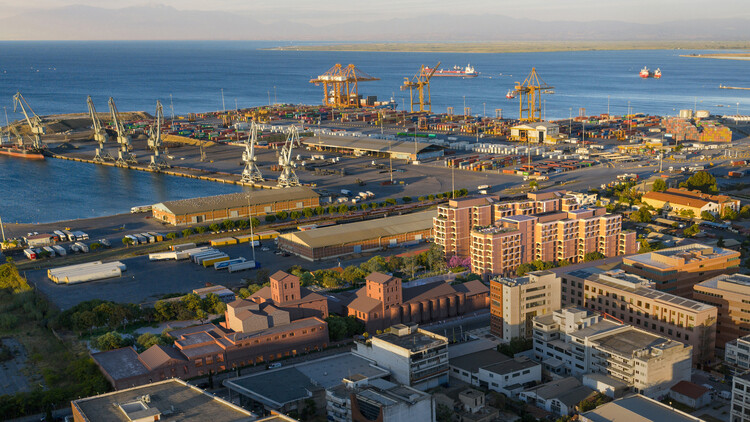 Redevelopment Masterplan for Thessaloniki / Foster + Partners. Image Courtesy of Foster + Partners
Foster + Partners‘ masterplan for the former FIX brewery in Thessaloniki outlines the transformation of the western seafront site into a mixed-use district combining housing, hospitality, cultural facilities, and public space. Retaining key industrial structures as anchors within the plan, the proposal adapts the brewery’s heritage fabric to shape new pedestrian routes, squares, and program clusters, strengthening connections between the waterfront and surrounding neighborhoods. Material references such as earthenware brick, exposed concrete, and industrial window profiles establish continuity between old and new interventions. A central landscaped square links to new residential and hotel buildings, while planting integrated into façades and terraces extends the public realm vertically. The scheme positions the site as a cultural and urban regeneration node within Thessaloniki.
The architectural developments emerging across Athens, Thessaloniki, and Piraeus indicate a continued effort to integrate environmental strategies, adaptable programs, and expanded public-realm connections within the country’s evolving urban fabric. Moreover, in Greece, The Architect’s Show, taking place on December 6–7, 2025, at the Athens Metropolitan Expo, provides a dedicated platform for professionals to engage with new materials, technologies, and design practices. By bringing together leading brands and industry practitioners, the event aims to support ongoing conversations around innovation and the future of the built environment.