
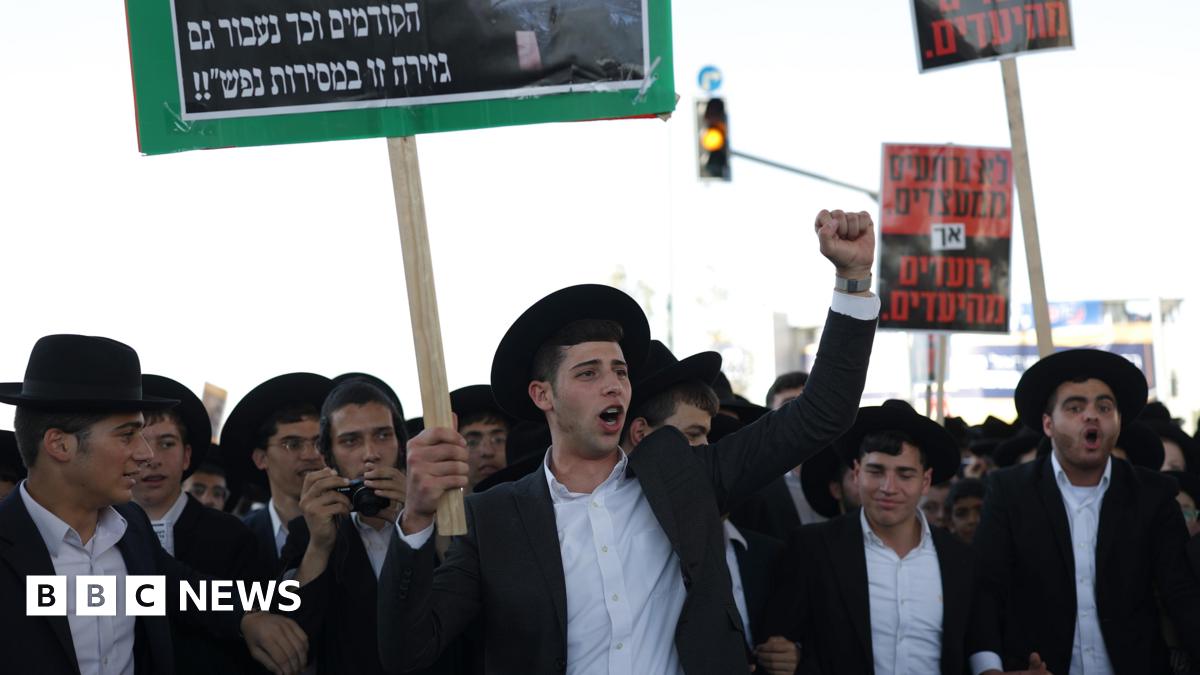
But the changes blowing through Israel have not yet breached the walls of the Kisse Rahamim yeshiva – or Jewish seminary – in Bnei Brak, an ultra-Orthodox city on the outskirts of Tel Aviv.
Inside the classroom, teenage boys sit in pairs to discuss Judaism’s religious laws, their brightly coloured school notebooks popping against the rows of white shirts and small black kippahs (traditional skullcaps).
“Come at one in the morning, and you will see half the guys are studying Torah,” the head of the yeshiva, Rabbi Tzemach Mazuz, told me, in what his office said was his first interview with foreign media, or with any female journalist. “By studying Torah, we protect the soldiers wherever they are. This is our army.”
Ultra-Orthodox believe continuous prayer and religious study protect Israel’s soldiers, and are as crucial to its military success as its tanks and air force. That belief was accepted by Israel’s politicians in the past, Rabbi Mazuz said, but he acknowledged that Israel was changing.
“Today, many in the government and the Knesset [parliament] have distanced themselves from religion. They say yeshiva students are lazy, which is not true,” he said. “In Tel Aviv, there are tens of thousands of draft-dodgers – why don’t they take them? Why are they attacking yeshiva students?”
Despite attacks from the right, Tel Aviv was a top contributor of soldiers during the war. And the pressure felt by Israeli conscripts and reservists over the past two years has thrown a spotlight on those who do not serve.