
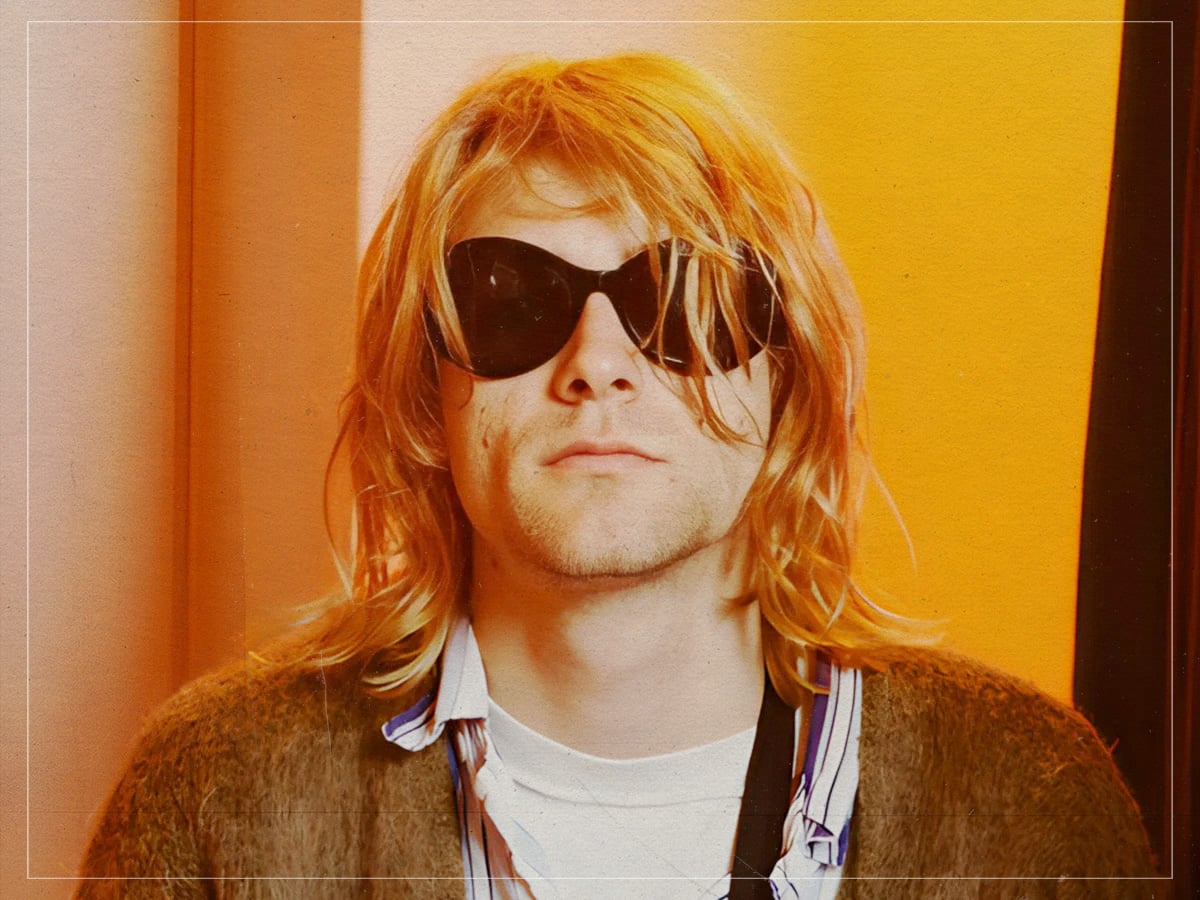
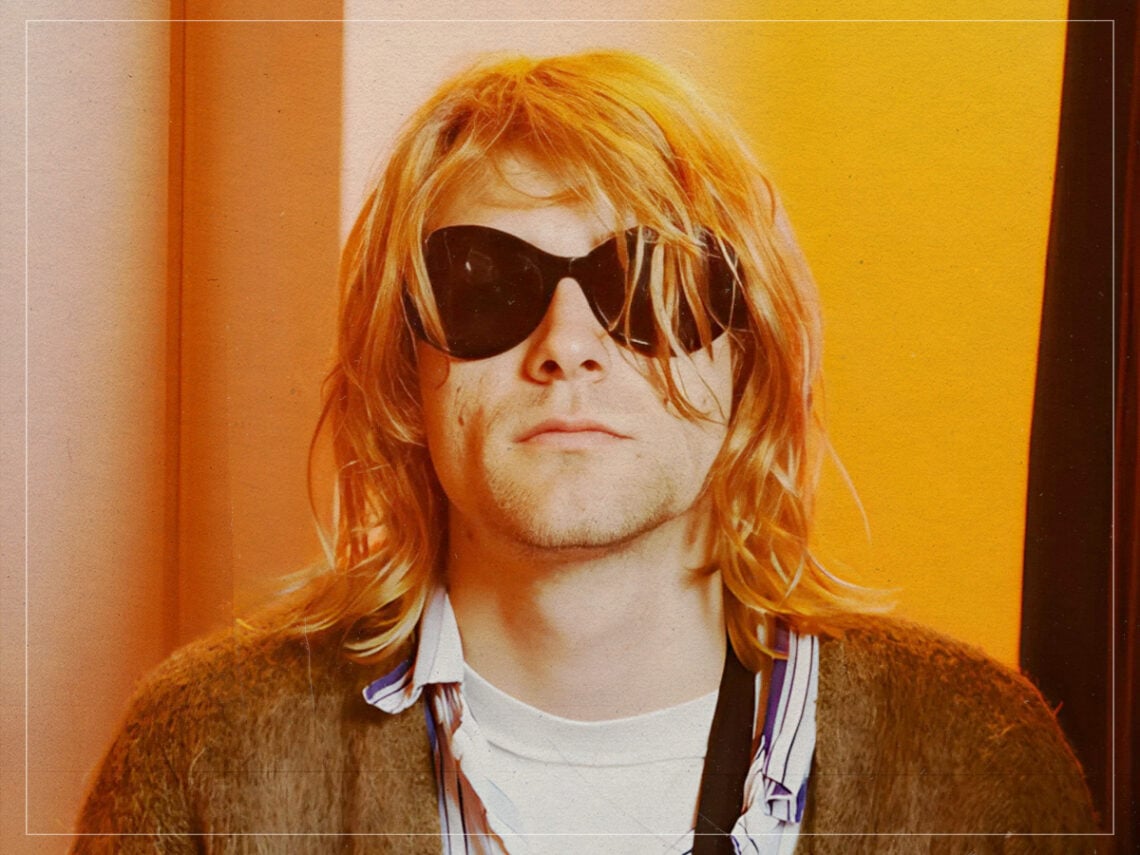
(Credits: Far Out / Nirvana)
Tue 2 December 2025 19:00, UK
When Nirvana started practising in garages, a world where their band T-shirts were all the rage probably seemed like nothing but a pipe dream. It’s also a level of impact that Kurt Cobain would never witness for himself.
In her memoir, Rebel Girl, Kathleen Hanna reflected on this harsh reality. “That’s kind of cool, a band that was practising in the garage a few blocks from where I lived, they’re just still everywhere, and people love their music,” she wrote, adding, “I just really wish that Kurt could have enjoyed it. And that’s the hard part, just being like, ‘Wow, I wish that he would’ve seen us live past the stupid Nineties, you’re-a-sellout thing.’”
Cobain was one of the ringleaders of the entire grunge movement, a force that changed the landscape by taking a completely different approach, a more authentic one that still exuded melodical charm, blending Cobain’s real influences, like Cheap Trick and The Knack. That’s his entire legacy, mainly because that’s all he was given the chance to achieve, his time cutting out before he was able to live past the “sell-out thing”, as Hanna described it.
That said, Cobain wasn’t exactly a constant star pupil when he was alive. He was a creative and musical genius, that much is true, but he was also immensely troubled, mentally and physically. Often, this would impact the environment he was in or the spirit of those around him, whether it had more to do with hinging productivity or making people feel concerned about his well-being.
This was the case while Cobain was working with Melvins on their record Houdini. Cobain had been brought onto the project as a producer after being suggested by an A&R at the label who ran Cobain’s management, and all seemed well until Cobain started being repeatedly absent from the studio, and was eventually dismissed by Buzz Osborne, who later said it was because he was “too screwed up”.
Speaking to Kerrang, Osborne reflected on the working environment, saying that they “did a bunch of sessions” with Cobain producing, but that it got to the point where “he was so out of control that we basically fired him”. Elsewhere, Osborne also reflected on the different versions of the story pushed by the label, which suggested that Cobain felt pressured by Osborne and left on his own accord, when in reality, it was his drug problem that was stagnating progress.
Reflecting on the entire experience isn’t especially positive for those reasons, which is a shame considering that it was their main project with the late musician, and it was filled with immense frustration and an inability to see eye to eye. According to their engineer on the record, it was “a devil’s album” because of these intense clashes, and there was no trust whatsoever when Cobain was constantly turning up in the state that he did. Or when he wasn’t turning up at all.
Nevertheless, Cobain’s contributions were still credited on the record. He might not have given major lyrical contributions, another fabrication that Osborne later refuted – that Cobain wanted to write songs for the record – but he did contribute guitar and percussion parts to two songs, ‘Sky Pup’ and ‘Spread Eagle Beagle’, respectively.
What’s more, these conditions didn’t really impact the quality of the record itself, as it still went on to become a major fan favourite and career-defining record, one that people broadly consider as one of the most important of the grunge era. Working with Cobain might have been ill-fated, but the music ultimately spoke for itself, all difficulties falling into the sidelines.
Related Topics