
Staff were left in tears while recounting what they’d seen
Lauren Monaghan and Local Democracy Reporter
04:00, 04 Dec 2025
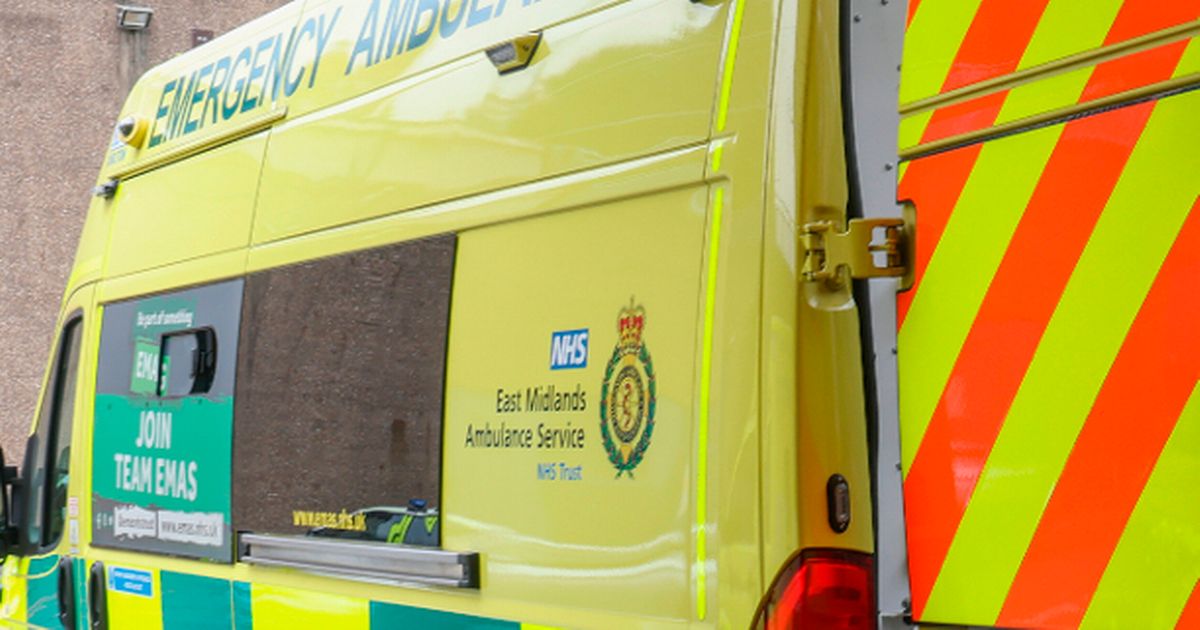
 Paramedics have spoken about the significant delays outside the emergency department at Queen’s Medical Centre, run by Nottingham University Hospitals Trust (Image: Joseph Raynor/ Reach PLC)
Nottinghamshire ambulance staff were left in tears after describing elderly patients waiting over nine hours outside an A&E department to service officials.
Deteriorated health, pressure sores and lack of patient dignity were all part of the experiences three EMAS workers shared with the service’s board officials on Tuesday (December 2).
Two Nottinghamshire paramedics and a technician all experienced significant delays outside the emergency department at Queen’s Medical Centre, run by Nottingham University Hospitals Trust (NUH), on November 2 and November 3, 2025.
These two days were just before NUH declared a critical incident on November 4 due to sustained pressures across the trust, particularly at QMC, where there were 24 ambulances waiting outside its A&E just after 4pm that day.
Paramedic Milissa told the board her experience with a frail, elderly lady who arrived at the hospital after a fall in the ambulance just before 10am and was officially handed over at 8.15pm that evening.
In that time, the patient had soiled herself, got pressure damage from the ambulance bed and had to be bed-bathed in the ambulance by paramedics due to them being told there was no room to change her in A&E.
In an emotional presentation, Milissa said in the meeting: “I got told ‘where do you think we’re going to put her?’
“It was undignified, it was cramped, I had two people help me who had never done care like that, like nursing – from my background I knew how to do it. It was the hardest thing to do.
“The pressure damage is worse in the back of the ambulance. I’m tilting her every hour, cushions under her hips, and she’s crying in pain. It’s frustrating I’m sitting there watching this.
“She was there for over 10 hours. She was cold, tired, I fed her, gave her medications – if that was my mum I’d be so, so distraught.”
Milissa said she cried at the end of her shift as she ‘didn’t feel as if she had done what needed to be done’. She spoke later in the meeting of hearing some patients say they would “rather die” in the ambulance than wait for hours outside A&E.
Paramedic Erin attended a 89-year-old woman who had fallen and broken her hip and had a pressure sore. She arrived at hospital at 9.40am and was only handed over to A&E staff around 6.30pm.
Erin said the woman’s observations and condition deteriorated in the last three to four hours in the ambulance, but she had no medication left to give her by the end.
She said: “This lady’s observations were so bad that if we were in the community we would be calling [resuscitation].
“It’s embarrassing if I’m being honest, her daughter’s sat with us the whole time and it’s just humiliating. I don’t like coming to work anymore.”
EMAS technician Nathalie assisted a 94-year-old man who had fallen and had urinary tract infection. She said he was a “very strong, independent man” who was living on his own.
They arrived at the hospital at about 9.30am but he was only handed over to the emergency department after 10 hours.
She said: “[At the start] we were doing crosswords, sudoku, singing songs, he was completely involved.
“By the end of those 10 hours this man couldn’t speak, he didn’t know who he was, he didn’t know how to take directions to have a drink.”
Responding to their experiences, Keeley Sheldon, director of quality at EMAS, said: “To give some hope that the future could look different, we have now commenced weekly dialogues with NHS England with regards to the implementation of the 45-minute handover [scheme].
“We’re absolutely committed to ensure we have that responsive handover but apologise it’s taken longer than we ever wished to.”
Acute hospital trusts across the region have been running a 45-minute ambulance handover scheme since late 2024 and early 2025 in a bid to free up ambulance crews to better respond to more emergencies. It was introduced at QMC in December 2024.
The amount of hours EMAS has lost to handover delays at QMC has risen in recent months. In September 2025, QMC lost more than 2,700 hours, with 32 per cent taking longer than 45 minutes. This rose to more than 4,000 hours in October, with 46 per cent taking longer than 45 minutes.
Across the region in November 2025, EMAS had more than 7,000 ambulance conveyances where patients waited longer than 45 minutes to be handed over.
Oliver Newbould, associate non-executive director, asked the ambulance staff: “What’s your observation of the staff at the hospital? Were they under incredible stress themselves?”
Milissa responded both EMAS and NUH staff are dealing with demand pressure but feels “if it’s not there in front of your eyes it’s not happening”.
She added: “We’re a team, it’s not them and us, but I feel like relationships [with A&E staff] have broken down over the last two to three years… it should be patient-centred focus.”
When communicating with A&E staff about a patient, Erin added: “It’s almost like I should be working in sales – I’m trying to convice them that this person is not well.”
Ben Holdaway, director of operations, said the three staff members’ accounts made him “more determined” to better ambulance handover times, adding EMAS was in discussion with other hospital trusts on ensuring faster handovers.
Responding to significant handover delays at QMC, Lisa Gowan, deputy chief operating officer at NUH, said, “We recognise the impact handover delays can have on our patients and our EMAS colleague for which we would like to apologise.
“We continue to see high demand on our services throughout this winter period and appreciate that just before and during our critical incident this would have been exacerbated further.”
Ms Gowan said NUH is working closely with EMAS on a solution and wants to create more bed space in hospitals, increasing capacity in the same-day emergency care unit and working with the urgent treatment centre to increase capacity which will positively impact wait times.
She added the trust is asking the public to consider having the flu vaccination and to use the most appropriate NHS service for different needs, including pharmacies, urgent treatment centres and mental health crisis support – people can visit NHS 111 or call 111 for guidance.