
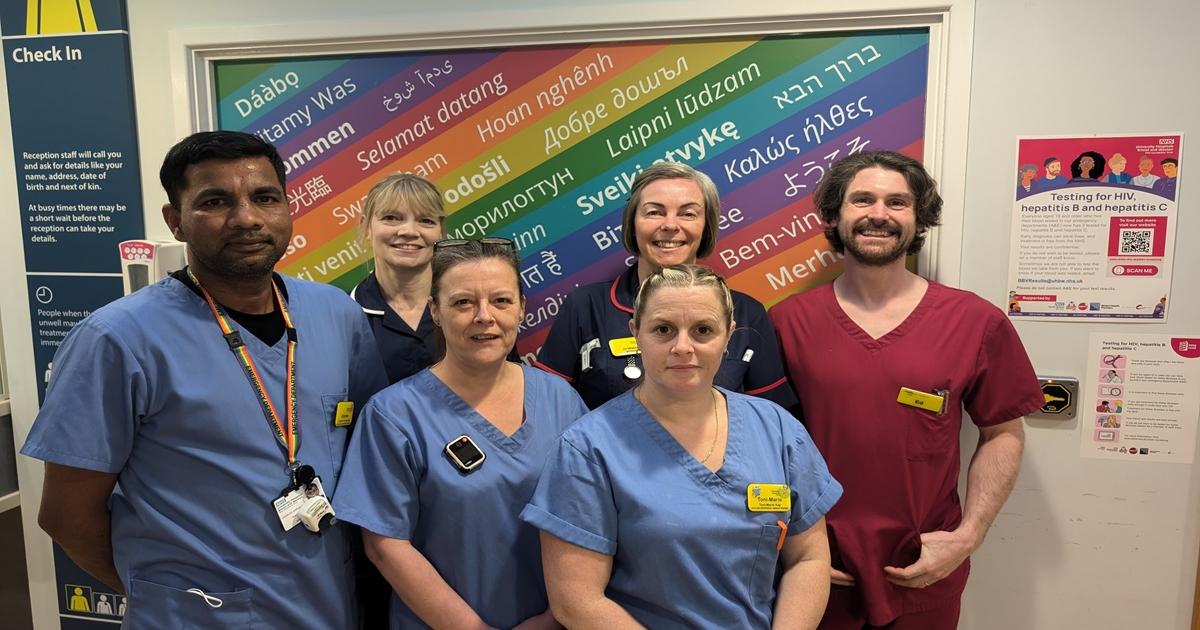
The programme, rolled out in emergency departments (EDs) last year, has tested over 72,000 patients for viruses including HIV, hepatitis B, and hepatitis C.
The initiative, which is non-optional for patients unless they specifically opt out, was introduced at the Bristol Royal Infirmary, Southmead Hospital, and Weston General Hospital.
Funded by NHS England and jointly run by University Hospitals Bristol and Weston NHS Foundation Trust and North Bristol NHS Trust, the scheme aims to detect undiagnosed blood-borne viruses (BBVs) and ensure early specialist care.
All patients giving blood samples for routine ED care were tested for the viruses unless they declined to participate.
Those who were newly diagnosed with HIV have now begun treatment, with 85 per cent of those newly diagnosed with hepatitis B and 84 per cent of those with hepatitis C also starting treatment.
More than 50 people previously diagnosed with one of these viruses have reconnected with treatment pathways.
One patient, identified with hepatitis B in the Weston General Hospital ED, said: “I’m really grateful to the clinicians for connecting me with the specialist clinic and helping ensure I can live a good quality of life despite my diagnosis.
“A huge thank you to the team for their unwavering support and for improving lives.”
Fiona Gordon, consultant in hepatology at University Hospitals Bristol and Weston NHS Foundation Trust, said: “It’s really encouraging to see so many people being tested for BBVs when blood samples are already being taken in EDs.
“For some, this testing has been truly life-changing – identifying an infection they didn’t know they had and helping them access the support and treatment they need.
“With today’s advances in medicine, Hepatitis B and HIV can be effectively managed to prevent serious health complications, while Hepatitis C is now curable. These treatments not only improve individual health outcomes but also play a vital role in preventing further transmission.”
Dr Matthew Clarke, ED consultant for North Bristol NHS Trust, added: “Many people in the UK living with a BBV are unaware of their status. Undiagnosed infections can result in serious long-term health issues and a higher risk of transmission.
“By supporting individuals to know their status and access specialist care, this programme is helping to improve health outcomes and curb the spread of these viruses in the region.”
Professor Tim Whittlestone, Bristol NHS Group chief medical and innovation officer, said: “Routine screening can make a life-changing difference, particularly for people who may be living with hepatitis B, hepatitis C, or HIV, without any symptoms.
“This achievement shows how our two organisations, working together as Bristol NHS Group, can make a real difference for the population we serve.”
The UK Health Security Agency recently published its Public Health Evaluation of BBV Opt-Out Testing in Emergency Departments in England.
The report shows strong engagement in the programme, with almost 70 per cent of eligible patients tested, over 60 per cent of whom were screened for the viruses for the first time.