

Every Christmas, it’s the same story for some households. The tree goes up, and within a day or two, you’re sneezing, congested, itchy-eyed and wondering why you suddenly feel awful.
If that sounds familiar, you might be dealing with something commonly known as Christmas tree syndrome. Rather than an official medical condition, it’s an informal term for allergy symptoms that appear after a Christmas tree is unboxed or brought into the home.
So what exactly is going on – and how do you stop it ruining your December?
What is it and what symptoms should you look out for?
According to Allergy UK, Christmas Tree Syndrome is “the nickname given to a flare-up of allergy symptoms which can be triggered by real or artificial trees”, and Christmas trees can “stir up irritants which then aggravate existing allergies”.
The reactions tend to feel like a cold or hay fever and can appear within hours or days of putting the tree up. Allergy UK say symptoms can include:
Sneezing and a runny nose
Blocked sinuses and pressure around the face
Wheezing or chest tightness
Rashes, itching or hives on the skin
“Allergy symptoms are usually mild but can leave you feeling under the weather,” the charity’s website states, adding that antihistamines often help.
More serious symptoms, such as breathing difficulties or swelling, should always be treated as urgent.
Why can your Christmas tree make you ill?
It’s not really the tree itself; it’s what comes with it.
According to Allergy UK, real trees can introduce:
Pollen from previous months (especially weeds and grasses)
Natural tree scents (called terpenes)
Artificial trees aren’t automatically “safe” either. Those that spend most of the year in storage can collect dust and mould, residue from the previous year’s decorations as well as pet hair and allergens.
Cat allergen, in particular, is small and sticky, per Allergy UK – meaning it clings to fabric, plastic and branches more easily than most people realise.
Additional research supports the existence of Christmas tree syndrome. A study examining allergic reactions during the festive season found that approximately 7% of allergy patients experienced respiratory or skin symptoms associated with Christmas trees.
Some people reacted within 24 hours, while others developed symptoms days later. The most likely causes were identified as tree oils and trapped allergens rather than visible mould alone.
Additionally, a UK eczema charity says real Christmas trees can be “problematic” for those prone to the condition.
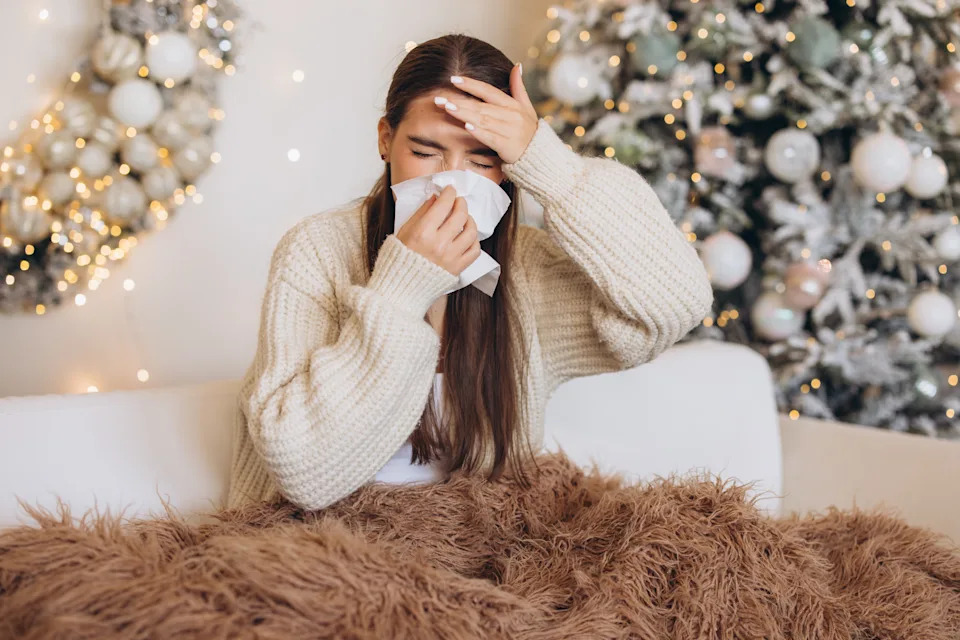
Sneezing, headaches and blocked sinuses are some of the most common signs of Christmas Tree Syndrome. (Getty Images)
5 tips to prevent Christmas tree syndrome
If your Christmas cheer now comes with a box of tissues, there are a few simple ways to reduce the impact.
Choose your tree carefully
If a real tree causes flare-ups, try a different species next year or consider switching to an artificial one.
If you’re buying a real tree, choose one that’s been freshly delivered rather than sitting around outside for days gathering spores and pollen.
Clean it before it comes inside
For real trees:
Shake or hose it down outside
Let it dry fully before bringing it indoors
Wear a mask and gloves while handling it
For artificial trees:
Dust and wipe each branch
Clean the base and storage box as well
Protect your skin while decorating
Wear long sleeves and gloves while putting up ornaments, especially if you get itchy arms or red patches after decorating. Skin contact is a common trigger.
Clean decorations
Old decorations can carry just as many irritants as the tree. Wipe ornaments when unpacking and store them in airtight containers afterwards. It also helps to give them another dust before putting them away at the end of the season.
Wash off allergens after handling the tree
Showering after decorating or washing your hands and face can remove pollen and spores that cling to the skin and hair. It sounds simple – but it works.
Use air filters and medication if needed
Air purifiers with HEPA filters can help reduce airborne particles, especially in the living room.
Allergy UK also notes that “over-the-counter antihistamines or nasal sprays may ease symptoms” — but advises speaking to your GP if you’re already taking medication.
If you feel worse after putting decorations up, allergens on branches and baubles could be the cause. (Getty Images)
When should you get medical advice?
If your symptoms become severe – especially wheezing, chest tightness or swelling – you should always seek urgent medical help.
“Any severe symptoms such as breathing difficulties or swelling require medical attention,” Allergy UK warns.
The charity advises asthma sufferers in particular to take flare-ups seriously and follow their action plan. In cases of breathing distress without relief medication, they recommend calling emergency services immediately.
“If your symptoms vanish once the decorations are packed away, Christmas tree syndrome is the likely cause,” Allergy UK states. But, if the symptoms continue into January, it’s worth getting checked properly.
Read more festive stores: