
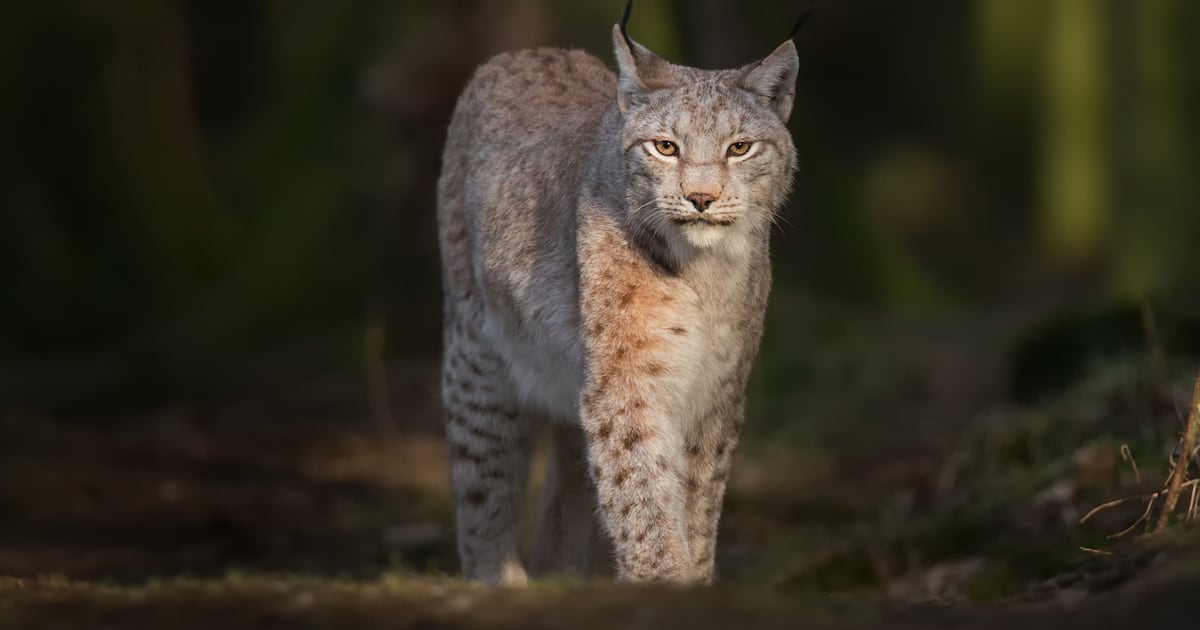
The idea of reintroducing large carnivorous predators into the countryside is not whetting the appetite of young people in Northern Ireland, according to the first ever comprehensive study on the subject.
In a survey carried out by researchers at the north’s ARK social policy hub at Queen’s and Ulster University, the thought of having lynx and wolves roaming in remote areas of Ireland and Britain leaves young people cautious.
The study comes in the wake of an increasing number of studies showing that parts of both islands are increasingly suitable for Eurasian lynx big cats, and to a lesser extent, grey wolves.
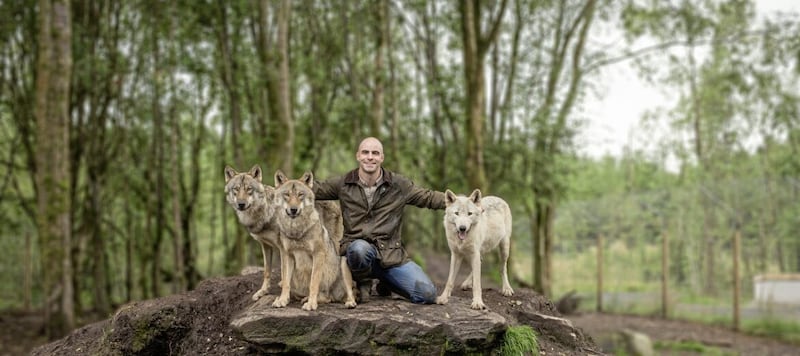 Killian McLaughlin with his wolf pack, at the Wild Ireland sanctuary PICTURE: ADAM PORTER
Both animals were once native to both Ireland and Great Britain, but were hunted to extinction, with lynx wiped out in Ireland over 1,000 years ago, while wolves survived on the island until the late 18th century.


Reintroducing such predators would provide a boost to ecosystems, advocates claim, by helping to control deer populations, which would in turn help with the expansion of native woodland areas, as deer often feed on tree saplings.
However, according to the ARK findings, only a minority of children and teens were in favour of sharing the countryside with apex predators.
The Young Life and Times survey interviewed over 2,000 16-year-olds while the Kids’ Life and Times survey polled over 4,000 children aged 10 and 11, all from Northern Ireland.
Just under one third (32%) of 10/11-year-olds and just over one third (35%) of 16-year-olds ‘agreed’ or ‘strongly agreed’ with the idea of lynx reintroductions.
That figure was lower for wolf reintroductions – 30% of 10/11-year-olds and 31% of 16-year-olds supported the idea.
The strongest single result was ‘neither agree nor disagree’ with reintroductions across both species and age-groups. In general, young people’s support for the reintroduction of large carnivores was lower than that of adults in previous surveys carried out in Great Britain. Those surveys recorded adult support as variously between 36% and 72%.
Girls and young people living in rural areas were significantly less supportive of reintroduction of either animal, while ‘don’t know’ answers were higher for lynx – which are not considered dangerous to humans than wolves.
There were more negative associations with wolves, which may be due to a higher perception of risk to humans and livestock.
Meanwhile, younger children whose families owned livestock were more supportive of large carnivore reintroductions while older teens whose families owned livestock were less so.
In January, four lynx were illegally released in the Scottish Highlands before eventually being recaptured.
In 2019, a wildlife sanctuary on the Derry/Donegal border opened, with a lynx and three wolves among the residents.
The owner, Killian McLaughlin, added his voice in 2022 to support for reintroducing wolves to tackle Co Donegal’s growing deer problem.
There had been concern over a rise in road collisions involving deer.
Speaking of the survey findings, Dr Jonny Hanson from QUB’s School of Social Sciences, Education and Social Work, said: “The potential reintroductions of lynx and wolves to the UK and Ireland are very socially complex and highly contested.
“This new data from young people helps us to understand the diverse perspectives of children and teenagers on this issue and gives us a better picture of their nuanced and valid views.
“Robust and independent social-science research like this should not just be bolted on to current and future large-carnivore reintroduction proposals but built into them.”
He added: “The feasibility and viability of potential lynx and wolf reintroductions in the UK and Ireland will hinge on understanding and addressing their complex human dimensions with young people and adults alike.”