
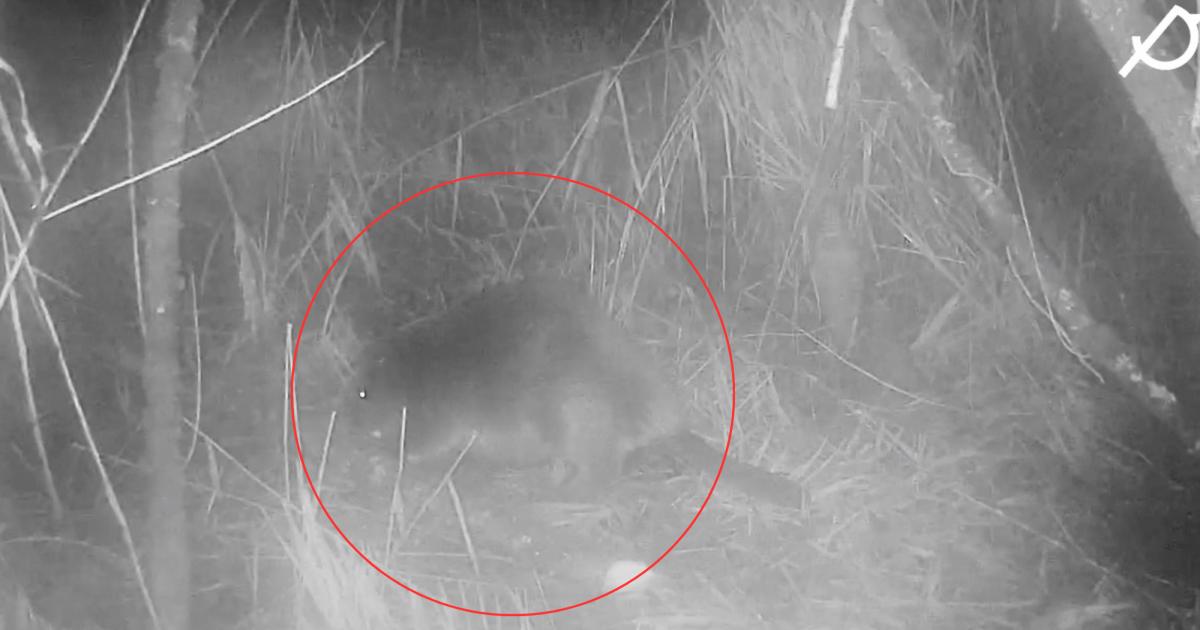
But locals are speculating whether the first beaver to be spotted in the wild for centuries may in fact be an escape artist from a nearby nature reserve.
The river-dwelling rodent was discovered along the River Wensum at the Pensthorpe Natural Park, near Fakenham, with its origin currently unknown.
Until now, no free-living beaver had been recorded in Norfolk in modern times.
But a short distance away at wildlife site Sculthorpe Moor Nature Reserve, a pair of beavers were introduced in 2022 within an enclosure.
The Sculthorpe Moor Nature Reserve (Image: Ian Burt)
Earlier this year, the Hawk and Owl Trust revealed the pair of Eurasian beavers had birthed two kits following the successful reintroduction.
Beavers are known to have been introduced at the River Glaven, which is about nine miles away at its nearest point in Hunworth, near Holt.
The rodents, which are being brought back to the UK to help manage flooding, have also been released at Wild Ken Hill near Heacham, about 17 miles away.
The beaver has been hard at work at Pensthorpe (Image: Pensthorpe Natural Park)
Due to the close proximity of the beaver spotting, locals are speculating that the wild beaver may have escaped from Sculthorpe Moor before travelling downstream.
However, Adrian Blumfield, operations director at the Hawk and Owl Trust, dismissed the claims.
He said: “Since 2022, the Hawk and Owl Trust’s Sculthorpe Moor nature reserve has been home to a thriving colony of beavers.
“These were introduced under licence from Natural England as part of our conservation activities. To support their wellbeing, the beavers are humanely trapped each year for a health inspection, and microchips are used to track each animal.
“The beavers at Sculthorpe Moor live within a secure enclosure to prevent them from wild roaming.
“Based on checks conducted by our rangers, there is nothing that suggests the beaver at Pensthorpe originated from our colony.
“However, we have offered assistance to Natural England if they decide that it should be trapped and placed within a licensed enclosure.”
Beavers are known for building dams (Image: Pensthorpe Natural Park)
However, Natural England says it has likely escaped from a licensed enclosure and staff are working with Pensthorpe to understand where the beaver has come from.
Spokeswoman Fiona Hinds said: “We are working with Pensthorpe Nature Reserve and the Beaver Trust to investigate reports of a sighting of a beaver on the reserve.
“We are working closely with partners to identify the origin of the animal and to ensure its welfare.”
Beavers are semi-aquatic and live in river systems and are known as “river engineers” as they help manage the flow of water by creating dams.
They could play a vital role in restoring wetland landscapes through creating ponds, channels and wet woodland habitats that benefit amphibians, insects, fish and countless bird species.
The rodents can swim at speeds of up to five miles per hour.
Beavers are known to travel long distances to set up new territories but it would appear quite the expedition for a beaver to have travelled from Hunworth or Heacham to reach Pensthorpe.
A spokeswoman for the Beaver Trust said there are “numerous beavers moving through our landscapes, so the beaver that has been spotted could be a naturally dispersing individual” rather than an escapee.
Beavers became extinct in Britain in the 16th century due to over-hunting, but have been reintroduced to Norfolk via captive release schemes in recent years.