
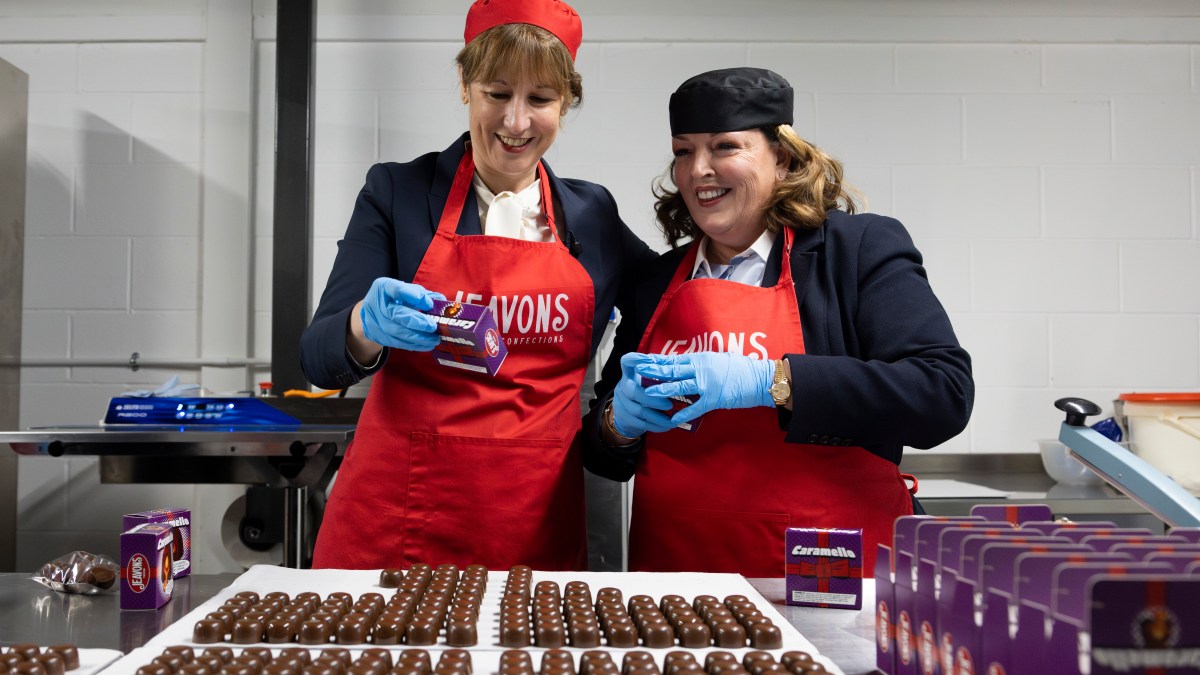
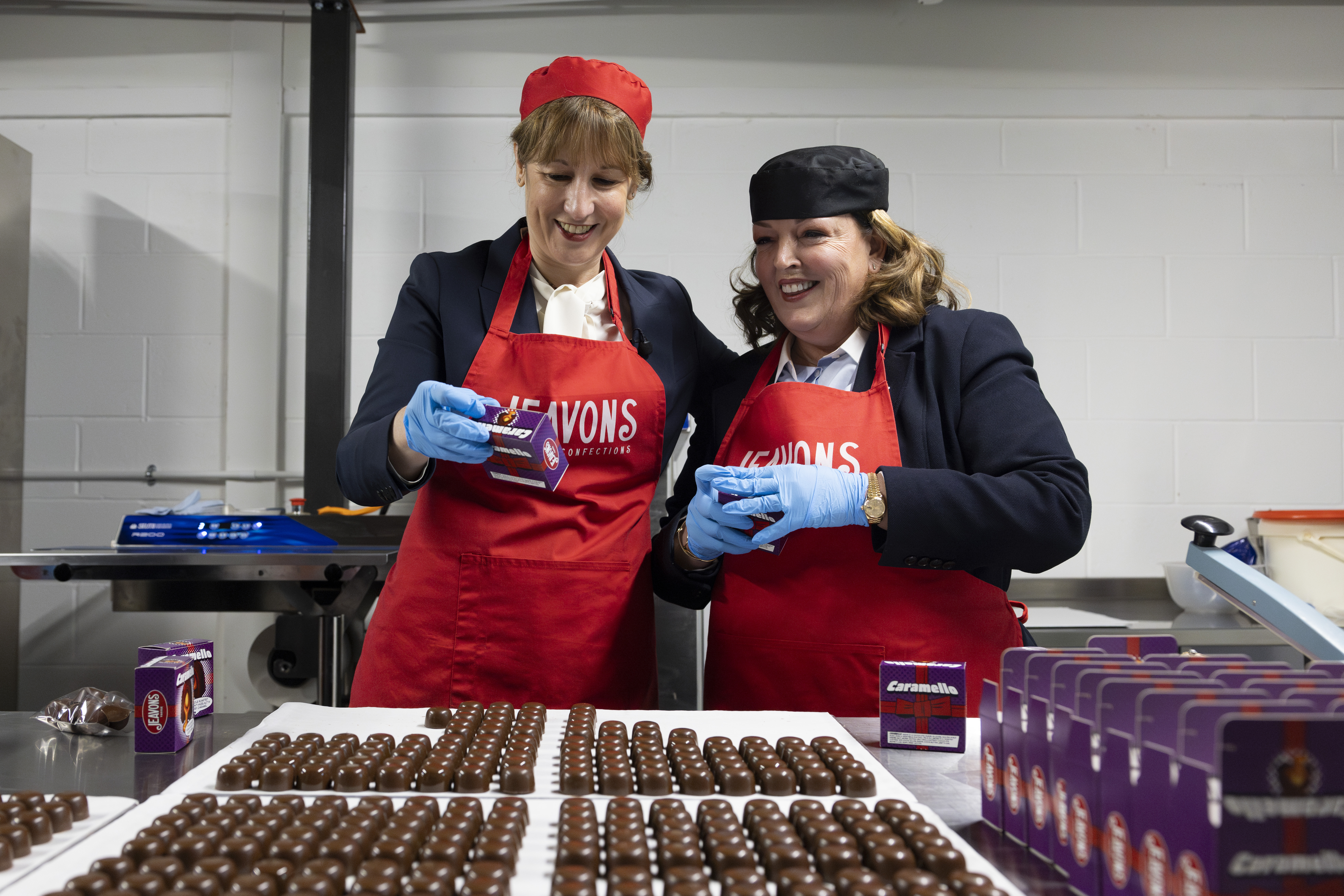
Rachel Reeves, right, visits Jeavons Toffee in Port Glasgow to celebrate Small Business Saturday
KIRSTY O’CONNOR / TREASURY
Yesterday was Small Business Saturday, an annual event to celebrate the contribution of small firms to the economy, society and communities. Nowhere is that contribution more visible than on Britain’s high streets. Though there are plenty of big names on them, it is the independent shops, pubs and restaurants that are their lifeblood.
Rachel Reeves, the chancellor, put her weight behind Small Business Saturday, praising “these incredible entrepreneurs” who run small firms, which she called “the backbone of our economy”. It is government policy, though, that often makes life unbearable for small firms and condemns our high streets to further decline.
The chancellor’s budget last year was a dagger to the heart of hospitality and retail firms, which were acutely vulnerable to the increase in employer’s national insurance contributions Reeves introduced. Not only did the employer NI rate rise in April this year, from 13.8 to 15 per cent, but the threshold at which it begins to be paid was reduced from £9,100 to £5,000. This was a guided missile aimed at these sectors, which employ many lower-paid and part-time workers.
Still reeling from those changes, which have already led to 100,000 job losses in hospitality alone, businesses hoped for better things in last month’s budget. For a brief moment, as the chancellor made encouraging noises about relief from business rates in her speech, it seemed as if their wishes had been granted.
There was, though, a huge sting in the tail, as described by Simon Emeny, chief executive of the brewer Fuller, Smith & Turner. Business rates, a tax on commercial property, are “the bane of many retail and hospitality businesses”, he writes in our Business section today.
Three months ago he and other leaders of the hospitality industry met Treasury ministers to warn of the impact of an upcoming review of the tax and likely increases in rateable values. That warning fell on deaf ears: the budget day announcement of an increase in rateable values more than wiped out any reliefs announced by the chancellor. “Take the Globe in Brentford, a charming community pub,” Emeny writes. “Until November 26 the rateable value was £24,500. But this has risen to £82,500, almost two and a half times as much. The rates payable will go from £4,251 with current reliefs to £15,709 from April, and by 2029 this goes to £19,505. This is almost a fivefold rise.”
If officialdom had a deliberate policy of making life difficult for the “backbone of the economy”, it is hard to think of how it could have been better designed. For shops, pubs, cafés and restaurants it has been one thing after another.
And, as legitimate businesses are squeezed out, in their place something much more sinister has been emerging on our high streets. The BBC’s Ed Thomas, who also writes for us today, has with his team been uncovering what he describes as “a vast network of illegal labour and systemic organised crime in plain sight on our high streets”.
What appear on the surface to be legitimate mini marts or barber shops are often fronts for fake cigarettes, illegal vapes and money laundering. Workers, often without visas, are employed on long shifts for well below the minimum wage. Trading standards officers in many parts of the country believe they are fighting a losing battle against organised crime.
In response to the reporting by the BBC and our own Jim Armitage, the National Crime Agency has launched raids and made 900 arrests but closed few shops. Thomas doubts a month-long blitz will solve the problem.
Sadly, he is right. Only by creating the right environment for good businesses will we drive out the bad and rescue Britain’s high streets. At present, unfortunately, the government is doing exactly the opposite.