
The long-running saga around Scotland’s lack of an online reporting portal for video footage of incidents filmed on the country’s roads has dragged on for years.
Road safety campaigners, the press and road users have long-since urged Police Scotland to follow their counterparts south of the border, in England and Wales, in providing an Operation Snap-style online portal where road users can report footage from dash cams and helmet cameras.
We regularly hear from cyclists in Scotland, often through our Near Miss of the Day series (highlighting driving standards and the lack of consideration for vulnerable road users on UK roads), who look on with jealousy at English and Welsh riders being able to report video footage of close passes or worse to their local police force via a relatively straightforward and time-efficient online portal.
Whether said reports are actioned appropriately is a different matter, and remains something of a postcode lottery, but many cyclists in Scotland we hear from say they feel left behind and are being placed in more danger as dangerous or careless driving goes unpunished.
In fact, a few have told us they rarely report anything or have given up entirely, due to the laborious, time-consuming process required to get footage of your incident in front of an officer.
Last year, road.cc reader James was forced to slams on his brakes to avoid a driver who had ignored him and turned across his path, almost causing a collision. While such footage could have been reported fairly easily if it had happened anywhere in England or Wales, the fact it happened in Wishaw, a town in North Lanarkshire, meant that, due to Police Scotland’s lack of portal, James was left telling us there was “no point in reporting” it.
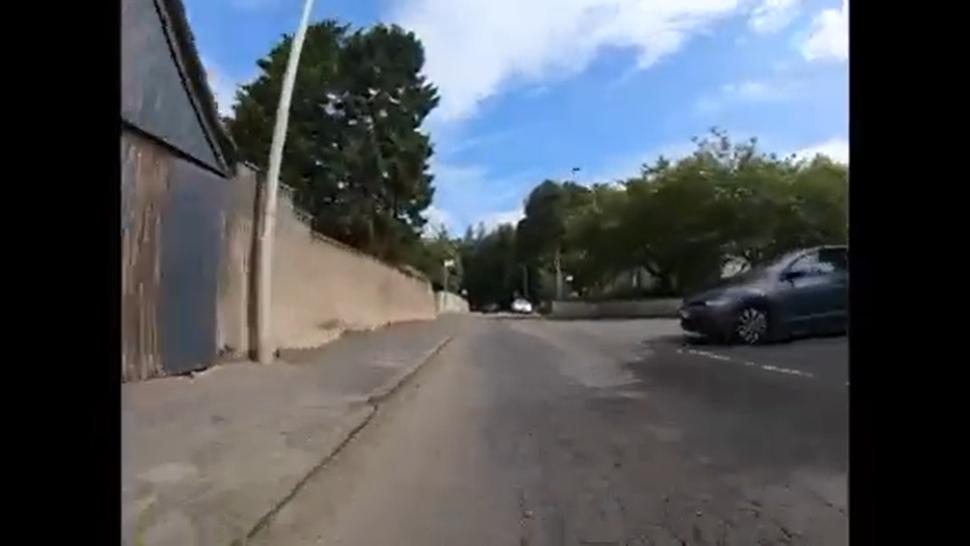 “No point” in reporting (credit: road.cc)
Instead, Scottish cyclists have had to make do with the Police Scotland Online Reporting Form, a method often criticised by those who have used it as time-consuming, complicated, inconsistent, and reliant on the attitudes of the officers dealing with the complaint, potentially deterring riders from submitting footage given the increased time and inconvenience of reporting incidents to the police.
While English and Welsh readers might suggest the outcome of a report being overly dependent on the attitude of an officer is equally an issue even with an online reporting portal, the situation in Scotland can be so inefficient that officers need to visit witnesses to get footage and take statements, further putting road safety in direct conflict with the police’s already strained time and resources.
“A very sorry state of affairs,” Scottish reader David Brennan told us last year.
Although the shocking close pass incident he was subject to was dealt with swiftly, Mr Brennan said the positive outcome was an exception and officers had to attend in person, a process that he pointed out is frustratingly time-consuming and inefficient for both people reporting incidents and officers on the ground.
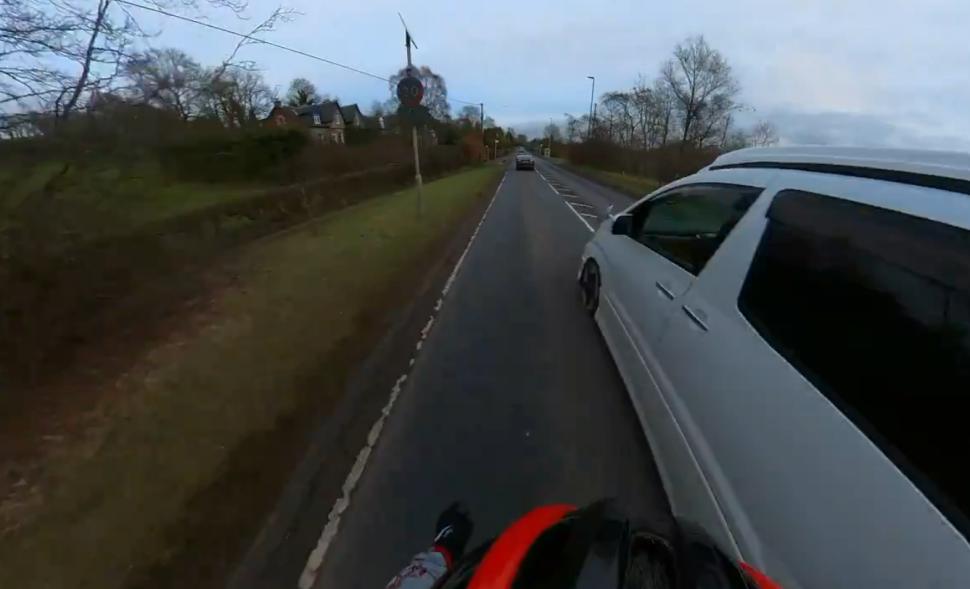 near miss of the day 908 – screenshot via David Brennan on X (credit: road.cc)
In England and Wales, many forces have dedicated teams of trained officers who can process reports remotely via an online portal. So why doesn’t Scotland just follow suit?
In March 2022, Police Scotland finally committed to piloting an online reporting tool, known as the National Dashcam Safety Portal, with support from the AA, RAC, and numerous other organisations.
Amid delays, Cycling UK warned that Police Scotland being slow to implement the portal was putting lives at risk.
Ultimately, Police Scotland announced that the project was “under review” due to budget constraints and, in November 2023, Scotland’s Minister for Justice Angela Constance confirmed that the road safety portal had been scrapped, in favour of a ‘Digital Evidence Sharing Capability’ which will gather video evidence related to all crime-related activity in Scotland, and not just dangerous driving.
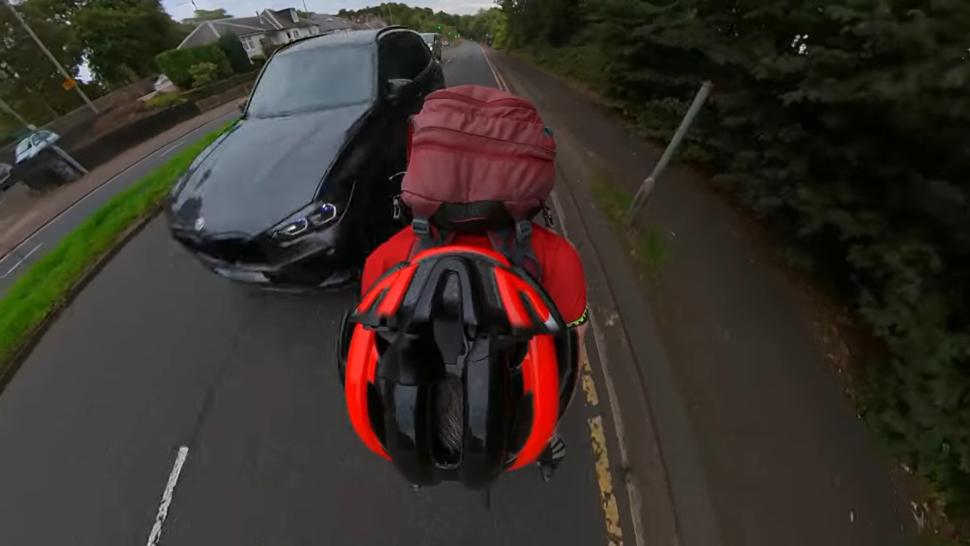 Cyclist films close pass and phone use (credit: magnatom/YouTube)
“A stand-alone portal is not the optimum route to create the capability for digital media submissions to be submitted by members of the public,” Constance argued at the time.
Last autumn there were signs of progress, however, as the Scottish government confirmed its Digital Evidence Sharing Capability (DESC) tool would be rolled out following a successful trial in Dundee and should be fully functional nationwide by autumn 2025.
It’s worth noting some campaigners warned DESC would be less functional than the cancelled National Dashcam Safety Portal, but after years of delay it did at least feel like things might be moving in the right direction.
So, where are we now? The autumn 2025 timeline passed and things still felt familiarly uncertain.
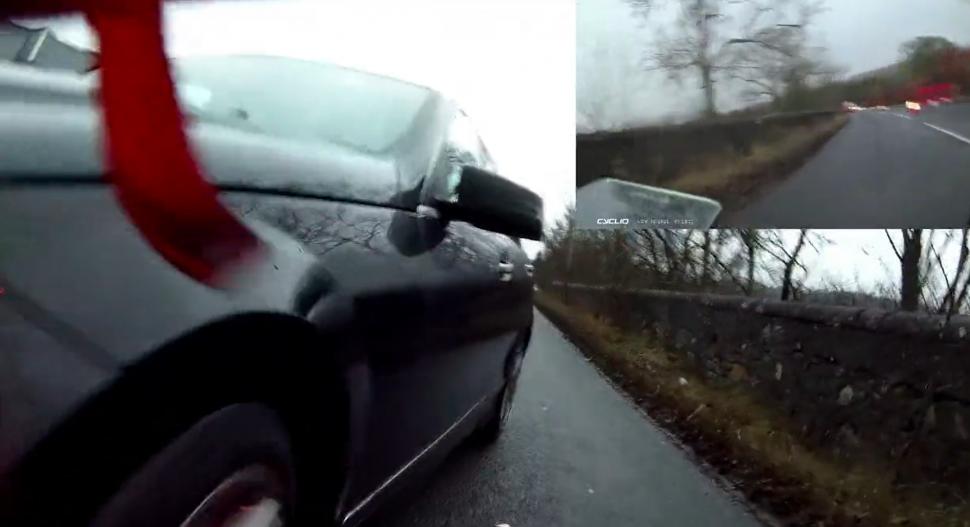 Motorist escapes punishment after alleged hit-and-run (credit – Alan Myles) (credit: road.cc)
“Almost a year on, and… nothing. I have contacted Police Scotland asking for an update, with no reply so far,” one Aberdeenshire-based road.cc reader told us recently.
In the meantime, the process of reporting footage remained (even under a generously positive description) clunky: “If I report anything using 101, then it will be my local police station that contacts me, and they will make it clear that they do not want you to report. Last time, I reported a close pass, they demanded that they visit me at my home, and view the footage, on the device I used, which was impossible, as the camera I use does not have a screen. I offered to come down to the station, with my camera, and the footage on my laptop, and it was a no, sorry. Even if I could have fulfilled this, then they would just make up something else, until you drop it.”
We contacted Police Scotland to try to find out what’s going on with DESC’s rollout and were told by Chief Superintendent Scott McCarren, head of Road Policing, that everything is still “under review”, not a particularly encouraging assessment considering the autumn 2025 timeline previously stated.
“Police Scotland’s commitment to improving how digital evidence can be submitted is still under review,” he said. “Significant work is ongoing to scope all options available that allow capture of journey-cam footage. This includes reviewing our current capability as well as exploring alternative platforms.”
Naturally, we asked Police Scotland’s press office about the previously stated timeline and why positivity about DESC’s rollout had now been replaced by vague comments about work to improve options and things being “still under review”. We also raised concerns from cyclists in Scotland that they feel left behind England and Wales when it comes to road safety.
A spokesperson said Police Scotland did not have anything further to add.
In a separate exchange, Police Scotland told one of our Scottish readers that: “Following review of what we can do within the resources and funding currently available, use of the already established Digital Evidence Sharing Capability (DESC) could efficiently provide this capability.”
So DESC is still being rolled out after all? On 27 November, three weeks after our contact with Police Scotland’s press office and head of roads policing, the Scottish Police Authority published a report from the Chief Constable stating “the roll out of our digital evidence sharing capability (DESC) came to a conclusion at the end of September as it was introduced into Argyll and West Dunbartonshire and Renfrewshire and Inverclyde”.
“DESC is the enabler for many of the innovations and improvements that are being rolled out including body worn video. The efficiencies that DESC brings has seen us save many officer hours as evidence is easy to upload for victims and witnesses and fewer phones seized as a result too. A recent survey of DESC users has said that it made their operational duties easier.
“Work is ongoing to encourage retailers and various organisations to embrace DESC so that evidence can be easily provided, and we can capture and review evidence easily and efficiently.”
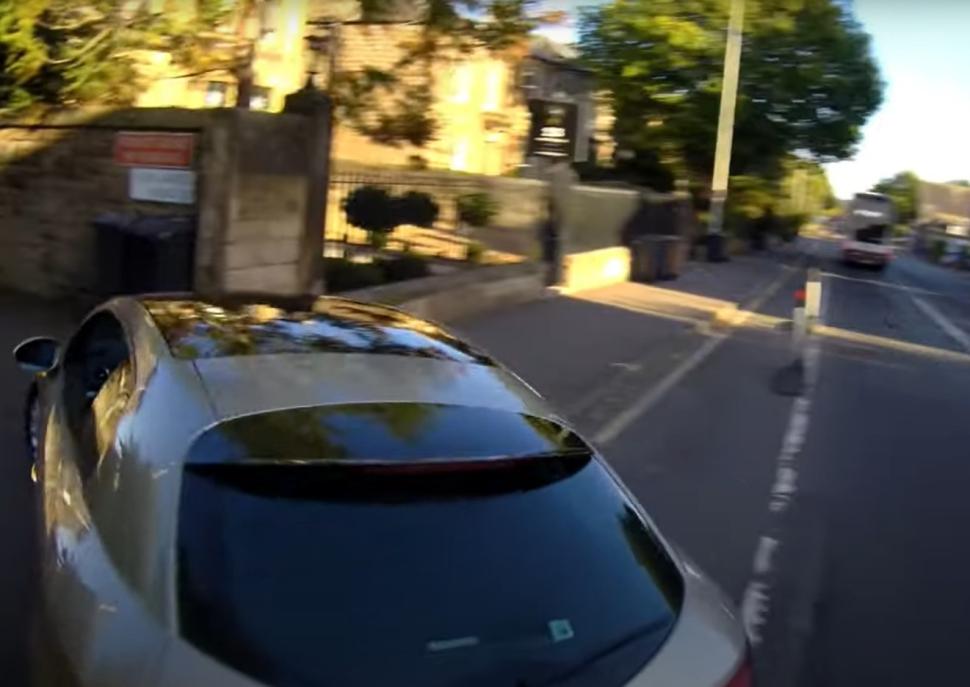 Cyclist crashes into bollard after driver turns across his path in Edinburgh cycle lane (credit: Edinburgh Cyclist)
The report makes Police Scotland’s comments of early November more confusing, but does suggest DESC is now fully operational in all parts of the country, allowing cyclists, or anyone, to upload digital evidence if they request a link for the service from their relevant force.
How it works in practice remains to be seen, after all some campaigners have warned DESC will be less functional than a dedicated Operation Snap-style portal, like the cancelled National Dashcam Safety Portal.
In fact, a Police Scotland spokesperson appeared to admit as much in communication with our aforementioned reader in Aberdeenshire: “DESC wouldn’t deliver the same functionality as a dash cam portal,” they admitted. “However it would still give members of the public an easy to use method to submit digital evidence if it’s required to help an investigation, including road traffic offences.”
If indeed it has now been rolled out nationally and cyclists can submit video footage online, the next question will be how evidence submitted via DESC will be handled?
As the reader in Aberdeenshire told us, he remains sceptical and fears his reports will continue to experience “very little interest in following up any report on bad driving”.
Let us know in the comments if you’ve been able to report any video footage via DESC and if it made sharing digital evidence easier…