
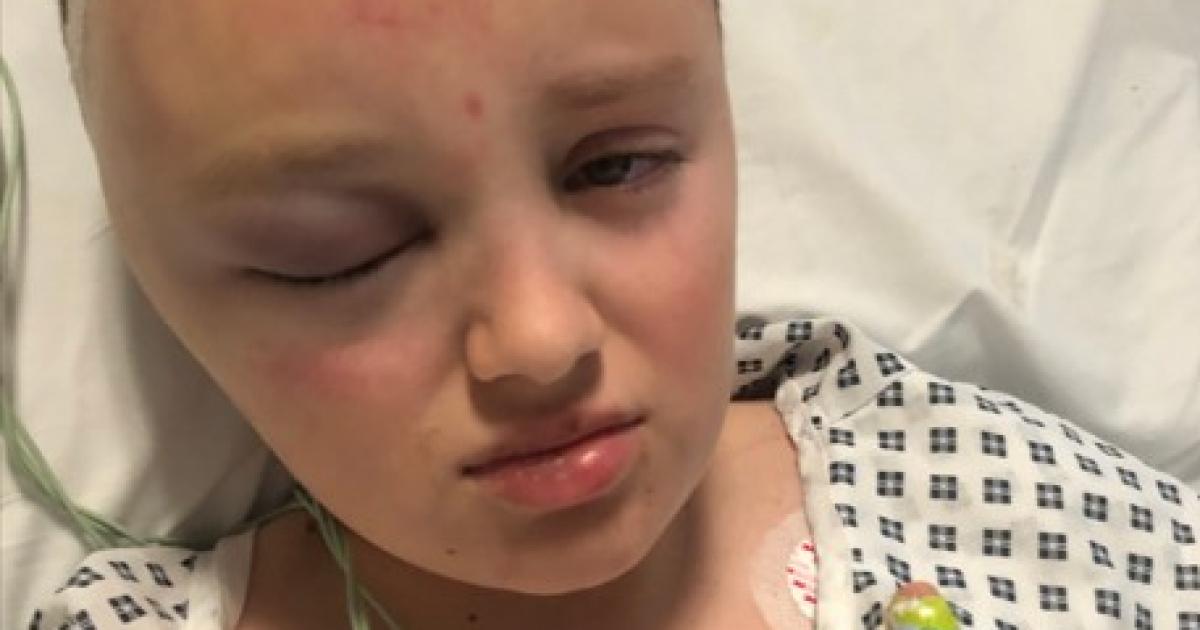
Luke Webber, a pupil at Barclay Academy in Stevenage, was just 12 when he began suffering from headaches and double vision in 2019.
Covid-19 restrictions meant that several appointments were delayed or cancelled, and by the time swelling was detected on his optic canal, Luke urgently needed surgery.
Luke had brain surgery twice, followed by proton beam therapy.
Luke had proton beam therapy. (Image: Courtesy of Action Medical Research)
His treatments have caused damage to his hypothalamus – an area of the brain that controls body temperature, hunger and thirst.
The damage has led to weight gain and a loss of impulse control.
Luke has also been left with life-long hormone deficiencies requiring daily medication.
Despite his difficulties, Luke returned to school, thrived in his GCSEs, and is now in Sixth Form studying A levels, hoping to become a primary school teacher.
Luke is hoping to become a primary school teacher. (Image: Courtesy of Action Medical Research)
Luke is also using his experiences to help others, as vice chair of the Cambridge Children’s Hospital Youth Forum, helping to shape the future of care for young patients.
He has been part of a study funded by children’s charity Action Medical Research, which sheds light on how the pandemic affected the diagnosis, treatment and experiences of children and young people with a brain tumour.
The findings, published in the British Medical Journal, reveal that while medical outcomes remained stable, the emotional toll was profound.
Luke’s dad, Peter, said: “Luke went through a life-changing diagnosis and treatment journey during the unprecedented Covid-19 pandemic.
“We are so grateful for the support we received, but it was challenging and isolating due to restrictions imposed by the pandemic.
“Research that aims to better understand the impact of widespread disruption on children like Luke will hopefully ensure that in the future families like ours won’t experience delays or feel isolated.”
Dr Ibrahim Jalloh, consultant neurosurgeon at Addenbrooke’s Hospital, part of Cambridge University Hospitals NHS Foundation Trust, said: “This study provided an invaluable space for children, young people and their caregivers to reflect and share their experiences of navigating a life-changing diagnosis during an unprecedented global crisis.
“We found that while treatment and survival outcomes remained broadly consistent, the emotional and practical impact on families was immense, going well beyond the challenges typically associated with this diagnosis.”
Luke with his family. (Image: Courtesy of Action Medical Research)
Read more
Dr Caroline Johnston, senior research manager at Action Medical Research, said: “Action Medical Research funded several projects to investigate the devastating impact of the Covid-19 pandemic on the lives of children and young people.
“We are committed to funding research that will ultimately improve the health and wellbeing of children and young people.
“The findings from this research offer practical insights into how healthcare services could be improved during future disruptions, so that families are never left feeling unsupported or alone at such a critical time.”
To find out more about the Covid-19 research funded by Action Medical Research, visit action.org.uk/research/research-we-fund/covid-19-and-long-covid.