
Imagine being able to peek at the universe mere moments after its birth—not through wild guesswork or theory, but with an actual image. Thanks to the latest cutting-edge technology and years of international scientific teamwork, researchers have now captured the most vivid snapshot yet of the infant universe, providing us with a spellbinding window into cosmic history.
A Window Into the Universe’s First Moments
Peering back into the universe’s earliest stages has always felt a bit like searching for your socks in a washing machine—challenging and occasionally impossible. Immediately after the Big Bang, the universe was an insanely hot, dense soup, completely opaque to light. It took about 380,000 years for the cosmos to chill out enough for light to finally get loose, creating something we now call the cosmic microwave background—the universe’s very first visible fingerprint.
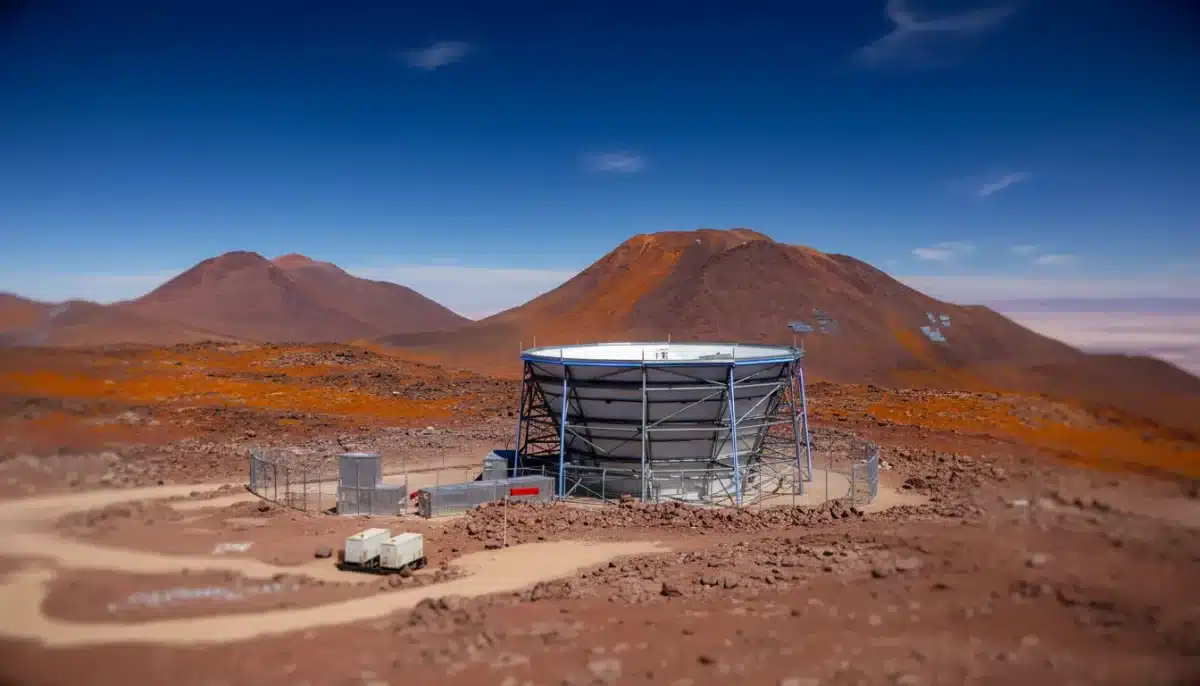
In 1990, NASA launched the COBE satellite, which managed to deliver a fuzzy first glimpse of this ancient light. A couple of decades later, the European Space Agency’s Planck telescope zoomed in for a clearer shot, uncovering more detail. And now? Scientists based at Princeton University, working with the Atacama Cosmology Telescope (ACT) in Chile, have taken things up a notch, snapping images so sharp that they reveal the universe’s subtle ripples and shifts in density—the very patterns that set the stage for everything we see around us today.
Reading the Universe’s Earliest Story
Even though ACT can only scan half of the sky from its perch in South America, it’s delivered a mind-blowingly detailed map of the early universe. This precious data is revealing new clues about what the cosmos is made of and how it has evolved throughout time.
What’s truly amazing is what these fresh images show: the young universe wasn’t a perfectly smooth pudding. Instead, there were tiny fluctuations—pockets just a little denser than their neighbors. As it turns out, these barely-there differences played a starring role: gravity started pulling more matter into the denser spots, generating gigantic clouds of hydrogen and helium (the universe’s two most abundant and lightweight elements).
Over millions of years, these cosmic clouds spectacularly collapsed under their own gravity, sparking the birth of the very first stars. Those stars got busy and gathered together, forging the first galaxies, which then planted the seeds for the galactic web we observe today.
Shedding Light on Old Puzzles
This new trove of images doesn’t just fit seamlessly into our standard cosmology models—it actually makes them stronger. Scientists can now refine estimates for crucial cosmic numbers, like the universe’s age, which has been nailed down with remarkable accuracy to about 13.8 billion years.
But, as with any good cosmic detective story, there’s still a mystery that refuses to budge: the so-called Hubble tension. This is fancy astrophysics-speak for the persistent disagreement between two ways of measuring how fast the universe is expanding. Measurements based on early-universe data (such as ACT’s) don’t quite tally with the numbers we see when observing nearby galaxies. Cue dramatic music.
There’s plenty of hope on the horizon, though—the upcoming Simons Observatory, an ultra-modern telescope currently under development, promises even sharper observations. Researchers are crossing their fingers that it will not only help resolve the Hubble tension but may also shed some light on the ever-mysterious dark matter and dark energy—two invisible ingredients that make up most of our universe, yet somehow remain stubbornly undetectable.
The Adventure Continues
Every leap in observational tech brings us closer to figuring out where we came from. The ACT’s latest discoveries let us witness the universe not just as it is, but as it was at the very dawn of time—a story written in light, stretched across billions of years.
These next-gen tools aren’t just serving up prettier images; they’re helping us polish our models, challenge what we thought we knew, and inch ever closer to life’s biggest cosmic questions. It’s an exhilarating reminder that, even now, the universe still has some secrets up its sleeve—and our quest to uncover them is anything but finished.
Stay tuned to the latest in technology. Whether you’re into gadgets, AI, cybersecurity, or the Internet of Things, we’ve got you covered. Our team delivers in-depth analysis, detailed product reviews, and tech guides to help you stay ahead and make informed choices in tech’s ever-evolving world.