
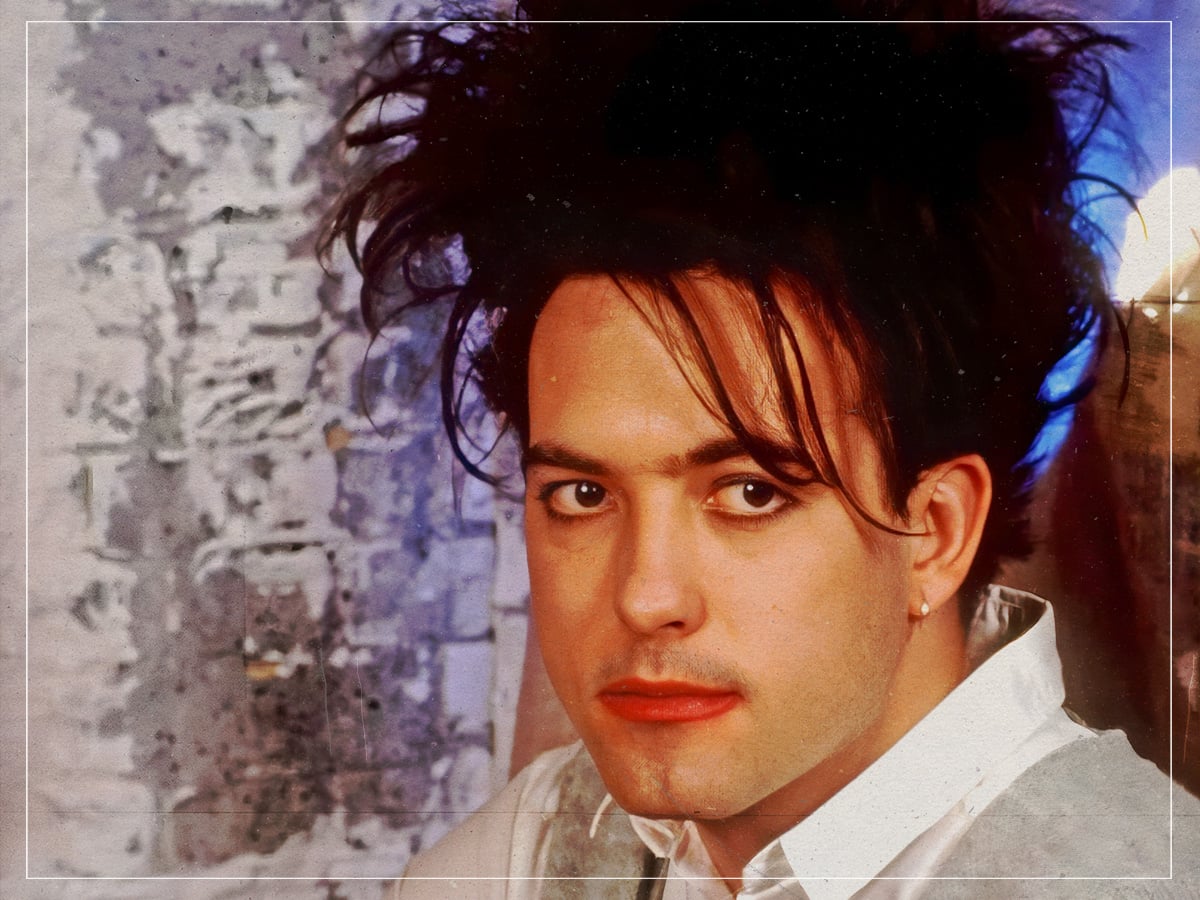
(Credits: Far Out / Alamy)
Wed 10 December 2025 13:00, UK
Most people who have ever been on the same bill as The Cure or Robert Smith know that they’re a tough act to follow.
Smith, in particular, has become a sought-after collaborator in his own right, while The Cure continues to remain a cherished touchpoint across all generations, whether it’s the nostalgia they evoke among those who have been fans from the beginning or new music lovers, exposed through their newest music or latest stint at Glastonbury Festival alongside Olivia Rodrigo.
One of the reasons why Smith’s music continues to resonate is that it blends the romance of gothic new wave with the more universal touchpoints of human existence, like longing, loss, heartache, hazy memory, and a disjointed sense of belonging, making for takes on themes and emotions that hook into all ages and eras.
On the other hand, it also resonates because Smith understands the modern landscape and what it means to get involved in current discourse, as often, with musicians who have been around as long as he has, there’s a disconnect between their legacy and their place in the current community; however, he continues to bridge that gap with ease.
For instance, when the conversation turned to parasocial relationships and the sense of entitlement that so-called superfans feel for their favourite artists, notably sparked by Chappell Roan and her disdain for those who disregard her personal boundaries in public, Smith said that he could relate to the frustration.
“It can feel quite threatening, honestly. If you have people sleeping outside your front door, it can get very weird,” he told the BBC, explaining, “You’re dealing with people who perhaps aren’t quite right all the time. How do you respond to this? It’s impossible, really.” He also said that, while he’s experienced similar situations, The Cure took a while to reach a certain level of fame, meaning that many stars of today don’t have that warm-up period before things explode.
This distinction also demonstrates the frontman’s broader perspective when it comes to the differences between his band and those of today, or even the ones that he emerged surrounded by, for that matter. Despite their popularity, Smith always exercised an observational eye, idolising some of his peers whom he felt had more talent instead of feeling threatened by them, and one such act was Joy Division.
In the late 1970s, the Ian Curtis-fronted band opened for The Cure at The Marquee Club in London, which led Smith to initially be endeared to them because they seemed to tackle similar themes, but he ultimately fell in love with them because of their aura on stage, offering the ideal primer before launching into sets of their own.
As he recalled to Paraguay’s Radio Urbana, “We did a thing in London at the Marquee Club. We picked the four bands we wanted to play with us, and Joy Division were one of those bands. I heard Unknown Pleasures on the radio on John Peel, and they were just fantastic.”
He went on, commenting on the rareity of the experience, “They were the best thing I’d seen, not ever, because I’d seen Bowie and the Stones, but they were of that generation of bands which is my generation of bands they were so powerful…that was our best show that year, I think, we went on after them and we had to really we had to try hard to match what they did. People that good [like Curtis] come around far too infrequently.”
Related Topics