

The German Bundestag voted on Friday to pass the pension package, which contains three laws intended to secure the pension system until at least 2031 and also establish the new ‘active pension’ as well as expand on ‘mother’s pension’ benefits.
The newly passed pension package has become a hot button issue in German politics in recent weeks with fierce debates around the proposals, including within the conservative Christian Democrat and Christian Social Union parties (CDU/CSU), making a flurry of headlines.
That the package would be passed in the Bundestag was far from guaranteed, and a failure to do so was a serious risk for Chancellor Friedrich Merz and his black-red coalition government with the centre-left the Social Democrats (SPD), as it could have triggered a confidence vote – and potentially a full-on government collapse.
But on Friday the package was passed; with 319 votes in support of the measures as opposed to 225 votes against it. Fifty-three MPs, including those from the Left party, had abstained from voting.
Now that the package has cleared the Bundestag, here’s what the laws mean for pensioners in Germany and why the issue is such a heated topic.
What’s in the plan?
The pension package contains three laws that were passed on Friday. These include a law to create an “active pension”, another to strengthen company pensions in small companies, and finally one which is set to lock-in the pension level until 2031 and expand the so-called “mothers pension”.
The active pension (Aktivrente), which is to begin from the start of 2026 is essentially a tax break for people over the age of 67 who continue working. It’s intended to keep more people in the workforce to combat Germany’s growing lack of skilled workers.
Going forward, people of retirement age who decide to continue working can receive up to €2,000 in monthly income tax free, on top of their monthly pension payment.
Civil servants and self-employed workers are excluded.
READ ALSO: What Germany’s incoming ‘active pension’ means for older workers
Another proposal aims to strengthen incentives for smaller businesses to offer company pensions to their employees. Workers earning up to €2,898 in gross salary per month could benefit.
The most consequential law, at least in terms of its widespread impact and cost, locks-in the pension level at 48 percent through 2031. This means that a retired person is guaranteed a monthly pension payment equal to 48 percent of the average net income they had earned over their working life.
The pension level in Germany was already set at 48 percent in 2025, but the new pension plan ensures that this level is to be maintained up until 2031, as had been agreed in the federal government’s coalition agreement between the CDU/CSU and SPD.
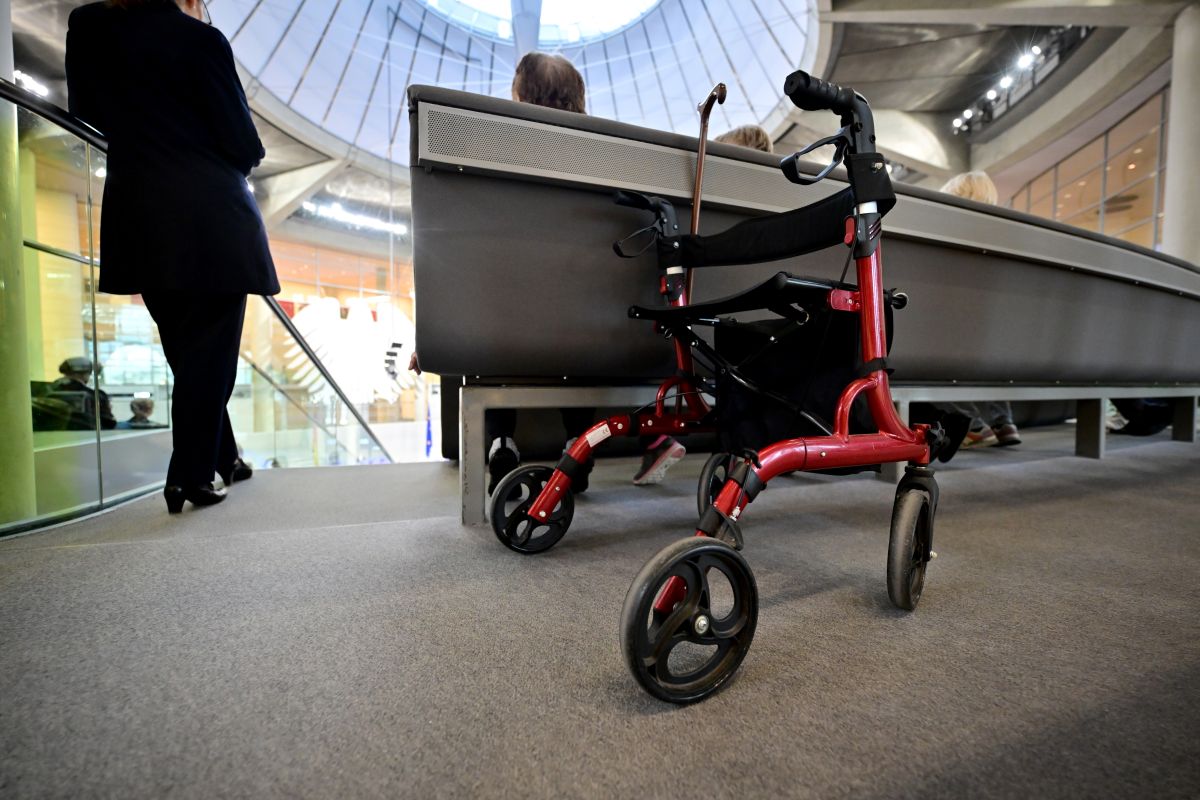
A walker stands behind seats in the visitors’ gallery during a debate on the pension reform in the Bundestag ahead of the vote on Friday. Photo: picture alliance/dpa | Sebastian Christoph Gollnow
Additionally, the reform also includes an extension of “mothers’ pensions” (Mütterrente), which are payments to women who spend time out of the workforce to raise children.
What are all the arguments about?
In terms of immediate impacts on workers in Germany, the pension package doesn’t look to be a ground-breaking reform. In fact, it could perhaps be argued that locking-in the pension rate exactly where it already sits is the opposite of a major reform.
Yet the topic has been at the centre of heated political debates and manoeuvring for weeks. So what is all the fuss about exactly?
The big picture is that Germany’s pension system was designed before the country had to reckon with an ageing population and a declining workforce. And that as the system eats up more and more of the federal budget, it’s become representative of a bigger struggle between generations and existential questions about what the eldest owe the youngest or vice versa.
A couple reader comments on a recent news update about the pension reform sum up the debate from the view of German residents pretty well.
One reader wrote that “extracting resources from the unborn is always [an issue] in democracy, given that unborns do not vote”.
Another reader wrote that she “can see young people’s perspective”, but argued that its still important to remember people need their pensions to survive.
Retirees “need their pensions and those must adjust to the rising prices and costs,” she wrote. “Unless Oma and Opa should be out on the streets begging for food.”
The SPD, traditionally staunch defenders of maintaining a strong social state, has made their ‘no further negotiations’ stance on the pension issue quite clear.
Meanwhile the CDU have found themselves split on the issue, particularly along a generational divide.
Chancellor Friedrich Merz, who is also leader of the party, had agreed along with the members of his cabinet that he would support the package with no further amendments – such was established in the black-red coalition agreement after all, and the SPD has had to make a fair amount of compromises on other issues there.
But the younger cohort of the CDU, including 18 members of the Bundestag from the CDU youth wing (Junge Union) had threatened to vote against the pension package, saying it puts an unfair burden on their peers and subsequent generations.
The youth wing expects additional costs of €120 billion in the 2030s should the pension level continue to be raised in future years to keep up with increased wages at that time.
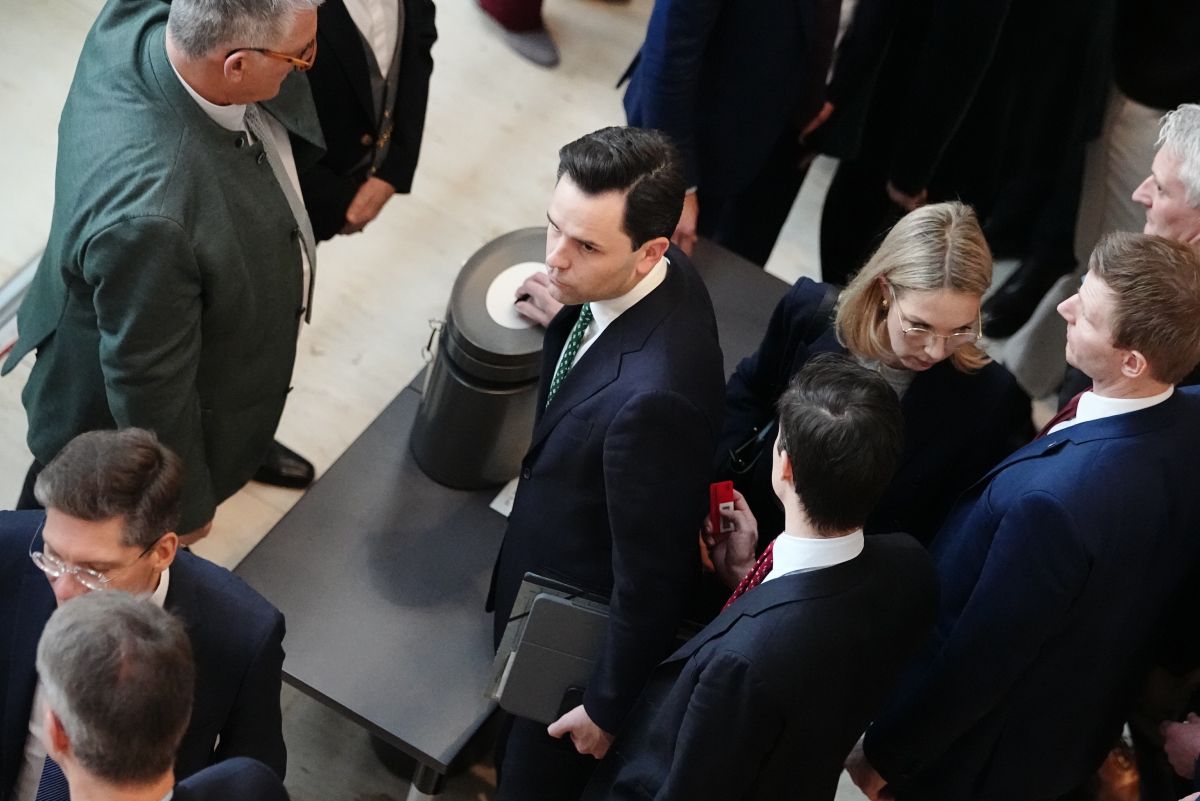
A member of the ‘Young Union’ is seen with his red voting card, which represents a vote against the pension package, in the Bundestag. Photo: picture alliance/dpa | Kay Nietfeld
In a speech to the German Parliament on Friday, the Junge Union chairman said that the package goes against “intergenerational justice”.
A ‘Christmas miracle’?
The issue had even piqued some international interest. US business newspaper, the Wall Street Journal published an editorial this week, referring to the CDU’s young dissenters as “pension rebels” and even calling the whole dispute a “Christmas miracle” and “exactly the kind of divine intervention” that Germany needs.
With the pension package past the Bundestag now, present bickering can be expected to subside, at least for now. But don’t expect that this is the last we’ve heard of it.
Germany’s pension system is set to continue eating up more and more of the federal budget in the coming years. (In the current budget it already amounts to around a quarter of the country’s total expenditure.)
So politicians will continue to wrestle around the topic each year during budget negotiations, and these debates can be expected to become increasingly heated as we move closer to 2031 and beyond.
OPINION: Why Germany’s pensions problems will soon be your problem