
Mr Chandra shared with the BBC pictures he took of the carcass, some of which show him with the dead animal.
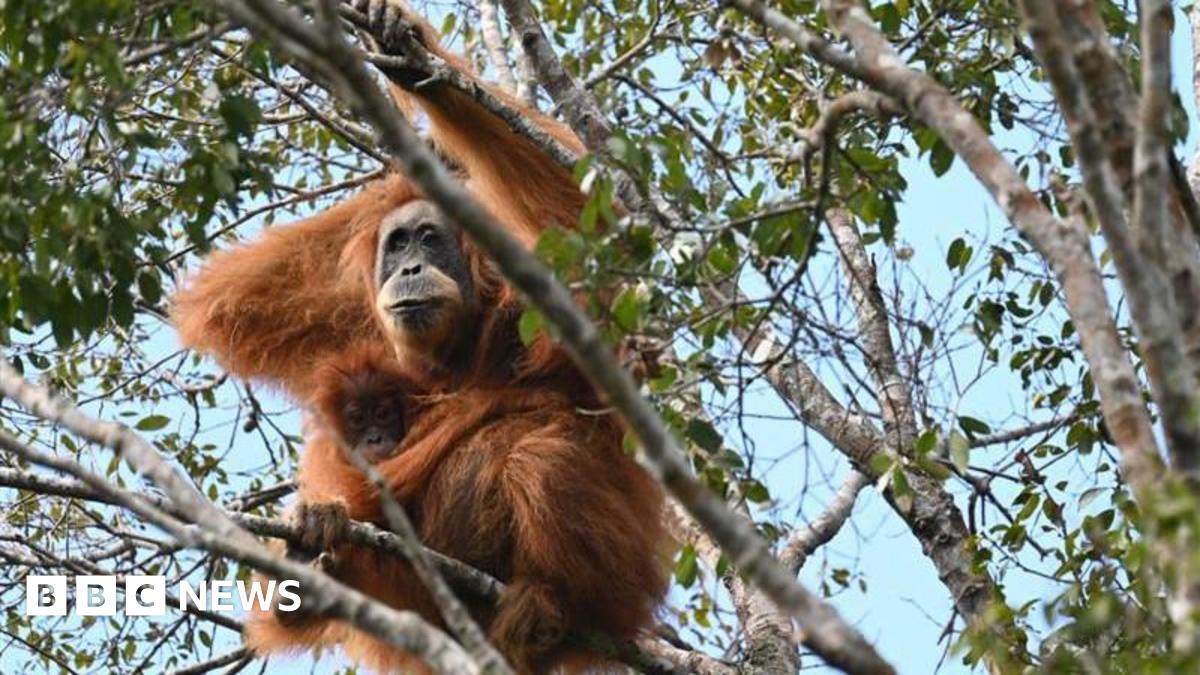
Conservationists working in the region believe it is of the Tapanuli orangutan, a species that was only discovered in 2017. The other two species are Bornean and Sumatran orangutans.
More than 900 people have died as a result of heavy rain, floods and landslides since Cyclone Senyar ravaged parts of Indonesia in late November. Hundreds are still missing, with many villages in Sumatra completely destroyed as the storm swept across the island.
Professor Erik Meijaard, managing director of Borneo Futures in Brunei, is now studying the disasters’ impact on the orangutans with the help of satellite images.
He said 4,800 hectares (11,860 acres) of forest on the mountain slopes can be seen as destroyed by landslides – but since part of the satellite image is cloud covered, he’s extrapolated the destruction figure to 7,200 hectares in his preliminary observation.
“The destroyed areas would have contained some 35 orangutans, and considering the violence of the destruction it wouldn’t surprise us if they are all dead. That’s a major blow to the population,” he told the BBC.
“These areas show as bare soil on satellite imagery where two weeks ago it was primary forest. Complete destruction. Many patches of several hectares completely denuded. It must have been hellish in the forest at the time.”
Prof Mejjard said he too has seen the picture of the dead orangutan shared by Chandra.
“What struck me is that all the flesh had been ripped off the face,” he said. “If a few hectares of forest comes down in massive landslides, even powerful orangutans are helpless and just get mangled.”
Panut Hadisiswoyo, founder of Orangutan Information Centre which works for the conservation of the primates in the region, said the carcass meant it was highly possible some Tapanuli orangutans were unable to escape as rushing waters and landslides swept through their habitat.