
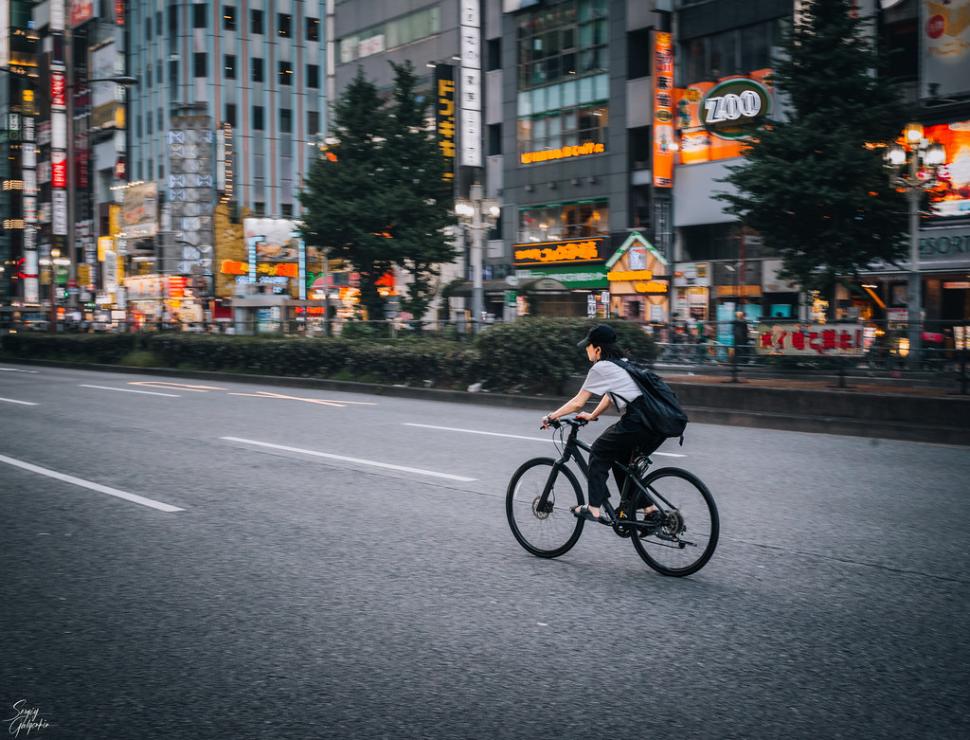
Almost 900 cyclists have had their driving licences suspended in Japan this year, and 4,500 arrested in total, for cycling under the influence of alcohol, as part of the country’s recent clampdown on people riding their bikes while drunk or using their phones, amid increasing road safety concerns.
Last November, a revised Road Traffic Act came into effect in Japan, imposing stricter penalties on cyclists breaking the law. Previously, police had only acted in instances of drink cycling if the cyclist showed an obvious inability to control their bike.
However, according to the revised law, anyone riding a bike who produces a reading of more than 0.15mg of alcohol per litre of breath is subject to a possible three-year jail term, a fine of 500,000 yen (£2,500), and the suspension of their driving licence.
Meanwhile, anyone who offers alcohol to cyclists, knowing they will soon ride their bike, or who lends a bike to a drunk person, faces up to two years in prison or a fine of up to 300,000 yen. The more serious offence of cycling while drunk was already included in Japanese law, and includes a maximum prison term of five years.
In the hours after the new law took effect last November, police authorities in Osaka said they had already recorded seven violations, including two men who were caught cycling while drunk. One of the men had collided with another cyclist and was issued a ticket, but no injuries were reported.
And new police figures, reported in the local press, have revealed that almost 900 cyclists were banned from driving for riding their bikes drunk between January and September, a huge rise compared to 2024, with authorities saying the offenders were “likely to pose a significant danger when driving a car”.
Meanwhile, over 4,500 people across Japan were arrested for cycling while tipsy between November 2024 and June this year.
“We aim to nip the social tolerance around this habit in the bud,” a police spokesperson told Japanese newspaper Yomiuri Shimbun following the release of the figures.
“Drunk cycling can lead to serious accidents. I hope everyone will abide by the rule, ‘Don’t drink and ride’.”
The crackdown on drink cycling in Japan – a nation where alcohol is traditionally viewed as a social lubricant, especially in business situations, and where the sight of a cyclist riding home after a few beers is a common one – comes amid concerns that cycling is becoming increasingly dangerous.
> Japan to make cycle helmets compulsory for all cyclists from next April
Since the boom in cycling’s popularity in the country in the wake of the Covid pandemic, while the number of collisions on the road are decreasing in general, collisions involving cyclists are on the rise.
Over 72,000 road traffic incidents involving people on bikes were recorded in Japan in 2023, accounting for around 20 per cent of all collisions in the country. In 2024, there were 67,531 bike-related collisions.
The National Police Agency also reported that there 50,000 citations issued for bicycle traffic violations last year, including 21,088 for riding through red lights, 21,833 for failing to stop at a stop sign, 1,251 for riding on the wrong side of the road, and 3,220 for entering railway crossings while the gates were down.
Along with imposing tougher penalties on drunk cycling, the revised Road Traffic Law also stipulated that any cyclist who uses their phone in any capacity, for calls, texts, or just general scrolling, will be subject to a maximum jail sentence of six months, or a fine of 100,000 yen (£508).
In cases where a cyclist’s phone use results in a collision, a maximum penalty of a year’s imprisonment, or a fine of 300,000 yen (roughly £1,500) can be imposed.
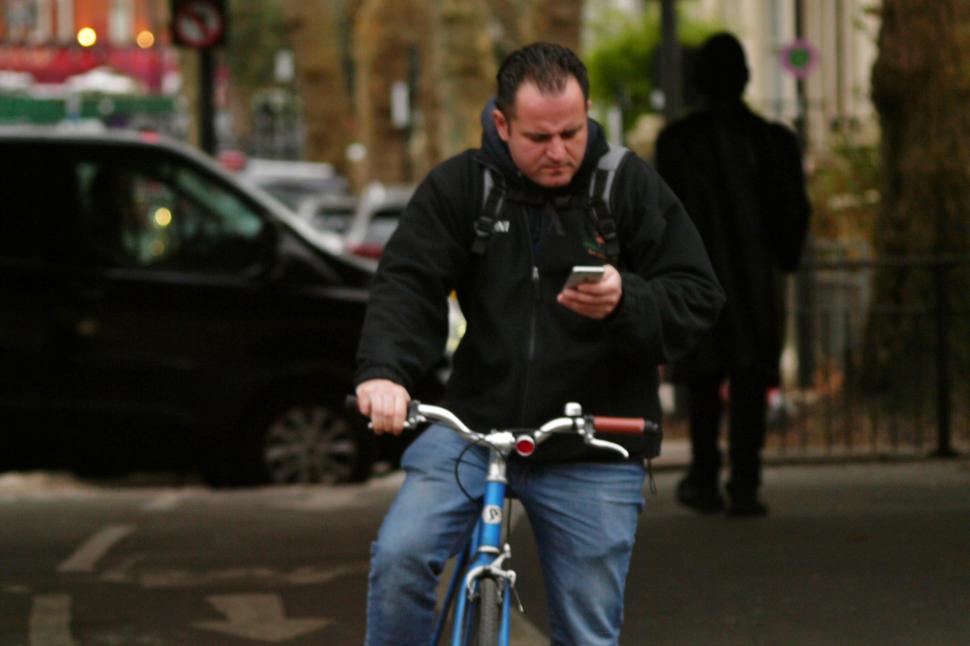 Cyclist in London on the phone (credit: Simon MacMichael)
In the first half of 2024 there was one fatality and 17 serious injuries stemming from incidents involving cyclists using their phones. Between 2018 and 2022, the number of collisions caused by cyclists on their phones jumped by more than 50 per cent to 454, compared to 295 during the previous five-year period.
A National Police Agency official said the rise in phone-related collisions – which, the Japanese government says, have resulted in the deaths of pedestrians – could be attributed not only to the ubiquitous presence of smartphones, but also the increasing variety of video and gaming content available on them.
“Making a call with a smartphone in your hand while cycling, or watching the screen, is now banned and subject to punishment,” a National Police Agency leaflet said, introducing the new law last November.
Previously, mobile phone use while cycling in Japan was governed by local public safety commissions, with 50,000 yen (£250) set as the maximum penalty.
And Japan’s attempt to impose ever more stringent regulations on cycling shows so signs of slowing down.
Next April, a further revision to the Road Traffic Act will come into effect, imposing fines on a string of offences that currently result in a simple warning.
This will mean cyclists in Japan will be subject to a mandatory 5,000 yen (£25) fine for cycling without lights at night, riding through red lights, cycling while wearing earphones – and holding an umbrella as they ride their bike.